






Newsletter Subscribe
Enter your email address below and subscribe to our newsletter

Enter your email address below and subscribe to our newsletter
All voices matter
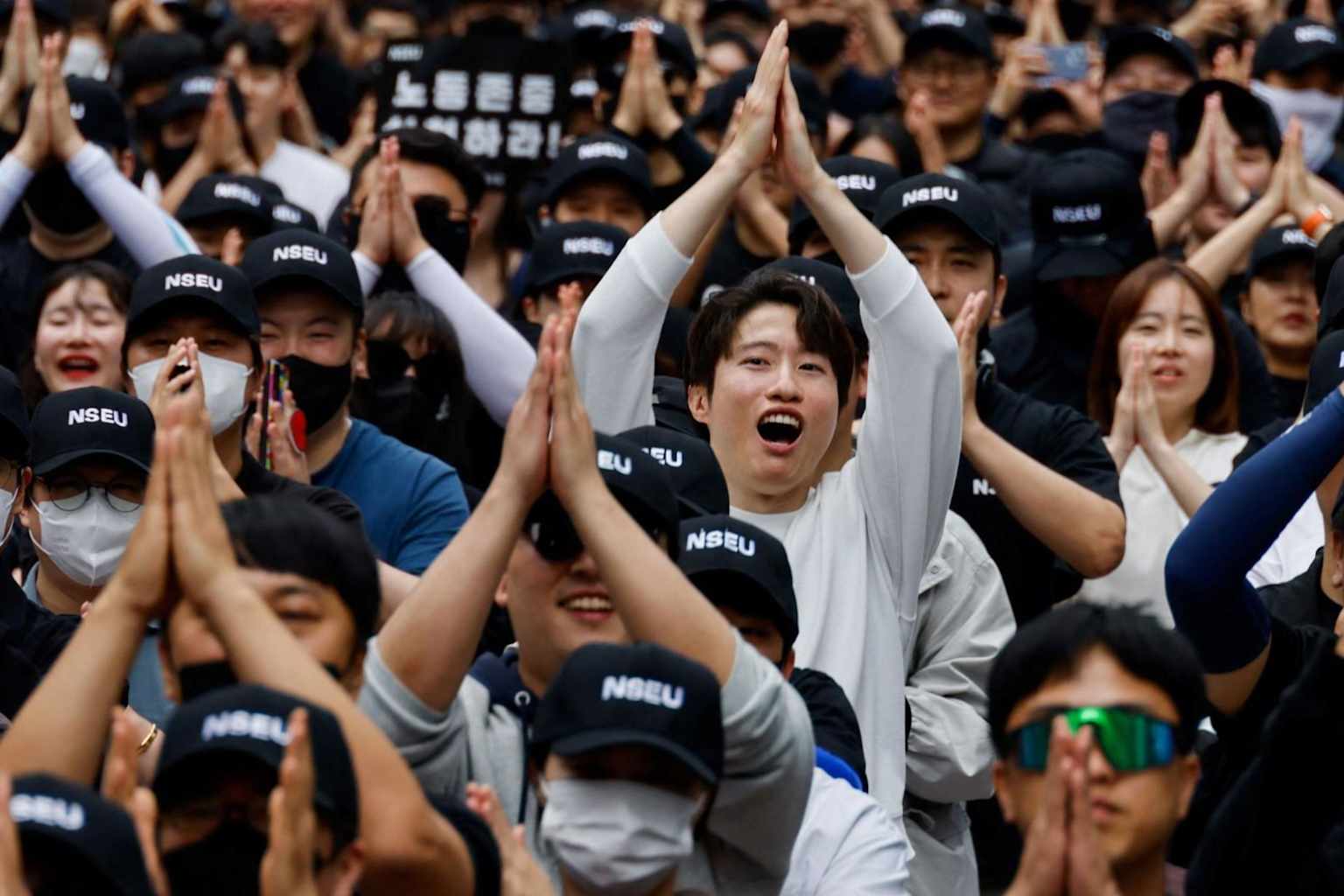
Samsung Electronics and its largest labor union reached a tentative agreement on Wednesday evening, suspending a general strike by nearly 48,000 workers that had been set to begin Thursday. The deal came after Labor Minister Kim Young-hoon personally intervened to broker a last-ditch negotiation session, stepping in hours after talks at the National Labor Relations Commission collapsed earlier in the day.
The drama unfolded in stages. Talks at the NLRC in Sejong broke down Wednesday morning after marathon overnight sessions failed to bridge the final gap between the two sides. Union leader Choi Seung-ho declared that the planned 18-day walkout would proceed as scheduled.youtube
Then, at around 4 p.m., the Labor Ministry announced that Minister Kim would personally mediate a new round of direct negotiations at the Gyeonggi Employment and Labor Office. The session, described as a direct bargaining process rather than a formal NLRC mediation, produced what weeks of earlier talks could not — a tentative agreement.ajunews
The union announced it would suspend the strike and put the deal to a membership ratification vote running from May 22 to May 27. If members reject the agreement, the strike could still go forward.youtube
The dispute centered on Samsung’s bonus system. The union demanded that 15% of annual operating profit be allocated to performance bonuses and that the company eliminate its existing cap limiting bonuses to 50% of base salary. Management resisted, citing the cyclical nature of the semiconductor business and the potential impact on profitability.youtube
JPMorgan analyst Jay Kwon had estimated that meeting the union’s full demands could reduce Samsung’s 2026 operating profit by 7% to 12%. South Korean Prime Minister Kim Min-seok warned that direct economic losses from an 18-day strike could reach 1 trillion won, with broader supply chain damage potentially escalating to 100 trillion won.fortune
The confrontation tested Samsung’s historically non-union corporate culture. Workers voted 93.1% in favor of strike action in March, and a court injunction obtained by Samsung required minimum staffing to protect production lines during any walkout. The strike would have been the largest in Samsung’s history, coinciding with a global shortage of memory chips used in AI data centers.youtube
Whether the deal holds now depends on the rank-and-file vote. NLRC Chairman Park Su-keun had noted on Tuesday that the two sides had narrowed their differences to a single remaining issue, suggesting the final agreement may have required concessions from both parties on the bonus cap structure.hani