







Newsletter Subscribe
Enter your email address below and subscribe to our newsletter

Enter your email address below and subscribe to our newsletter
All voices matter
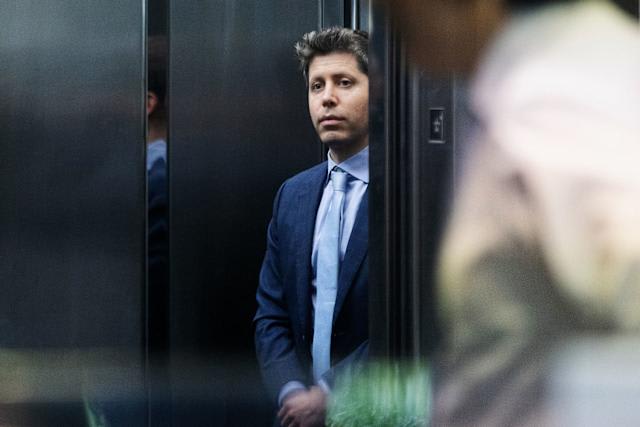
OpenAI CEO Sam Altman took the witness stand on Tuesday in a federal courtroom in Oakland, California, pushing back against Elon Musk’s claims that he betrayed the AI company’s founding nonprofit mission. Altman testified that it was Musk who sought long-term control of OpenAI and who had advocated for it to merge with Tesla before his departure from the organization in 2018.nytimes
“My belief is he wanted to have long term control, and that he would have had that had we agreed to the structure he wanted,” Altman said. His testimony, delivered during the third week of the high-profile trial, aimed to counter Musk’s assertion that no individual should dominate the future of artificial intelligence and to show that Musk himself was supportive of OpenAI becoming a commercial enterprise.cnn
Altman’s appearance followed a day of testimony from Microsoft CEO Satya Nadella and OpenAI board chairman Bret Taylor, both of whom took the stand on Monday. Nadella testified for several hours, asserting that Musk had never raised concerns to him about Microsoft’s investments in OpenAI and that the partnership always had a commercial dimension. He also defended his role during the November 2023 episode in which Altman was briefly ousted and then reinstated as CEO.cnbc
Taylor, who was called by OpenAI as a witness on Monday afternoon, testified about the board’s role and the company’s organizational structure. According to earlier reporting, Taylor was instrumental in rejecting a $97.4 billion takeover bid from Musk and a consortium of investors tied to his AI company xAI in February 2025, calling it “an attempt to disrupt his competition”.cnbc
The trial, overseen by Judge Yvonne Gonzalez Rogers, began on April 27 with jury selection and opening statements. Musk is seeking more than $150 billion in damages from OpenAI, Altman, and Microsoft, along with Altman’s removal from the board and the reversal of OpenAI’s for-profit restructuring. Only two of Musk’s original 26 claims remain: unjust enrichment and breach of charitable trust.cnbc
The jury’s verdict will be advisory, with the judge making the final ruling. Closing arguments are expected as soon as this week, with jury deliberations potentially following shortly after. A ruling against OpenAI could complicate its plans for an initial public offering expected later this year.abc7news