







Newsletter Subscribe
Enter your email address below and subscribe to our newsletter

Enter your email address below and subscribe to our newsletter
All voices matter
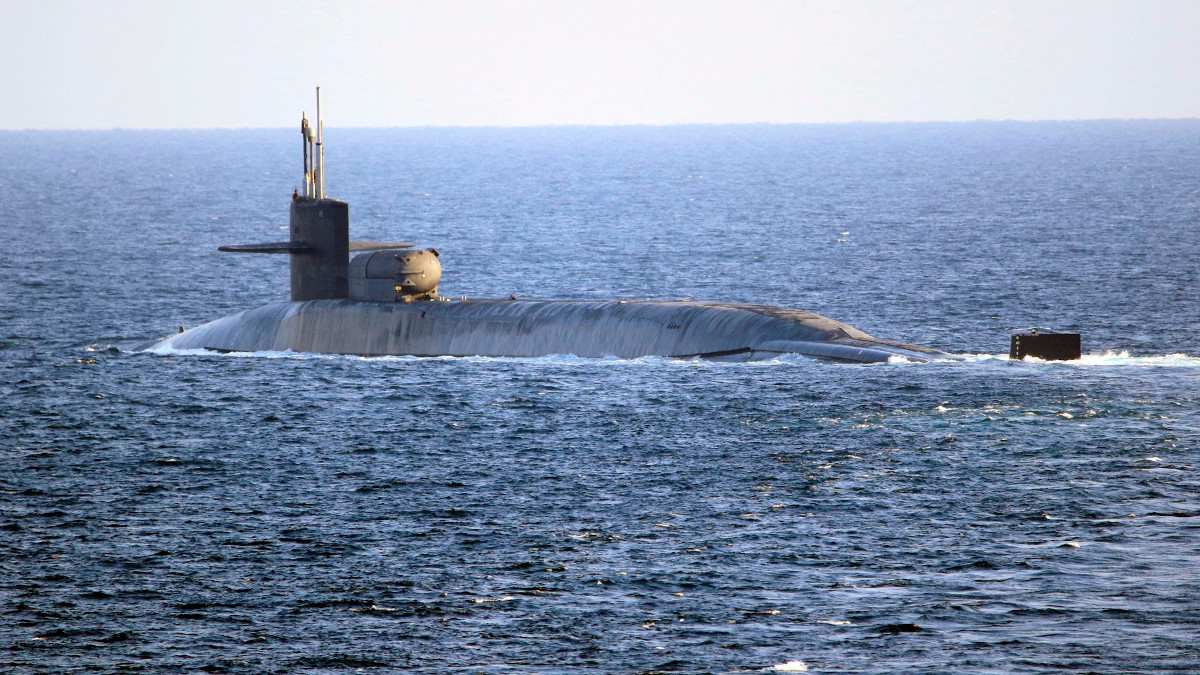
The Pentagon took the unusual step on Monday of publicly acknowledging that a nuclear-armed ballistic missile submarine had arrived in Gibraltar on Sunday, May 10, in what analysts view as a calculated pressure signal directed at Iran as ceasefire negotiations collapse.
The USS Alaska (SSBN-732), an Ohio-class ballistic missile submarine armed with up to 20 Trident II D5 nuclear missiles, was photographed transiting the Strait of Gibraltar under heavy escort from Gibraltar Squadron patrol craft and Royal Marines fleet protection units. A 200-meter exclusion zone was immediately activated around Gibraltar’s South Mole upon the submarine’s arrival. U.S. Naval Forces Europe confirmed the port visit, stating it “demonstrates U.S. capability”.armyrecognition
The public disclosure of one of America’s most secretive strategic assets — designed to remain invisible beneath the ocean — is itself the message. Ohio-class submarines represent one leg of the U.S. nuclear triad and are almost never acknowledged in real time. The submarine was first spotted by photographer Peter Ferrary and identified by open-source naval trackers.x
The deployment coincided with President Trump’s rejection of Iran’s latest counterproposal to end the ten-week-old conflict. On Sunday, Trump posted on Truth Social that Iran’s response was “TOTALLY UNACCEPTABLE,” and on Monday described the existing ceasefire as being on “massive life support” during an Oval Office briefing.cnbc
Iran’s response, delivered through Pakistani mediators, demanded war reparations, full sovereignty over the Strait of Hormuz, an end to the U.S. naval blockade, and the lifting of sanctions — conditions Washington considers non-starters. Tehran framed the U.S. proposal as tantamount to surrender. Iran’s Foreign Ministry spokesperson Esmail Baghaei said Monday that the U.S. “persisted in its unreasonable demands” and insisted Iran was seeking only its “legitimate rights”.apnews
The submarine’s appearance positions American nuclear deterrence assets within range of the broader Middle East theater at a moment of acute uncertainty. The U.S. is currently enforcing a naval blockade preventing over 70 tankers from accessing Iranian ports, and the conflict has already seen direct naval engagements, including the sinking of an Iranian warship by a U.S. submarine torpedo in March.theiranpost
The deliberate visibility of the USS Alaska suggests Washington is layering nuclear deterrence messaging atop its conventional military operations — a posture shift from diplomatic patience toward explicit strategic coercion as Trump weighs whether to resume hostilities.hindustantimes