







Newsletter Subscribe
Enter your email address below and subscribe to our newsletter

Enter your email address below and subscribe to our newsletter
All voices matter
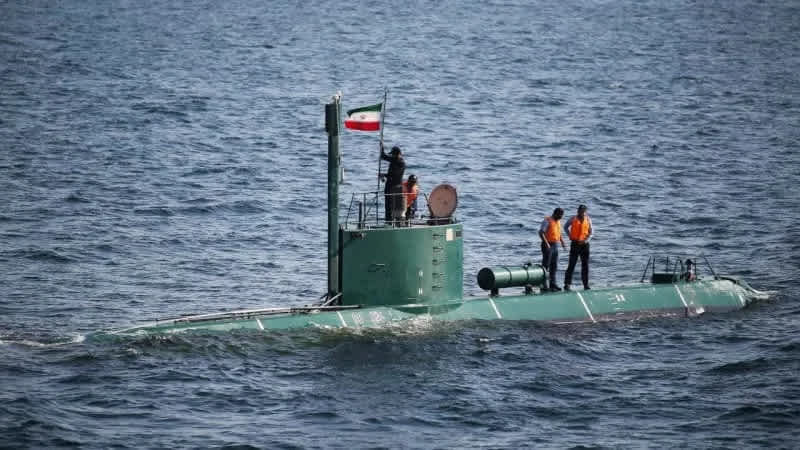
Iran’s Navy confirmed on Sunday that its domestically built Ghadir-class midget submarines are operating in a “trigger-ready” state inside the Strait of Hormuz, escalating an already volatile maritime confrontation with the United States that has paralyzed global shipping through the world’s most critical oil chokepoint.
Rear Admiral Shahram Irani, commander of the Iranian Navy, announced the deployment during what Iranian state media described as formation exercises in which multiple Ghadir submarines surfaced before submerging again for renewed combat patrols. Irani said the submarines could remain on the seabed for extended periods while tracking and preparing to destroy hostile vessels. Iranian state-linked outlets described the boats as capable of transforming sections of the strait into “kill zones” against larger warships dependent on predictable navigation routes.iranintl
The Ghadir-class, sometimes called the “Persian Gulf Dolphins” by Iranian media, measures approximately 29 meters in length and displaces between 117 and 150 tons — roughly one-tenth the size of a conventional attack submarine. Iran is believed to operate between 19 and 23 of the vessels. Each carries two 533mm torpedo tubes capable of launching heavyweight torpedoes and anti-ship cruise missiles such as the Jask-2, which Iran has previously test-fired from a submerged Ghadir platform. The submarines can also lay naval mines during nocturnal operations, a capability that compounds an already dire mining threat in the strait.theasialive
The deployment adds a new dimension to a crisis that has intensified since the United States and Israel launched airstrikes against Iran beginning February 28, sparking the 2026 Iran war. Iran retaliated by closing the Strait of Hormuz to traffic, while the United States imposed a naval blockade on Iranian ports starting April 13. Approximately 1,600 commercial vessels remain trapped in the Persian Gulf, and the International Energy Agency has called the disruption the most severe to global oil supply in history.axios
Earlier this month, President Trump launched “Project Freedom,” deploying warships, over 100 aircraft, and 15,000 personnel to escort stranded vessels through the strait. Iran responded with missile and drone fire at U.S. naval assets, and on May 8, U.S. forces disabled two Iranian tankers attempting to breach the American blockade, according to NPR. France and Britain have also dispatched warships to accompany the U.S. effort, drawing a warning from Tehran of “decisive and immediate” retaliation, according to Xinhua.news
Analysts warn that the Ghadir fleet exploits the Persian Gulf’s shallow, acoustically cluttered waters — averaging about 36 meters in depth through Hormuz — where conventional Western anti-submarine warfare systems, optimized for deep-ocean tracking, face severe limitations. The submarines’ diesel-electric propulsion and compact profile allow them to blend acoustically with dense commercial traffic, creating what regional analysts describe as persistent underwater ambiguity that complicates operational planning for the U.S. Navy and allied formations.theasialive
Iran’s foreign ministry said on Sunday that it is reviewing a U.S. counterproposal transmitted through Pakistan aimed at ending the conflict and reopening the strait. Until diplomacy produces results, the presence of concealed submarines beneath one of the world’s busiest shipping lanes ensures that the cost of miscalculation continues to rise.aljazeera