







Newsletter Subscribe
Enter your email address below and subscribe to our newsletter

Enter your email address below and subscribe to our newsletter
All voices matter
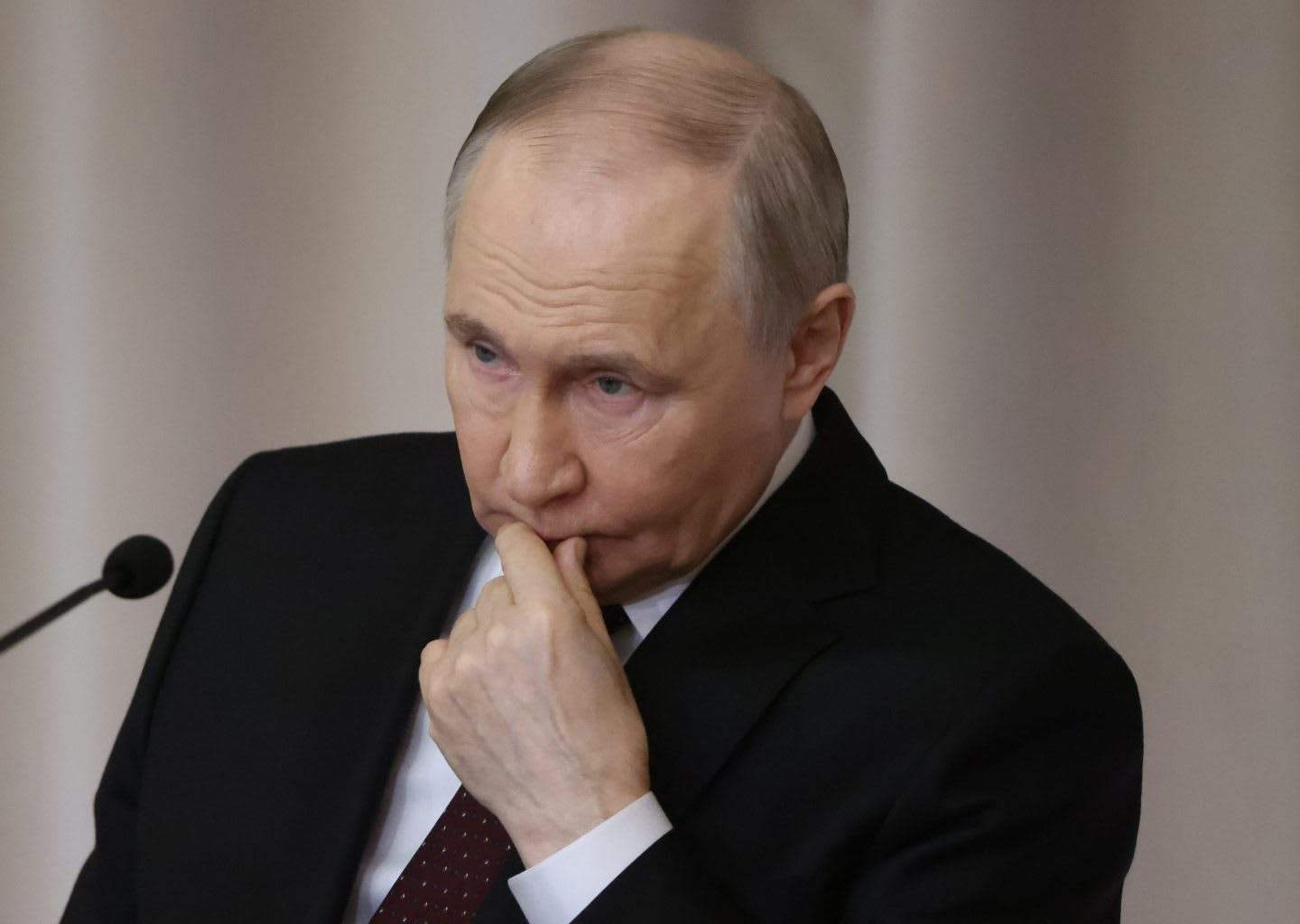
Russian President Vladimir Putin has been spending extended periods in underground bunkers in southern Russia since March 2026, gripped by fears of both a coup by political elites and a drone-based assassination, according to reports published by the Financial Times and the independent Russian investigative outlet Istories (Important Stories), citing a classified European intelligence report.istories
The revelations came as a Ukrainian drone struck a 52-story luxury residential tower on Mosfilmovskaya Street in Moscow overnight on May 4 — roughly six kilometers from the Kremlin — underscoring the aerial threats that have rattled the Russian leadership. Moscow Mayor Sergei Sobyanin confirmed the strike on Telegram, saying there were no casualties. The attack occurred just five days before Russia’s May 9 Victory Day parade, for which the defense ministry had already announced that military equipment and cadets would be absent from Red Square this year as a precaution against drone strikes.aljazeera
According to the intelligence report cited by Istories, Russia’s Federal Protective Service (FSO) has “significantly tightened security measures around Vladimir Putin since March 2026 due to fears of a conspiracy or a coup attempt”. Putin and his family have stopped visiting their residences in the Moscow region and at Valdai in northwestern Russia, and the president is now spending most of his time in bunkers in the Krasnodar region while his press service publishes pre-recorded video to maintain the appearance of normalcy.unn
Staff in Putin’s immediate circle — including cooks, photographers, and bodyguards — have been barred from using mobile phones with internet access and from using public transport. Video surveillance systems have been installed in their homes. Visitors to the presidential administration must undergo two levels of screening, and FSO agents have been stationed along the Moscow River to counter potential drone attacks.i24news
The Financial Times reported that Putin’s anxiety was fueled in part by Ukraine’s drone operation “Spiderweb,” which struck Russian airfields beyond the Arctic Circle, and by the U.S. seizure of Venezuelan leader Nicolás Maduro in January. “The shock of Ukraine’s drone operation Spiderweb is still there,” a person familiar with Putin told the FT.i24news
The intelligence report also points to growing friction within Russia’s security apparatus. At a meeting with Putin late last year, FSB chief Alexander Bortnikov blamed the defense ministry for failing to protect senior military personnel — including Lieutenant General Fanil Sarvarov, killed in a Ukraine-linked attack — while National Guard head Viktor Zolotov denied responsibility, citing limited resources.i24news
The report noted that “Putin fears not so much Ukrainian attacks as a conspiracy by Russian political elites,” adding that he is also weighing the possibility of a drone-based assassination attempt carried out by figures within the Russian establishment itself. Roman Anin, founder of Istories, wrote in an accompanying analysis that Russia’s competing “siloviki” clans now face a narrowing set of futures, warning the internal power struggle could intensify.istories