







Newsletter Subscribe
Enter your email address below and subscribe to our newsletter

Enter your email address below and subscribe to our newsletter
All voices matter
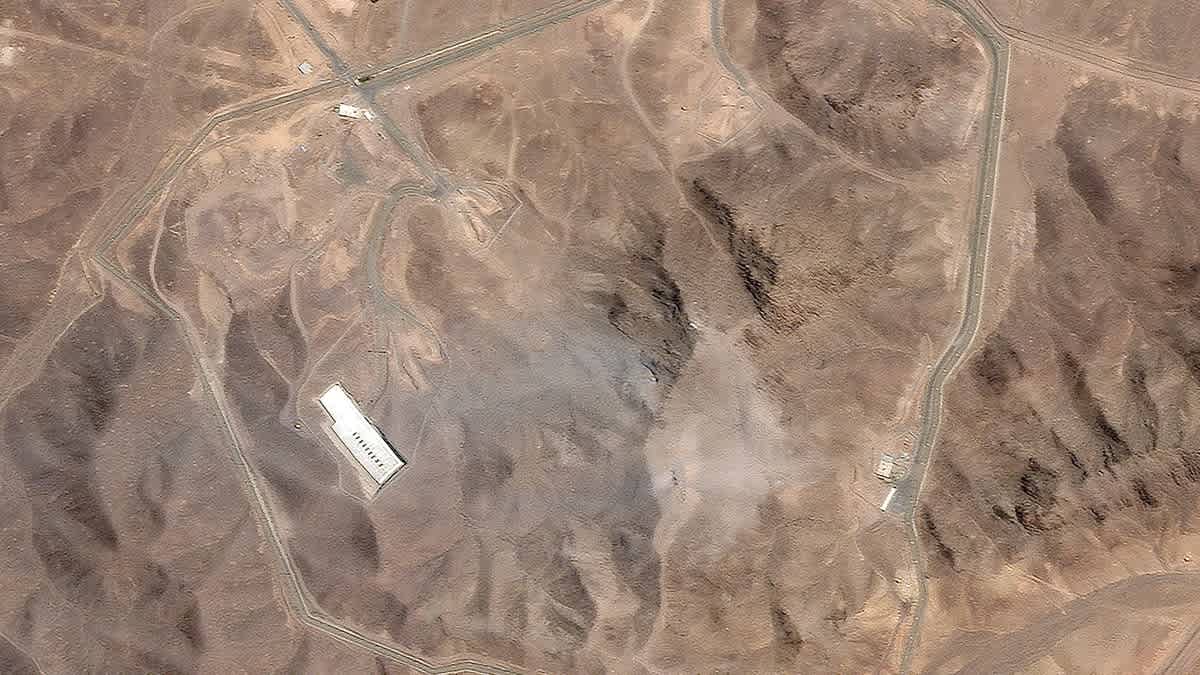
Two months into a U.S.-led military campaign against Iran, American intelligence assessments indicate that the time Tehran would need to build a nuclear weapon has not shifted since last summer, when a joint U.S.-Israeli strike extended the timeline to roughly nine months to a year, Reuters reported on Monday, citing three sources familiar with the matter.whtc
The assessments suggest that despite more than 8,000 military targets struck since the conflict began on February 28, the current war — launched partly to prevent Iran from acquiring nuclear weapons — has not materially degraded Tehran’s nuclear capabilities. Prior to the June 2025 strikes on the Natanz, Fordow, and Isfahan nuclear complexes, U.S. intelligence had estimated Iran could produce enough bomb-grade uranium and assemble a weapon within three to six months. Those strikes pushed the estimate to approximately nine months to a year, where it remains today.wikipedia
The unchanged estimate reflects that recent U.S. and Israeli military operations have focused primarily on conventional military targets rather than nuclear infrastructure. Some analysts also point to an absence of nuclear-related targets that can be safely and effectively destroyed following the damage already inflicted in June.yahoo
At the core of the challenge is Iran’s remaining stockpile of highly enriched uranium — approximately 460 kilograms enriched to 60 percent, enough for roughly 10 bombs if further enriched, according to the International Atomic Energy Agency. Most of this material is believed to be stored in deeply buried underground tunnels at the Isfahan nuclear complex, beyond the reach of conventional U.S. munitions.youtube
“Iran still possesses all of the nuclear material as far as we know,” said Kelsey Davenport Brewer, now vice president of the Nuclear Threat Initiative. “That material is likely located in deeply buried underground facilities that U.S. munitions cannot penetrate.”yahoo
Significantly impeding Iran’s nuclear progress may now require physically retrieving or destroying that stockpile. In early March, Axios reported that the United States and Israel discussed deploying special forces to secure the HEU cache, an operation that would require troops on Iranian soil navigating heavily fortified underground sites. Iran itself appeared to anticipate such a move, burying all entrances to the Isfahan tunnel complex under soil in early February, according to satellite imagery analyzed by the Institute for Science and International Security.militarnyi
An apparent U.S. attempt to access the Isfahan site in early April reportedly failed after Iranian air defenses and ground forces detected the operation. With ceasefire talks ongoing but stalled over the nuclear issue, the question of how — or whether — the United States can neutralize Iran’s buried uranium stockpile remains the central unresolved challenge of the conflict.substack