







Newsletter Subscribe
Enter your email address below and subscribe to our newsletter

Enter your email address below and subscribe to our newsletter
All voices matter
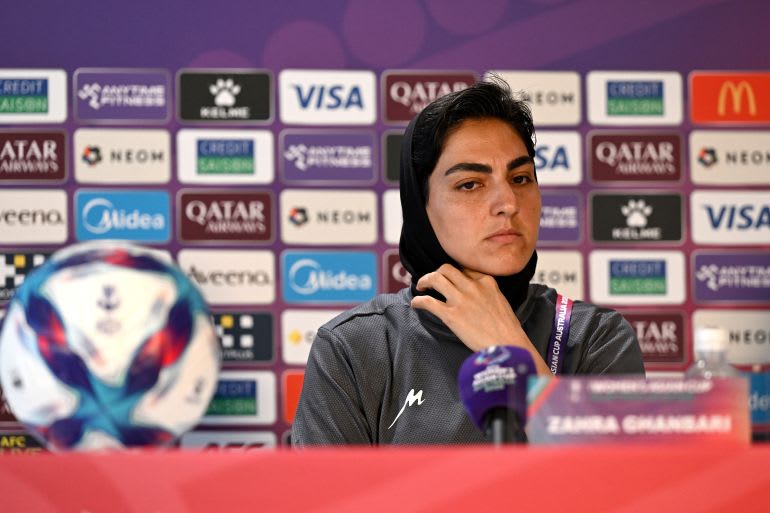
Zahra Ghanbari, captain of Iran’s women’s national soccer team and the country’s all-time leading female goal scorer, has withdrawn her asylum application in Australia and is preparing to return to Iran, state media reported on Sunday. Her decision makes her the fifth member of the seven-person group to reverse course, leaving just two of the original asylum seekers still in the country.yahoo
Ghanbari is expected to travel from Australia to Malaysia before continuing on to Iran, according to the state-run IRNA news agency, which said she was “returning to the embrace of the homeland”. Iranian media hailed the move as a “patriotic decision”.dw
The withdrawals have drawn alarm from human rights advocates and exiled Iranian athletes who say the players’ families have been targeted. Shiva Amini, a former Iranian national futsal player now living in exile, wrote on X that Iran’s Football Federation, working with the Revolutionary Guards, had “placed intense and systematic pressure on the players’ families in Iran”. Amini said authorities had pressured Ghanbari’s mother specifically, calling it evidence of “the level of cruelty and desperation they are willing to use to force these athletes to comply”.nbcrightnow
Opposition television channel Iran International reported corroborating information, saying Ghanbari’s mother had been summoned by the Guards’ intelligence branch, and that her daughter was then informed of the interrogation. Iranian refugee advocate Ara Rasuli, who was involved in the asylum process, told ESPN that the players faced “all sorts of different threats, such as taking the families into custody, taking over their assets”.espn
The saga began when Iranian players stood silent during the national anthem before their opening Women’s Asian Cup match against South Korea on March 2, a gesture widely seen as a protest against the Iranian government amid the outbreak of the U.S.-Iran conflict on February 28. An Iranian state television presenter labeled the players “wartime traitors,” raising fears of severe punishment upon their return.finedayradio
After the team was eliminated from the tournament, Australian Home Affairs Minister Tony Burke personally signed humanitarian visas for seven members of the delegation — six players and one staff member. But the group quickly began to shrink: one player reversed her decision within days after contacting the Iranian embassy, three more departed for Malaysia on Saturday, and now Ghanbari has followed.apnews
Burke said the players “were given repeated chances to talk about their options” but acknowledged the government “cannot remove the context in which the players are making these incredibly difficult decisions”.tbsnews
The identities of the two members still in Australia have not been publicly confirmed. Tehran has accused Australia and the United States of orchestrating the asylum offers as “psychological warfare,” while Australian Prime Minister Anthony Albanese praised the women’s courage and promised they would be welcomed. The returning players are currently at a hotel in Kuala Lumpur awaiting their onward flight to Tehran.apnews