






Newsletter Subscribe
Enter your email address below and subscribe to our newsletter

Enter your email address below and subscribe to our newsletter
All voices matter
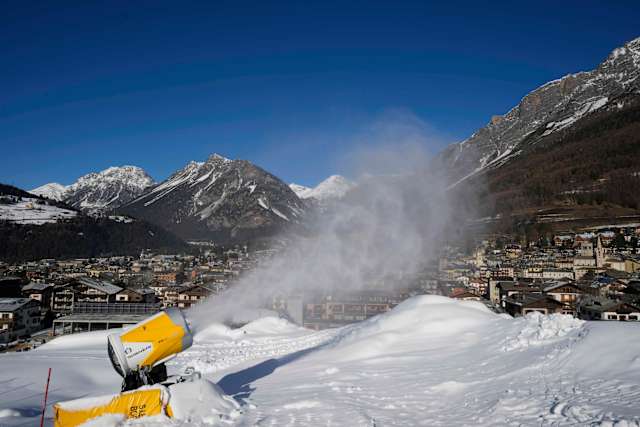
The 2026 Milan-Cortina Winter Olympics, which officially begin on February 6 with a historic dual-location opening ceremony, will depend almost entirely on manufactured snow as warming temperatures and unpredictable natural snowfall reshape the future of winter sports in the Alps.
Organizers have deployed approximately 2.4 million cubic meters of artificial snow across competition venues—equivalent to twice the volume of Rome’s Colosseum—requiring roughly 948,000 cubic meters of water and 125 snow cannons to prepare courses for elite athletes.xchangetickets
Despite venues situated in the high-altitude Italian Alps, natural snowfall in the region has become increasingly unreliable. According to Climate Central, February temperatures in Cortina have risen from an average of 19.3°F during 1956-1965 to 27.1°F during 2016-2025, pushing conditions closer to the thawing point. Average February snow depth has declined by approximately 15 centimeters since the early 1970s.the-independent
The dependence on machine-made snow is no longer merely a backup plan. Italian environmental organization Legambiente reports that more than 90 percent of Italy’s ski slopes already rely on artificial snow. TechnoAlpin, the Bolzano-based company that provided snow-making systems for the Beijing 2022 Games, is blanketing major slopes in a $32 million operation.youtube
“Most of our races take place on machine-made snow,” said Rosie Brennan, a U.S. Olympic cross-country skier. “While television production does a fantastic job of making it appear as if we are in winter wonderlands, this year has been particularly challenging.” Athletes note that artificial snow creates courses that are “faster, icier, and pose more risks” than natural conditions.weather
The International Olympic Committee is now actively discussing moving future Winter Games to January instead of February. IOC President Kirsty Coventry confirmed that the schedule for future Olympics “could be brought forward a month in response to climate change.”kyodonews
“March is quite late because the sun is strong enough to melt the snow,” said Karl Stoss, the IOC member overseeing the sports program review, suggesting the Paralympics could shift to February while the main Games move to January.huffpost
A University of Waterloo study commissioned by the IOC projects that under mid-range emissions scenarios, only 52 of 93 potential host locations will remain climate-reliable by the 2050s, dropping to just 46 by the 2080s.phys
Environmental groups have intensified criticism of the Games. Greenpeace called on organizers to end their partnership with Italian energy company Eni, declaring “the Winter Olympics need snow, not fossil fuels.” Norwegian skier Nikolai Schirmer delivered a petition signed by more than 21,000 athletes and supporters demanding an end to fossil fuel sponsorships in winter sports.espn
“The show goes on while the things you depend on to do your job—winter—is disappearing in front of your very eyes,” Schirmer said. “We’re on the front lines.”espn