






Newsletter Subscribe
Enter your email address below and subscribe to our newsletter

Enter your email address below and subscribe to our newsletter
All voices matter
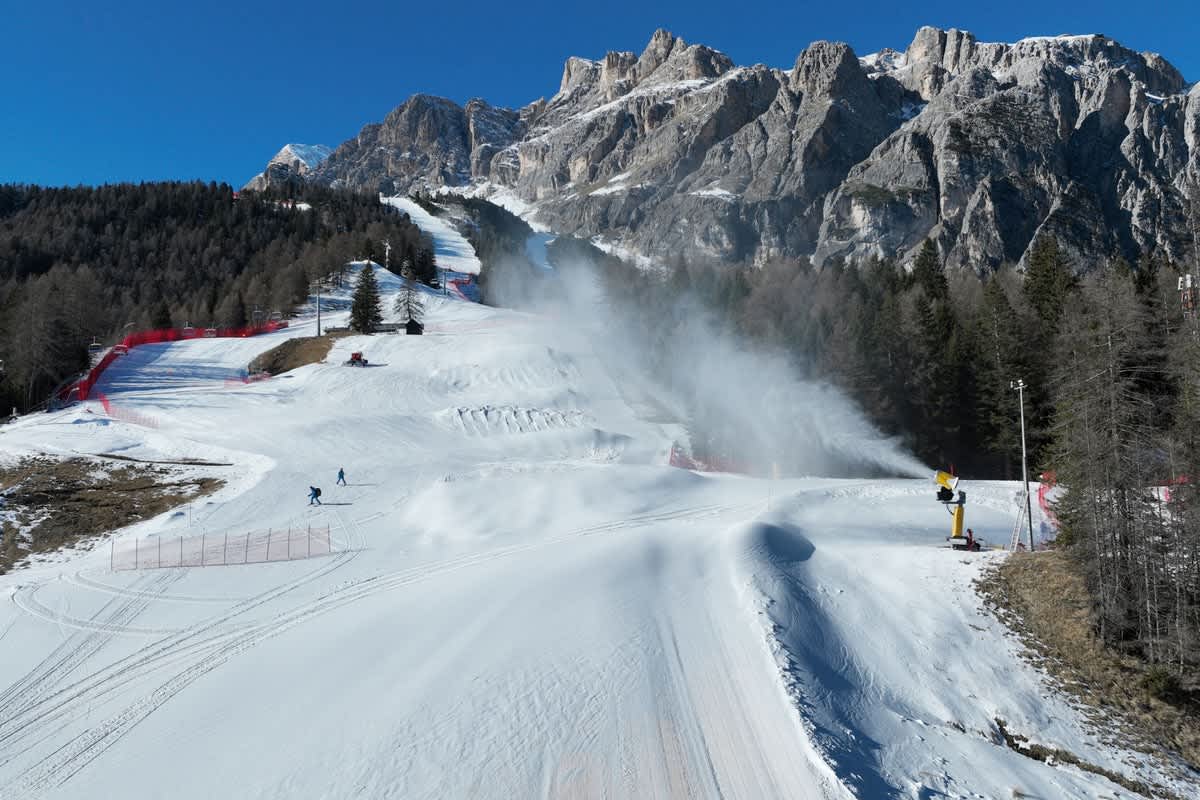
Snowmaking crews at the Milano Cortina 2026 Winter Olympics are racing against time to prepare competition surfaces as climate change continues to shrink the windows of freezing temperatures needed to produce artificial snow.
With the opening ceremony scheduled for February 6 in Milan and Cortina d’Ampezzo, organizers have relied heavily on snowmaking infrastructure to supplement increasingly unpredictable natural snowfall in Italy’s Alpine venues. Recent snowfall over the past weekend has provided relief, but the long-term trend is clear: winters are warming, and the margin for error is narrowing.
At Livigno, the venue for freestyle skiing and snowboarding events, more than 600,000 cubic meters of snow have been generated since mid-December. TechnoAlpin, the Bolzano-based snowmaking company that secured €30 million in contracts for the Games, has deployed advanced automation systems across multiple Olympic venues.independent
Nemanja Dogo, TechnoAlpin’s executive technical manager, said production was accelerated during brief cold spells after Christmas, when temperatures dropped to minus 22 degrees Celsius. “The windows to get ready for the first of December are getting shorter and shorter,” Dogo warned.reuters
The organizing committee has said it plans to produce 2.4 million cubic meters of artificial snow, requiring 948,000 cubic meters of water. The snowmaking operation will still use far less water than the 2022 Beijing Winter Olympics, which required approximately 2.79 million cubic meters for all snow sports venues.phys
Climate scientists say the challenge extends beyond technology. According to analysis by Climate Central, February temperatures in Cortina have warmed 6.4°F (3.6°C) since the town last hosted the Winter Olympics in 1956. The town now experiences 41 fewer freezing days annually than it did seven decades ago, a decline of nearly 20 percent.independent
Caitlin Hicks Pries, an associate professor of biological sciences at Dartmouth, emphasized the dual challenge: “It’s not just the fact that you’re losing natural snow, you’re also losing the days that you need to make snow.”independent
Snowmaking technology has advanced considerably. What once took approximately 150 hours to prepare a priority slope had fallen to about 100 hours by 2018, with many resorts now completing priority slopes in roughly 50 hours. TechnoAlpin invests about €8 million annually in research and development, achieving a 25 percent improvement in snow output using the same power consumption as a decade ago.reuters
Despite technological progress, climate scientists warn that physical constraints cannot be overcome indefinitely. A study published in the journal Nature indicates that more than half of Europe’s 2,234 ski resorts face significant risk of insufficient snow if global temperatures rise 2°C above pre-industrial levels.dw
“With four degrees Celsius of warming, 98% of European ski resorts are going to be threatened with low snow supply,” Hicks Pries cautioned. “Right now, snowmaking can cover for the change that we’re seeing if they have the resources. But that can’t go on.”independent
Italian meteorologist Mattia Gussoni told AFP that more heavy snowfall is expected across the Alps in the coming days, providing optimism for the start of February. For now, organizers and athletes can breathe easier, but the Winter Olympics’ long-term future in traditional Alpine locations remains an open question.phys