Newsletter Subscribe
Enter your email address below and subscribe to our newsletter
Enter your email address below and subscribe to our newsletter

All voices matter
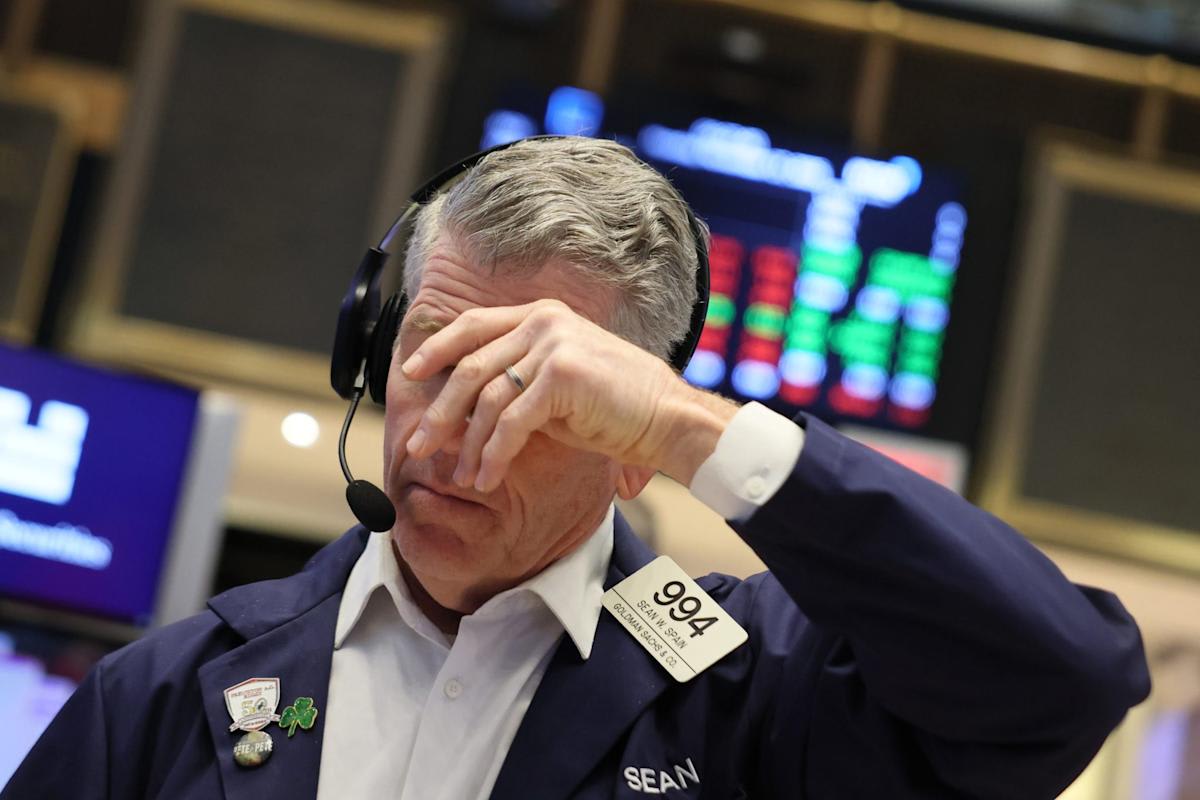
Goldman Sachs’s research division issued a report on June 22 concluding that while the AI investment boom has not yet peaked, market valuations for AI-related companies have moved well ahead of what macroeconomic benchmarks can justify. The bank warned that the primary risk facing AI trades is no longer a traditional “valuation bubble” but an emerging “earnings bubble” — a scenario in which profits generated by the investment cycle itself could prove unsustainable once capital spending intensity fades.panewslab
Since the launch of ChatGPT in late November 2022, AI-related companies have added approximately $27 trillion in market capitalization, up from $19 trillion as of November 2025, according to the Goldman research note. By the bank’s benchmark calculation, the present value of new capital income the U.S. economy stands to gain from AI-driven productivity is roughly $9 trillion — leaving a gap of $18 trillion that can only be rationalized by assuming AI winners will capture outsized shares of global revenue and productivity dividends over extended time horizons.htx
Forward price-to-earnings ratios have not spiraled in the manner of the late 1990s, Goldman noted, because earnings expectations have been revised sharply upward alongside share prices. But the bank cautioned that this dynamic mirrors patterns seen in cyclical industries near the top of an investment cycle, where the earnings denominator is temporarily inflated.panewslab
Goldman’s analysts argued that as long as capex continues to be revised higher, earnings for chip makers, cloud providers, and data center builders will keep growing — potentially overwhelming valuation concerns in the near term. The danger emerges when the investment cycle eventually peaks. “If the market simply extrapolates the next two to three years of strong earnings far into the future, risk will rise,” the note stated, because capital expenditure “cannot grow at the current intensity forever.”htx
The report also flagged fragility in the non-AI economy, noting that real disposable income growth has averaged only about 1% annualized over the past two years — far below the 5% to 6% pace of the late 1990s. This means the AI boom may be masking underlying softness rather than adding to broad-based strength, and if the AI narrative stumbles, “the non-AI part may not provide sufficient support.”panewslab
Goldman’s trading desk observed that equity volatility is beginning to shift upward. Single-stock implied volatility has increased, options skew has moved lower, and gains have grown more concentrated. The semiconductor index’s recent performance, the bank noted, has approached the late-stage gains of the Nasdaq during the 1999–2000 period. In a separate note earlier in June, Goldman projected that hyperscaler capital expenditure could reach $1.1 trillion in 2027, well above current Wall Street consensus of roughly $920 billion.businessinsider
The bank’s advice: remain positioned in the AI trade while adding put protection, or replace some spot exposure with call options to manage drawdowns — a posture that acknowledges both the momentum of the cycle and its growing dependence on optimistic assumptions.panewslab