






Newsletter Subscribe
Enter your email address below and subscribe to our newsletter

Enter your email address below and subscribe to our newsletter
All voices matter
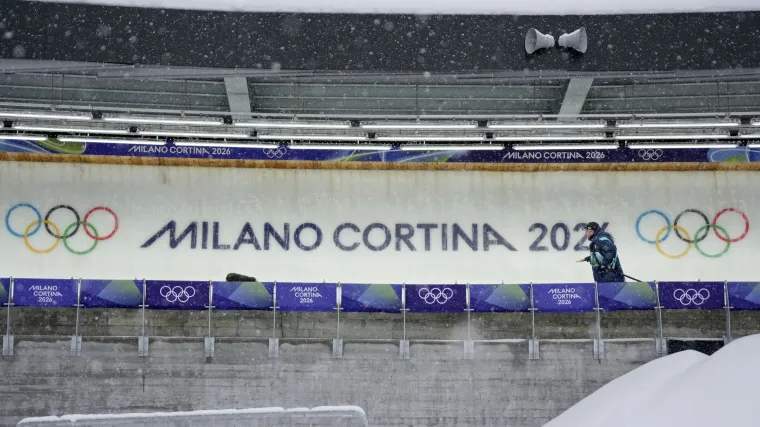
The 2026 Winter Olympics open today at San Siro Stadium in Milan, marking the beginning of a 17-day competition where victories and defeats will be measured in fractions of seconds and determined by the invisible forces of physics and chemistry.britannica
From the specially engineered ice surfaces to the first-ever ban on fluorinated ski waxes, the Milano Cortina Games showcase how scientific innovation continues to push the boundaries of human athletic performance.
Different Olympic sports demand radically different ice surfaces, requiring precise manipulation of water chemistry. Greg Taylor, chief operating officer of Jet Ice, the Canadian company creating ice surfaces for this year’s Games, says total dissolved solids (TDS) in water play a crucial role. Curling requires nearly pure water with TDS of 0–10 parts per million to produce extremely hard ice, while figure skating needs softer ice with TDS of 120–150 ppm “so when they’re doing jumps there’s a bit of give in the ice,” Taylor told Chemical & Engineering News.acs
Building a competition-quality ice sheet takes about 72 hours of continuous work. A 3-meter-wide boom with a dozen nozzles sprays thin layers of water mist that freezes, creating a surface roughly 1.5 inches thick.acs
Meanwhile, the ban on fluorinated ski waxes represents a historic shift for the Games. The International Ski and Snowboard Federation prohibited PFAS-containing waxes starting in the 2023–24 season due to environmental and health concerns. “Applying ski wax exposes ski technicians to fluorocarbons; the compounds wear off in the snow and enter local water systems,” explained Jeffrey Bates, a materials scientist at the University of Utah.youtube
Dutch, Italian, and Canadian speed skating teams will debut a new hybrid aerodynamic suit offering an estimated 8 percent reduction in air resistance compared to most competitors’ attire. The suit features a dual-layer construction on arms and legs that creates beneficial turbulence at speeds between 20 and 90 kilometers per hour, a concept borrowed from cycling but new to speed skating at this level.speedskatingnews
The rebuilt Eugenio Monti sliding center in Cortina d’Ampezzo also represents an engineering achievement. The 1,730-meter track features 16 curves, 83 kilometers of refrigerant pipes, and a glycol-based refrigeration system. Athletes can reach speeds exceeding 130 kilometers per hour with accelerations up to 5 g.linkedin
Michigan State University physicist Stuart Tessmer notes that friction is the unifying theme across winter sports. “As they push into the ice with their feet, the icy track pushes back at them, propelling them forward. That reflects Isaac Newton’s third law of physics,” he explained.msu
Ski mountaineering, making its Olympic debut, presents a unique physics problem. Research shows velocity uphill is achieved primarily through more frequent strides rather than longer ones due to high resistive forces, with the combined weight of athlete and equipment inversely correlated with performance.frontiersin
The Games will also feature figure skaters attempting quadruple jumps that require rotation speeds of 1,000 to 1,100 degrees per second—while landing with forces five to eight times their body weight.sciencefriday