




Newsletter Subscribe
Enter your email address below and subscribe to our newsletter

Enter your email address below and subscribe to our newsletter
All voices matter
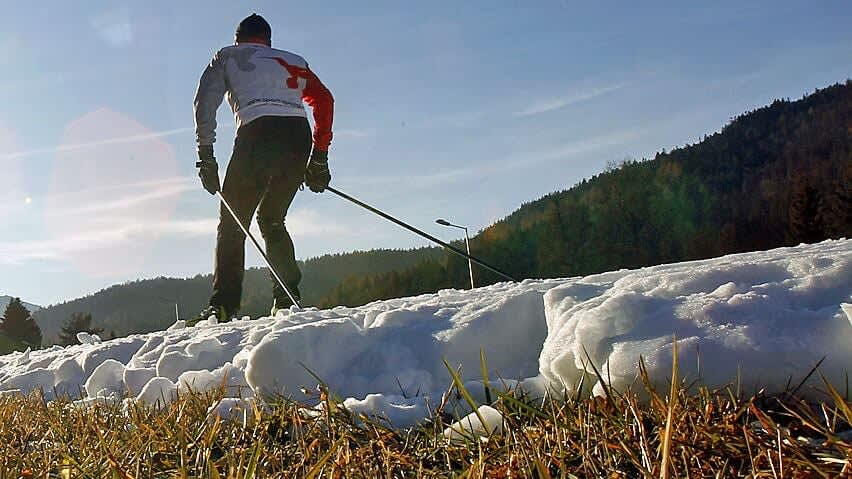
As the Milan-Cortina Winter Olympics approach next month, growing evidence shows that climate change is reshaping the geography of where the Winter Games can be held. The International Olympic Committee is now considering rotating the Olympics among a permanent pool of suitable locations and moving events earlier in the season as warming temperatures diminish reliable winter conditions worldwide.
Research commissioned by the IOC paints a stark picture. Out of 93 mountain locations currently equipped with winter sports infrastructure to host elite competition, only 52 will have adequate snow depth and cold temperatures to reliably host a Winter Olympics by the 2050s, according to a study by University of Waterloo professor Daniel Scott and University of Innsbruck associate professor Robert Steiger. That number could plummet to as few as 30 by the 2080s, depending on global efforts to curb carbon emissions.abcnews
Several former host cities will no longer be “climate reliable” enough by the 2050s, including Chamonix, France; Garmisch-Partenkirchen, Germany; and Sochi, Russia. Past venues in Vancouver, Canada; Palisades Tahoe, California; Sarajevo, Bosnia-Herzegovina; and Oslo, Norway, are classified as “climatically risky.”sfgate
“Climate change is going to change the geography of where we can hold the Winter Olympics and the Paralympics. There’s no question,” Scott said. “The only question is, how much?”sfgate
The situation has fueled calls for a rotation model. Johan Eliasch, president of the International Ski and Snowboard Federation, is advocating for six to eight permanent venues to host the Games on a recurring basis. “Climate change could become an existential threat,” Eliasch warned. “The only logical way to bring costs down to reasonable levels is to have a rotation scheme.”chinadailyhk
Karl Stoss, chair of the IOC’s Future Host Commission, confirmed the committee is considering rotating games among a permanent pool of locations and holding them earlier in the season because March has become too warm for the Paralympic Games. The IOC has already selected the French Alps for 2030, Salt Lake City for 2034, and is in exclusive discussions with Switzerland about 2038.abcnews
Milan-Cortina organizers plan to produce nearly 2.4 million cubic meters of artificial snow for the upcoming Games, requiring an estimated 250 million gallons of water—equivalent to nearly 380 Olympic swimming pools. New high-elevation reservoirs have been constructed to store this water, including the Monte Sponda basin in Livigno with a capacity of 203,000 cubic meters.sfgate
Belgian biathlete Maya Cloetens, 24, who trains in the mountains above Grenoble—host of the 1968 Winter Olympics—has witnessed the changes firsthand. “I grew up there, and I really see the difference of snow,” she said. “In 15 years, it has completely changed.”abcnews