







Newsletter Subscribe
Enter your email address below and subscribe to our newsletter

Enter your email address below and subscribe to our newsletter
All voices matter
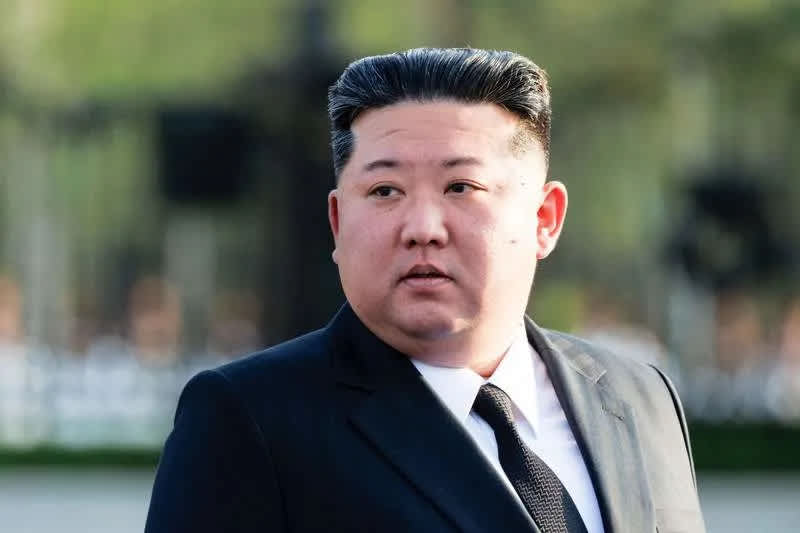
North Korea has revised its constitution to remove all references to reunification with South Korea, formally codifying leader Kim Jong Un’s doctrine of treating the two Koreas as hostile, separate states, according to a draft of the amended text reviewed by Reuters.internazionale
The revision, believed to have been adopted during a March session of the Supreme People’s Assembly, marks the first time North Korea has included a territorial clause in its constitution, Seoul National University professor Lee Jung-chul said at a South Korean Unification Ministry briefing on Wednesday.channelnewsasia
The new Article 2 states that North Korea’s territory includes land “bordering the People’s Republic of China and the Russian Federation to the north and the Republic of Korea to the south,” along with territorial waters and airspace, and declares that Pyongyang “will never tolerate any infringement” on its territory. Notably, the clause does not specify the exact location of the border with South Korea or mention disputed maritime boundaries such as the Northern Limit Line in the Yellow Sea.indiatimes
The omission of a specific inter-Korean border line suggests Pyongyang may be trying to avoid immediately creating a new source of friction, even as it embeds the “two hostile states” doctrine in its highest law, according to analysts cited by Reuters.internazionale
The amended constitution also elevates Kim Jong Un’s position. As chairman of the State Affairs Commission, he is now formally designated as North Korea’s head of state, replacing previous language that described the post as that of the country’s supreme leader who represents the state. He is also placed above the Supreme People’s Assembly in the constitutional hierarchy for the first time.yna
Command over North Korea’s nuclear forces now explicitly rests with the State Affairs Commission chairman, formally placing authority over the country’s nuclear arsenal in Kim’s hands. A separate defence clause describes North Korea as a “responsible nuclear weapons state” committed to advancing its nuclear capabilities to safeguard its survival and deter war.dw
The revision also strips the Supreme People’s Assembly of its power to recall the president of the State Affairs Commission, further consolidating Kim’s grip on power, according to Anadolu Agency.aa
The changes represent a sharp break from decades of stated policy dating to 1948, when Pyongyang formally committed to pursuing unification. Kim called in January 2024 for the constitution to define South Korea as the North’s “primary foe and invariable principal enemy” and ordered the removal of all concepts of “reunification,” “reconciliation,” and “fellow countrymen” from national life. At the Workers’ Party congress in January 2026, he declared that North Korea “has absolutely no business dealings with the Republic of Korea” and would “forever exclude South Korea from the category of fellow countrymen”.wikipedia