







Newsletter Subscribe
Enter your email address below and subscribe to our newsletter

Enter your email address below and subscribe to our newsletter
All voices matter
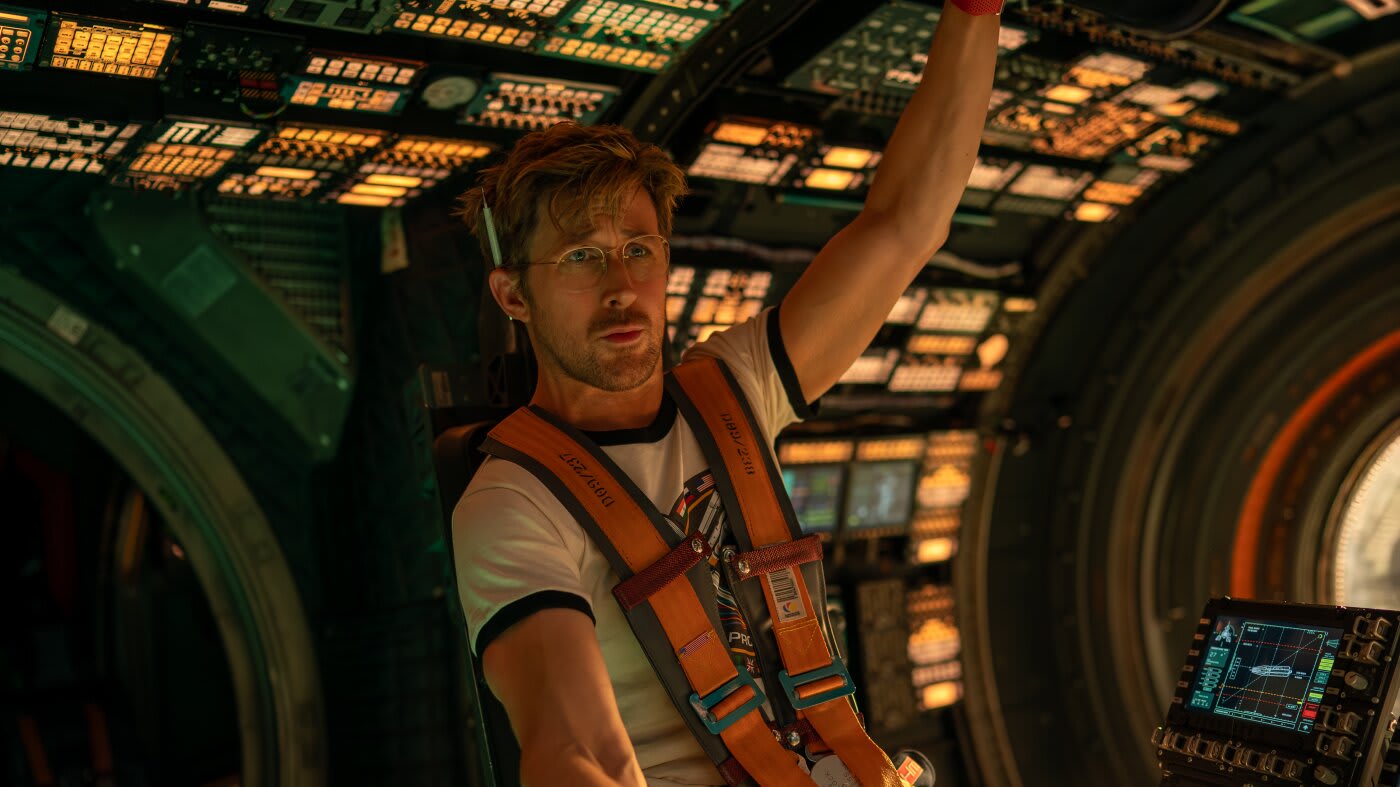
Two weeks after its theatrical debut, scientists continue to weigh in on “Project Hail Mary,” the Ryan Gosling-led adaptation of Andy Weir’s best-selling novel, and the consensus is that the film gets most of its science right — with a few notable exceptions.
The film, which opened on March 20 and has earned a 95% score on Rotten Tomatoes, follows a molecular biologist sent on a one-way mission to the Tau Ceti star system to discover why Earth’s sun is being drained by a fictional microorganism called astrophage. In a New York Times assessment published Friday, experts described the blockbuster as grounded in hard science fiction that “gets a lot right but misses a few things.”bd-pratidin
Astrophysicist Jacqueline McCleary, an assistant professor of physics at Northeastern University, said the film’s treatment of astrophysics, orbital mechanics, and spacecraft engineering is “treated very fairly.” The rotating spacecraft that generates artificial gravity through centrifugal force is based on “totally conventional, well-accepted physics,” she said. The film’s depiction of time dilation — the phenomenon in which an astronaut traveling at high speed experiences time differently than people on Earth — also drew praise for its accuracy.northeastern
Wendy Freedman, an astronomer at the University of Chicago and a National Medal of Science recipient, told Science magazine that the film impressed her with “how well it represented how science is done.” She added: “He collaborates, and science is a very collaborative enterprise, so I really like the way science was portrayed in the movie.”science
The astrophage itself is the film’s biggest scientific leap. McCleary noted a “orders of magnitude mismatch” between the energy a microbe could realistically store and the sun’s actual energy output of 10^26 joules per second. Molecular biologist Tina Hesman Saey, writing for ScienceNews, acknowledged that while single-celled organisms can survive extreme conditions, she doesn’t “know of any organisms that could live in both the extreme heat and cold, not to mention survive in a vacuum.”bgr
Earth scientist Carolyn Gramling also flagged the speed at which the astrophage dims the sun — 10% in 30 years, compared with a natural luminosity change of 10% per billion years. “But sci-fi likes to speed things up for dramatic effect,” she conceded. NASA also corrected a line in the film about awaiting instructions from the Deep Space Network, noting that the real DSN communicates continuously with its spacecraft.bgr
Despite the liberties, experts found deeper authenticity in the film’s portrayal of scientific thinking. McCleary said the partnership between Grace and his alien counterpart Rocky captures something essential about researchers: “You’re willing to bridge wide gaps in order to work together to solve what’s fundamentally an intellectual problem.” Freedman echoed the sentiment, praising how Gosling’s character approaches challenges “very thoughtfully, methodically. Here’s an idea, a hypothesis, and let’s test it.”northeastern