Newsletter Subscribe
Enter your email address below and subscribe to our newsletter

Enter your email address below and subscribe to our newsletter
All voices matter
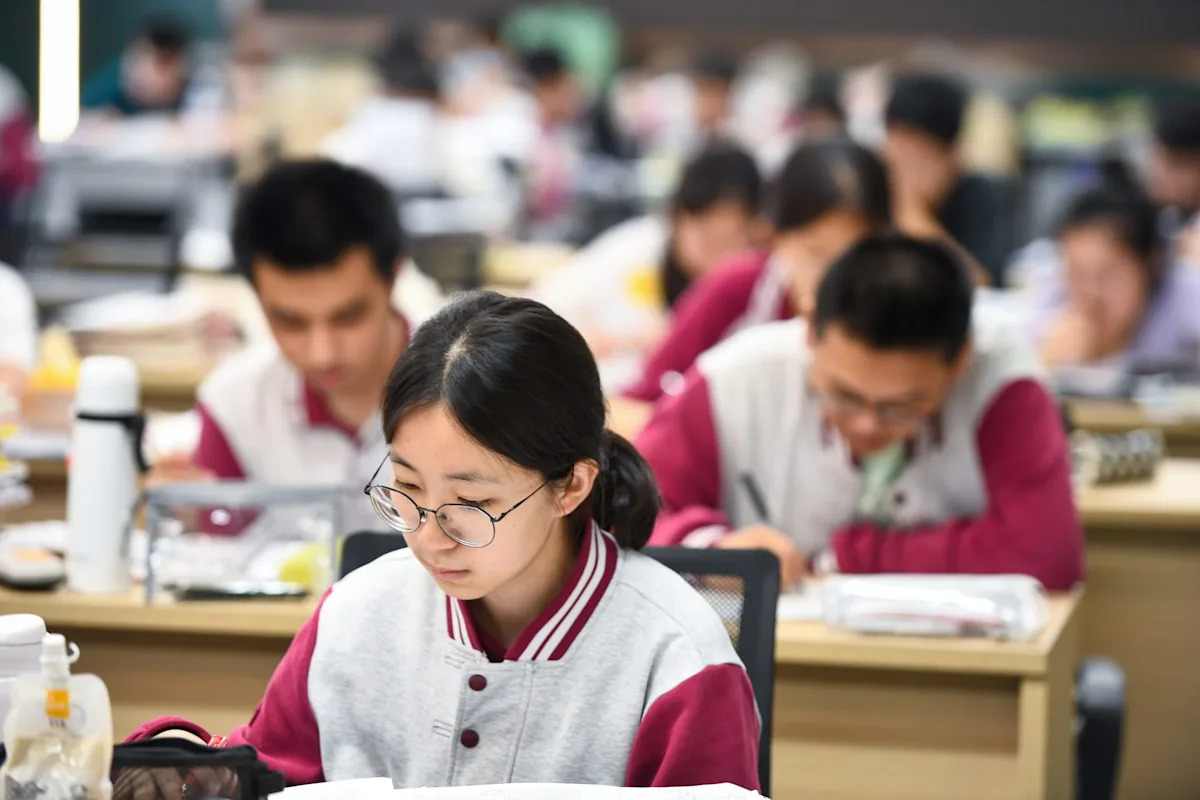
A large-scale study tracking 26,811 Chinese secondary students over 30 months has found that generative AI tools used to speed through homework are associated with sharply lower exam performance — even as the same technology shows promise when deployed as in-class tutoring support.
The research, published by the Centre for Economic Policy Research as a discussion paper titled “The Generative AI Learning Penalty,” analyzed panel data from students in grades 7 through 12. It found that AI adoption cut homework completion time by roughly 30 percent and boosted homework scores by 18 percent, but monthly exam scores — where AI was not permitted — fell about 20 percent within six months. Over two years, penalties on high-stakes entrance exams reached 18 to 24 percent.digg
The study’s core finding centers on effort displacement. About 80 percent of the learning losses were driven by students who finished assignments unusually fast while posting high homework scores — a pattern consistent with outsourcing the cognitive work to AI rather than engaging with it. Students who maintained completion times similar to non-users saw only minor declines. The steepest drops appeared in social sciences, followed by STEM and languages, and were concentrated among younger students, high-achievers, and boys.linkedin
The results add to a growing body of evidence suggesting that the context of AI use matters more than AI use itself. Wharton professor Ethan Mollick, who highlighted the study on Bluesky and X, summarized the emerging pattern: “AI tutoring in support of classes is good, using AI to ‘help’ with homework is bad”. A separate study published in Nature found that students using an AI tutor during class learned more in less time and reported higher engagement compared with traditional active learning.x
The findings arrive as AI adoption among young people in China accelerates rapidly. A nationwide survey reported by China Daily in April found that more than 60 percent of primary and secondary school students have used AI, with 71 percent of those respondents saying they use it to complete homework. In the United States, an NPR/Ipsos poll found that 55 percent of K-12 teachers believe AI mainly serves as a shortcut for students to avoid doing more rigorous work.npr
The question now facing educators and policymakers is whether schools can channel AI toward supplemental tutoring rather than homework replacement. Some institutions are already adapting: a growing number of U.S. college professors have shifted to oral exams and in-class assignments to limit AI-enabled shortcuts, according to the Associated Press. Whether similar interventions can scale across K-12 systems — particularly in China, where AI-powered educational technology is a market reportedly valued at over $43 billion — remains an open question.nytimes