







Newsletter Subscribe
Enter your email address below and subscribe to our newsletter

Enter your email address below and subscribe to our newsletter
All voices matter
Physicists have for the first time directly detected a high degree of quantum entanglement in a centimeter-sized crystal — a macroscopic object visible to the naked eye — challenging long-held assumptions about the scale at which quantum mechanics operates.
The study, published June 15 in Nature Physics, describes how a team led by TU Wien in collaboration with Rice University used a framework from quantum information theory called quantum Fisher information to measure multipartite entanglement in a crystal made of cerium, palladium, and silicon. The crystal is classified as a “strange metal,” a category of materials whose electrical behavior defies conventional understanding.nature
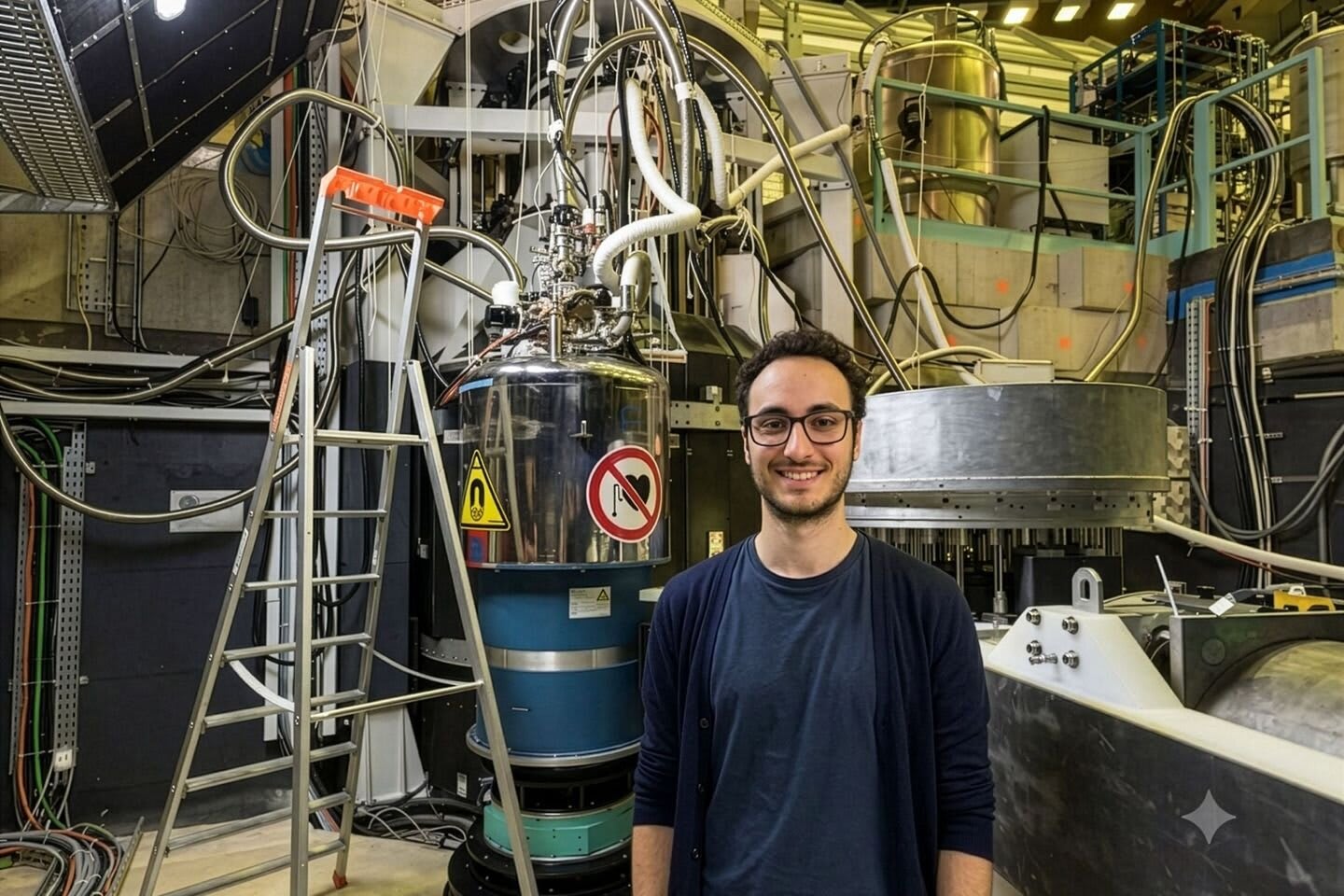
At the Institut Laue-Langevin in Grenoble, France, PhD student Federico Mazza bombarded the crystal with neutrons and analyzed the material’s response. “In a normal material, one would expect a neutron to transfer its energy to an individual particle,” Mazza said. “But by analyzing the data using the quantum Fisher information, we found a response that cannot be explained in terms of independent particles. Instead, it indicates that groups of at least nine quantum-entangled entities act collectively.”tuwien
The entanglement peaked at the quantum critical point — the threshold at which the material transitions between two quantum phases — providing direct evidence that quantum correlations intensify at this boundary.research
The theoretical foundation draws on work by Innsbruck quantum physicist Peter Zoller and his team, who showed that quantum Fisher information can reveal entanglement in large many-body systems. “For a collection of independent particles, the response is limited because each particle contributes on its own,” said Prof. Silke Bühler-Paschen of TU Wien’s Institute of Solid State Physics. “However, if the particles are entangled, the entire system can respond more strongly than the sum of its individual parts.”tuwien
Fakher Assaad of the University of Würzburg, lead theorist on the work, said the findings point beyond a single material. “Strong entanglement appears to be directly linked to the unusual behaviour of strange metals,” he said.tuwien
The research builds on a 2025 collaboration between TU Wien and Rice University that found electric current flows through strange metals in an unusually low-noise manner. The newly measured entanglement offers a possible explanation: particles coordinate collectively to suppress current fluctuations.tuwien
Bühler-Paschen said the team’s next goal is to explore whether strange metals could find applications in quantum technologies, particularly high-precision measurements for quantum metrology.tuwien