






Newsletter Subscribe
Enter your email address below and subscribe to our newsletter

Enter your email address below and subscribe to our newsletter
All voices matter
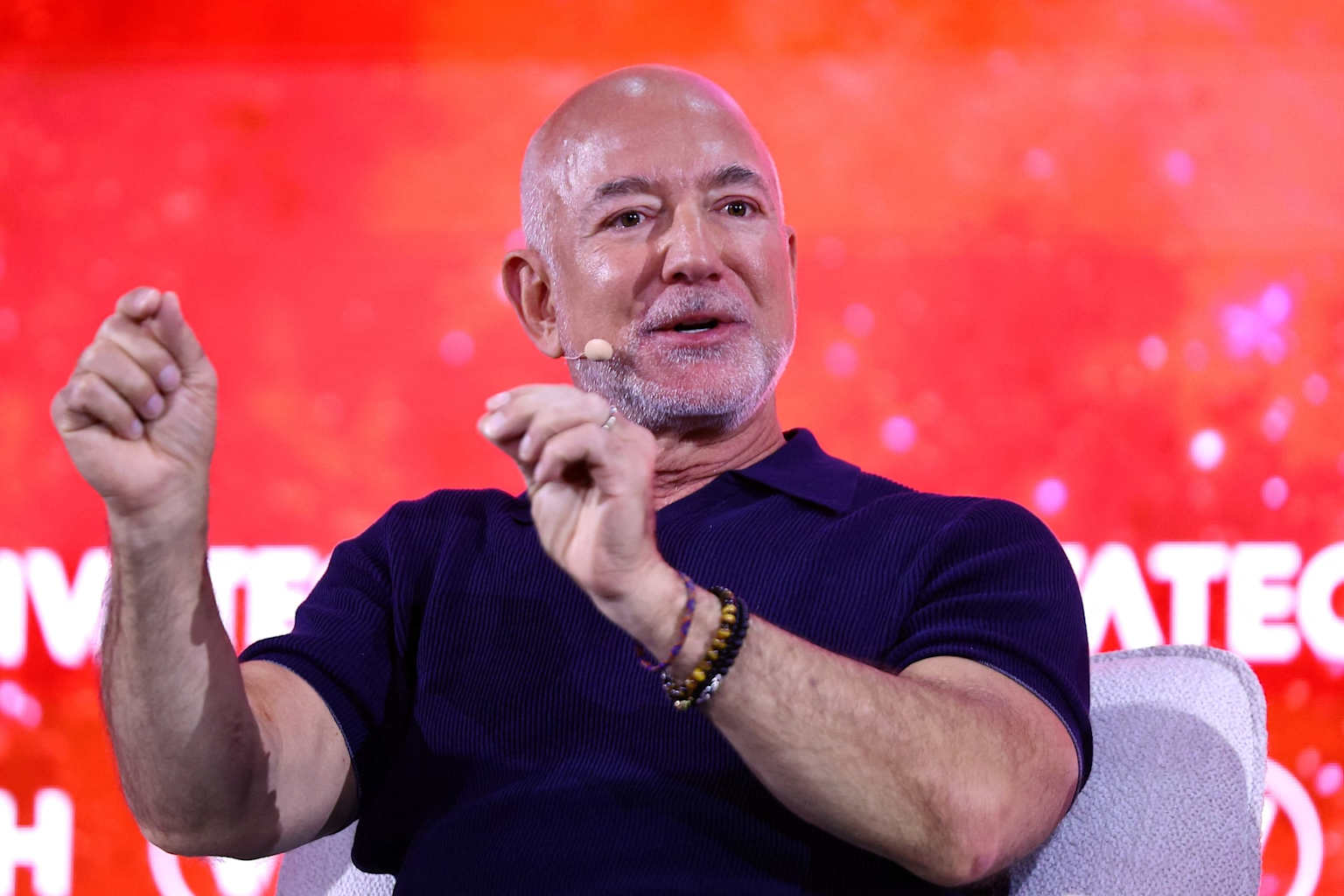
Jeff Bezos took the stage at VivaTech in Paris on Wednesday to argue that colonizing the Moon is not a detour from saving Earth but the only way to accomplish it, framing Blue Origin’s lunar ambitions as both environmentally necessary and now vindicated by the broader space industry’s shift toward the same destination.
Speaking alongside Blue Origin CEO Dave Limp in a session moderated by former NASA astronaut Mike Massimino, the Amazon founder laid out an economic and environmental case for permanent lunar settlement. Heavy industry, he argued, must eventually leave Earth if the planet is to recover from centuries of damage.euronews
“Our garden planet can be returned to its pre-industrial revolution state,” Bezos said. “This is the only way in which the world is worse today than it was 500 years ago. We can actually have both.”euronews
He cited the Moon’s physical advantages: reachable in three and a half days rather than waiting for a biennial Mars window, and requiring 28 times less energy per kilogram to lift materials from its surface than from Earth. Lunar water ice could be converted into propellant, and billions of years of meteorite impacts have deposited virtually every mineral needed to build infrastructure in space.euronews
Bezos was pointed about sequencing. “When you skip steps, it actually doesn’t make you faster,” he said, an implicit rebuke of the Mars-first rhetoric that long defined Elon Musk’s SpaceX. That contrast has narrowed in recent months. In February 2026, Musk announced on his X platform that SpaceX would pursue a “self-growing city” on the Moon achievable within a decade, a pivot from years of Mars colonization talk. SpaceX also shuttered none of its Mars plans but added lunar ambitions atop them, while Blue Origin closed its suborbital tourism business to funnel resources into its Blue Moon lander program.reuters
NASA’s revised Artemis architecture has further elevated Blue Origin’s role. The agency selected the company for its Moon Base 1 mission, targeted for launch no earlier than fall 2026, to deliver payloads to the lunar south pole.nasa
Bezos drew a line between Apollo-era exploration and what Blue Origin is attempting now. The original Moon landings consumed up to 4.5 percent of the U.S. federal budget and proved unsustainable, he said. “The idea that we’ve been to the moon before — it’s the permanence of it, of staying there. Now is the right time. To really get into it and go to stay.”euronews
He sketched a longer vision of orbital habitats, space-based solar energy, and chip manufacturing off-world — with Mars following only once the lunar foundation is complete. “We will build colonies on Mars and so on,” he said. “The moon is an important first step.”euronews