






Newsletter Subscribe
Enter your email address below and subscribe to our newsletter

Enter your email address below and subscribe to our newsletter
All voices matter
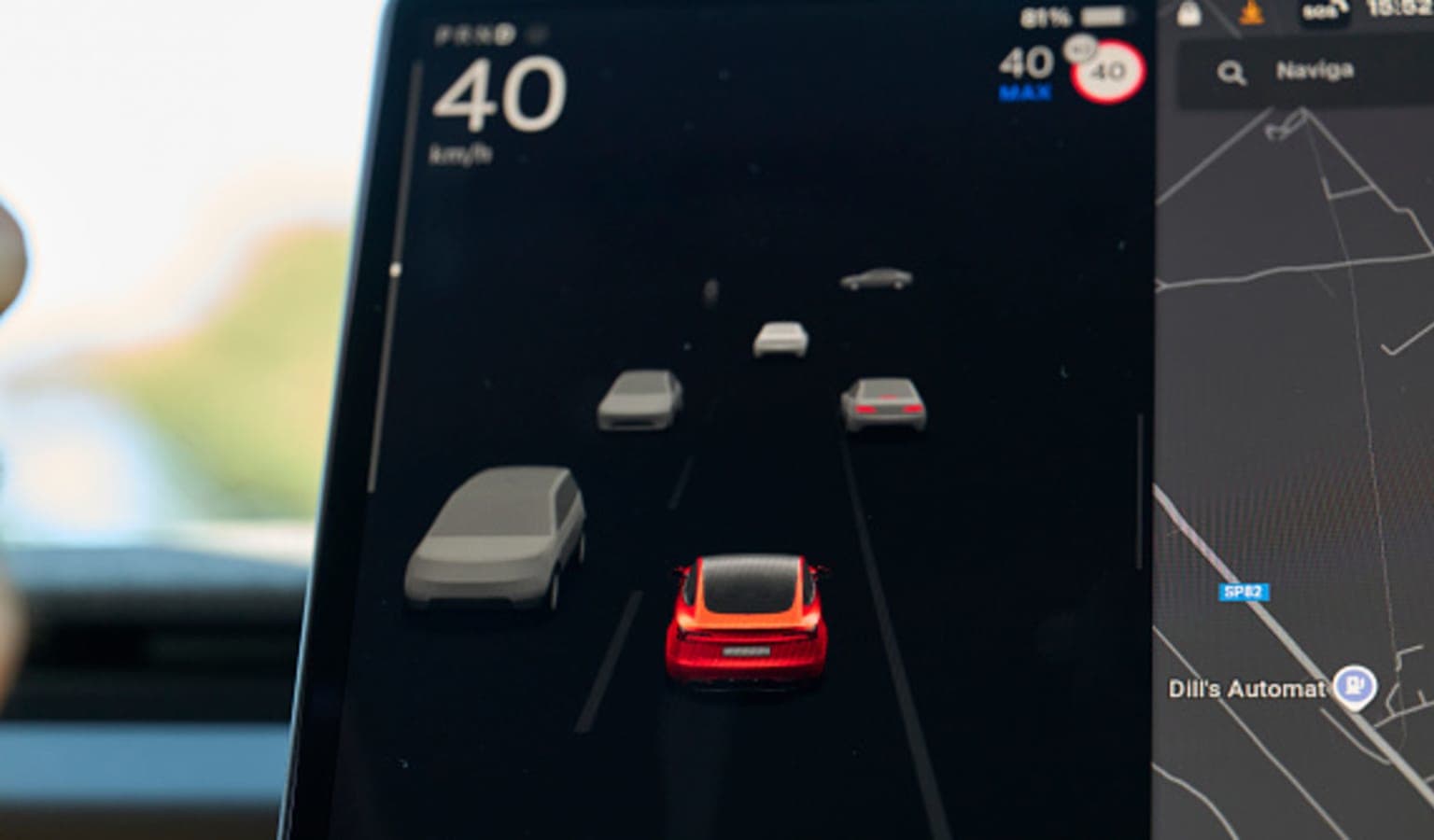
Tesla has submitted self-reported safety statistics to European regulators that independent traffic safety researchers describe as misleading, according to a Reuters investigation published on Sunday, raising new questions about the company’s campaign to win continent-wide approval for its Full Self-Driving system.
The Reuters report found that Tesla provided safety figures to authorities in Sweden and the Netherlands claiming that vehicles equipped with FSD can travel more than seven times farther between accidents compared to the average U.S. driver. But ten of eleven independent traffic safety researchers consulted by Reuters called the statistics “misleading marketing,” concluding that Tesla’s methodology inflates actual safety performance by roughly three times.reuters
The researchers said the figures rest on a flawed comparison — the implausible premise that every vehicle in the United States, including trucks and motorcycles with higher accident rates, would be replaced by an FSD-equipped Tesla. A Norwegian regulator told Tesla supporters that the company’s figures “are self-produced,” making it difficult to correlate them with official accident statistics.thehindubusinessline
A separate Reuters investigation last month also revealed that seven of nine former Tesla data labelers — the workers who train the company’s AI system — said they would not trust FSD to drive them, citing documented failures around emergency vehicles, motorcycles, and construction zones.electrek
Despite the scrutiny, Tesla has secured a string of national-level approvals. Belgium became the fifth EU member state to authorize FSD on June 10, following the Netherlands, Lithuania, Estonia, and Denmark. Each country recognized the Dutch RDW certification under a provisional national framework that bypasses the slower EU-wide approval process.reuters
But a unified pan-European deployment remains out of reach. European regulators have raised concerns about the system’s tendency to exceed speed limits, its safety on icy roads, and whether drivers can circumvent features designed to prevent phone use while driving. Major markets including Germany and France could demand localized verification cycles, potentially delaying EU-wide clearance into 2027.sherwood
The European Commission’s Technical Committee on Motor Vehicles is not expected to vote on FSD until at least July, with a follow-up session scheduled for October. The European Transport Safety Council has urged member states to adopt a “precautionary approach,” warning of human-factor risks such as driver over-reliance on a system that still requires active supervision.youtube
Tesla had told regulators it expected EU-wide approval in the second or third quarter of 2026, but the Reuters findings could further complicate that timeline. As one Swedish regulator put it, the challenge lies in “looking beyond surface-level figures” to evaluate whether the technology is truly safe.sherwood