






Newsletter Subscribe
Enter your email address below and subscribe to our newsletter

Enter your email address below and subscribe to our newsletter
All voices matter
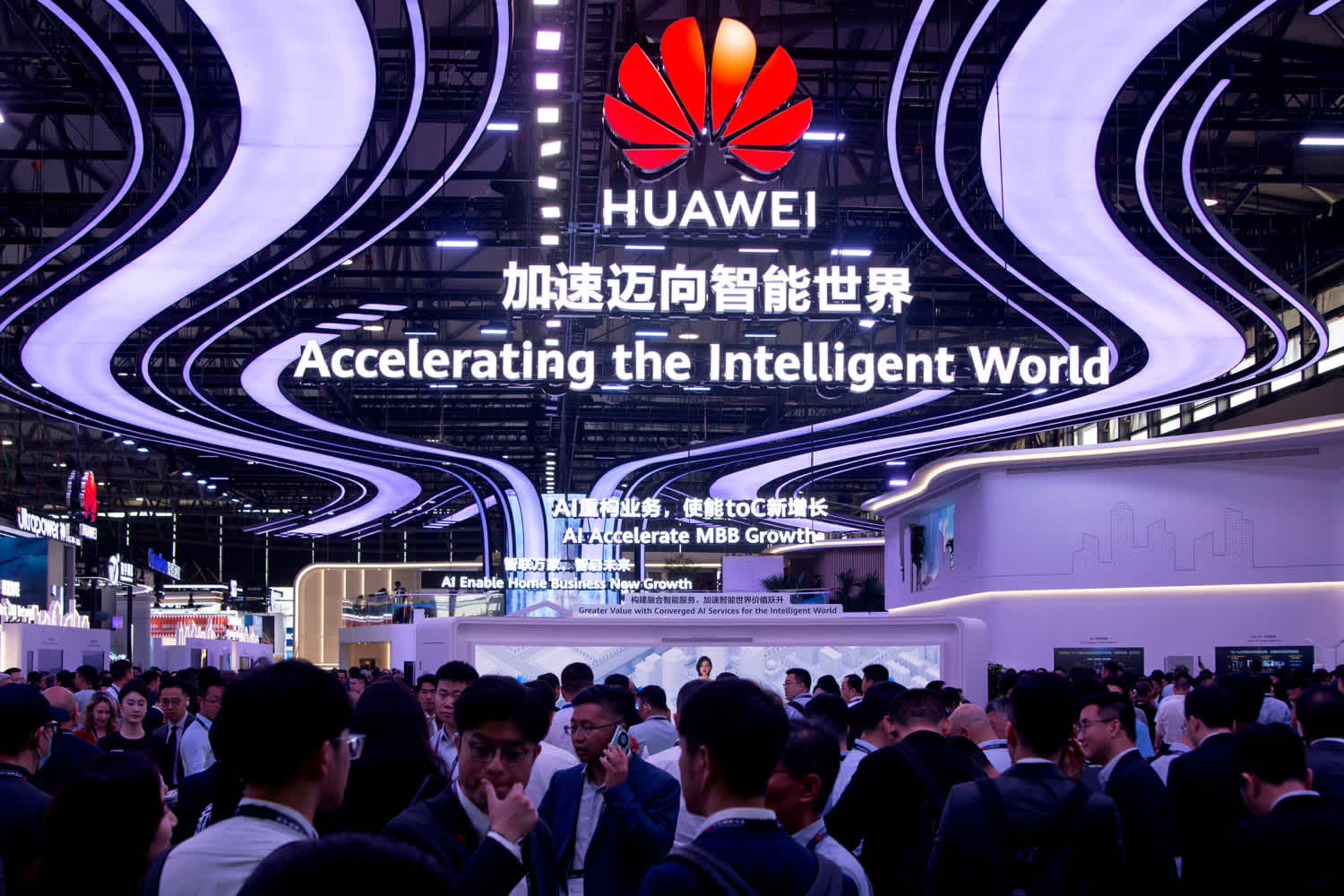
Huawei on Friday launched what it calls the Hongtu Plan, a sweeping semiconductor and device strategy that aims to span 200 types of chips, 1,200 device categories, and more than 20 industry segments, the company announced at its annual Developer Conference in Songshan Lake, Dongguan.x
The plan, unveiled on the opening day of HDC 2026, which runs from June 12 to 14, represents Huawei’s most comprehensive roadmap yet for building a self-sufficient hardware ecosystem — one designed to function entirely without access to Western chip-making tools cut off by U.S. export controls.huaweicentral
The Hongtu Plan arrives less than three weeks after Huawei introduced its Tau Scaling Law at the 2026 IEEE International Symposium on Circuits and Systems in Shanghai. That presentation laid out a new framework for advancing chip performance by optimizing signal propagation time rather than relying on ever-smaller transistors — the traditional approach known as Moore’s Law.reuters
Huawei’s production architecture under this framework, called LogicFolding, stacks layers of chip circuitry vertically to shorten the distances data travels inside a processor. The company claims the approach will deliver transistor density equivalent to a 1.4nm process node by 2031, without requiring the extreme ultraviolet lithography equipment that remains unavailable to Chinese firms.substack
The first commercial chip to use LogicFolding, a next-generation Kirin processor, is scheduled for launch in autumn 2026.huawei
Where the Tau Scaling Law addresses how Huawei plans to make chips competitive, the Hongtu Plan addresses how broadly those chips will be deployed. Covering 200 chip types across more than 1,200 device categories signals an ambition to supply silicon for everything from smartphones and vehicles to industrial equipment and data centers.huaweicentral
He Hui, director of semiconductor research at Omdia, told Reuters that Huawei’s approach “signifies a transition from traditional node-driven scaling to a focus on system-level efficiency scaling,” describing it as a viable path when advanced lithography options are limited.reuters
The conference is also expected to feature the debut of HarmonyOS 7, the latest version of Huawei’s operating system, which would run across the expanding device ecosystem the Hongtu Plan envisions.wedoany