






Newsletter Subscribe
Enter your email address below and subscribe to our newsletter

Enter your email address below and subscribe to our newsletter
All voices matter
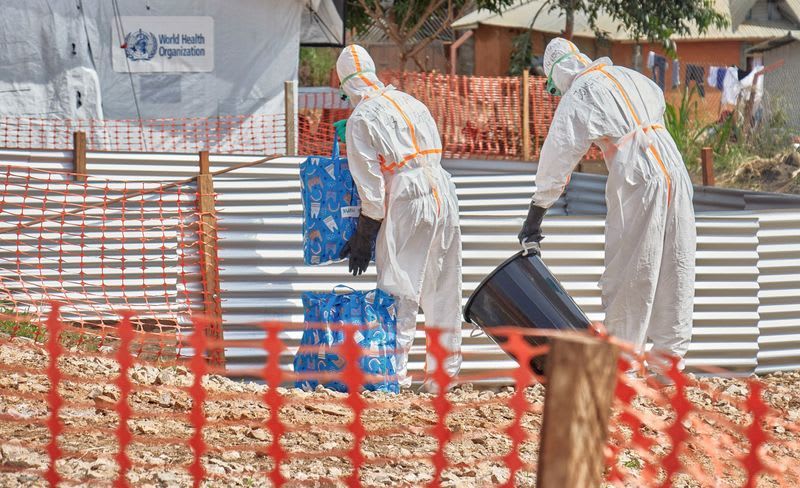
The United States announced a $50 million commitment to the Coalition for Epidemic Preparedness Innovations (CEPI) to accelerate development of medical countermeasures against the Bundibugyo strain of Ebola virus, as the deadly outbreak in the Democratic Republic of Congo continues to expand with no licensed vaccine available.cepi
The State Department announced the funding on Wednesday, directing it toward laboratory studies, clinical trials, and manufacturing for Bundibugyo virus countermeasure candidates. The pledge brings total U.S. direct Ebola response funding to approximately $270 million, after successive tranches of $80 million in late May, $38 million on June 5, and $20 million on June 10.state
The outbreak has grown rapidly since DRC’s Ministry of Health officially declared it on May 15. As of June 11, the DRC had reported 676 confirmed cases including 136 deaths, spread across 19 health zones in Ituri province and into North Kivu and South Kivu. Uganda has reported 19 confirmed cases and two deaths, though no new cases there since June 5.europa
The World Health Organization declared the outbreak a Public Health Emergency of International Concern on May 17, citing the cross-border risk posed by the Bundibugyo strain — for which no approved vaccines or treatments exist.gov
The new U.S. funding to CEPI builds on an earlier commitment announced June 1, when CEPI allocated approximately $62 million across three vaccine candidates. The largest share — up to $50 million — went to Moderna to support preclinical development and Phase 1 clinical testing of an mRNA-based Bundibugyo vaccine. Additional grants went to the University of Oxford and the Serum Institute of India ($8.6 million) and the International AIDS Vaccine Initiative ($3.2 million).finanznachrichten
CEPI chief executive Richard Hatchett told Reuters it could be possible to get Bundibugyo vaccines ready for clinical trials within months, though STAT News reported it would likely take several months before trials of strain-specific vaccines can begin.reuters
The U.S. response has unfolded alongside other international commitments. The global vaccine alliance Gavi has made $50 million available for the Bundibugyo outbreak, and the World Bank’s Pandemic Fund approved up to $220.6 million in emergency financing for affected and at-risk countries across Central and Eastern Africa.thepandemicfund
Secretary of State Marco Rubio also announced on June 2 that the U.S. would re-engage with Gavi after the Trump administration pulled funding in 2025, stating “we need to drive this to an outcome.”usnews