




Newsletter Subscribe
Enter your email address below and subscribe to our newsletter

Enter your email address below and subscribe to our newsletter
All voices matter
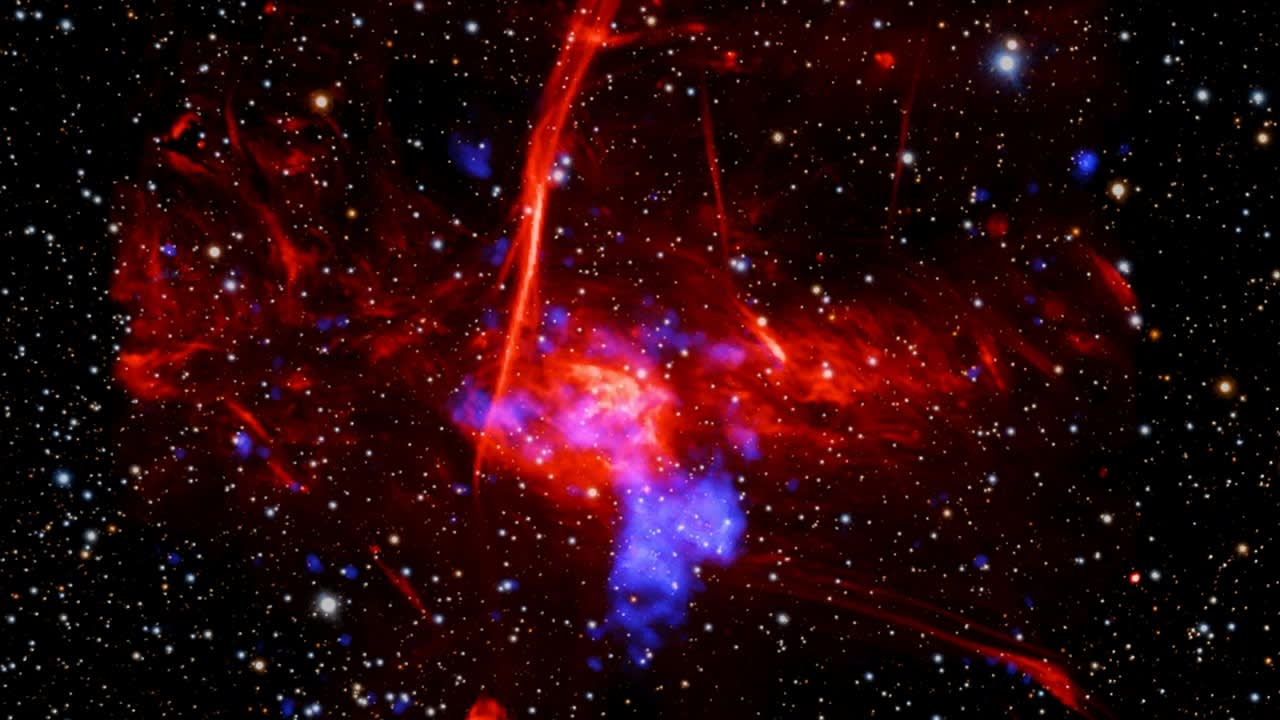
Astronomers using NASA’s Chandra X-ray Observatory may have identified a new supernova remnant in one of the most crowded and extreme environments in the Milky Way — the region surrounding the galaxy’s central supermassive black hole. The findings, published in The Astrophysical Journal, add to the growing catalog of explosive events known to have occurred in the galactic downtown.nasa
The evidence for the remnant, located about 26,000 light-years from Earth near the star-forming region Sagittarius C, comes from X-ray data collected by Chandra and ESA’s XMM-Newton telescope. The observations reveal what researchers describe as a “blob” of X-ray emission that may come from the remains of a massive star that self-destructed as a supernova, buried within a larger cloud of expanding gas.youtube
If confirmed, the object would be one of the closest supernova remnants ever discovered to Sagittarius A*, the supermassive black hole at the Milky Way’s center. The remnant appears to be expanding at roughly two million miles per hour and is estimated to be at least 1,700 years old.youtube
The discovery did not come entirely without precedent. Previous observations with NASA’s now-retired SOFIA telescope had revealed evidence for an expanding shell of gas surrounding the Sagittarius C region, giving astronomers a hint that a stellar explosion had occurred in the same location.youtube
The galactic center is an exotic region crammed with massive stars, long threads of magnetic fields, and dense clouds of gas orbiting rapidly around the core. Studying supernova remnants in this environment helps scientists understand how explosions interact with the unusually dense and energetic material near the galaxy’s heart.harvard
The finding arrives amid a burst of discoveries about the Milky Way’s central region. Earlier this month, a separate team announced the first direct detection of a wind streaming from Sagittarius A* itself, using data from the Atacama Large Millimeter/submillimeter Array and Chandra, resolving a mystery that had persisted for over 50 years.harvard
Together, the results underscore the galactic center as a laboratory for extreme astrophysics — where black hole winds, supernovae, and intense magnetic fields all compete to shape the surrounding environment.