Newsletter Subscribe
Enter your email address below and subscribe to our newsletter

Enter your email address below and subscribe to our newsletter
All voices matter
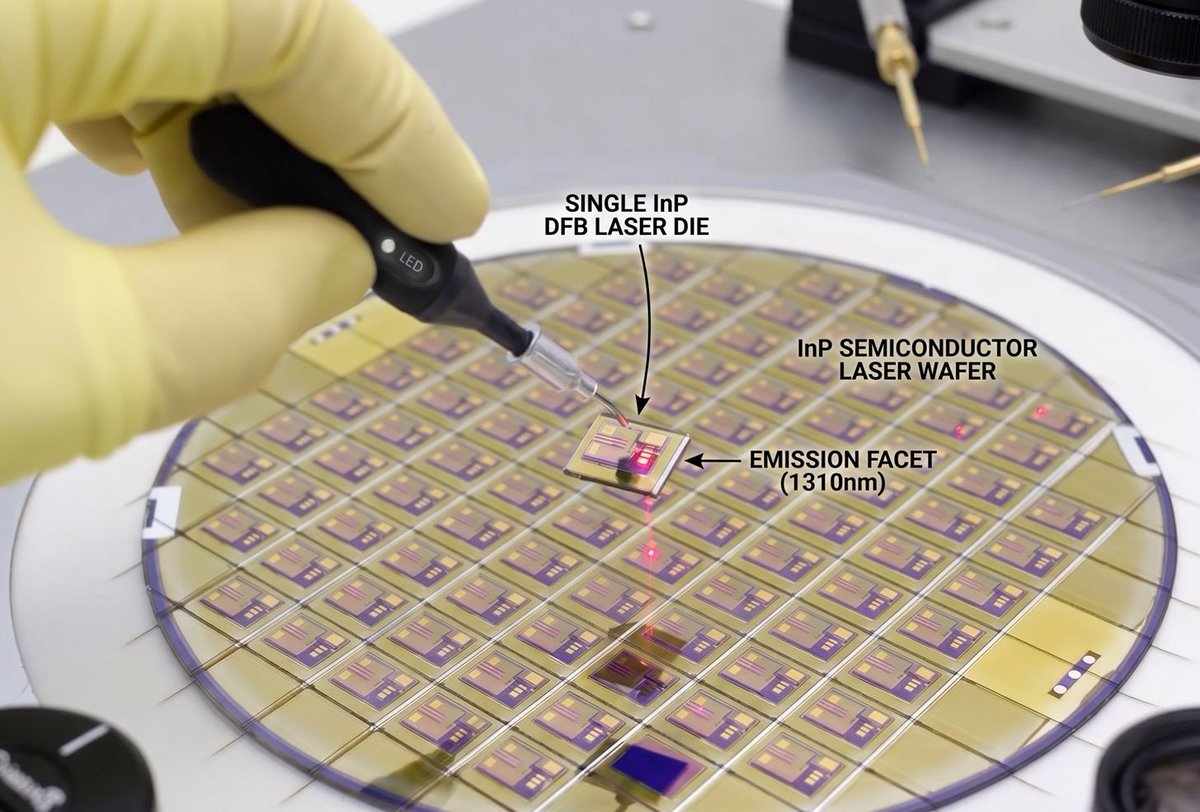
Coherent CEO Jim Anderson traveled to China in May as part of a U.S. business delegation accompanying President Donald Trump, in part to raise concerns over Beijing’s delays in issuing export licenses for indium phosphide — a compound material essential to manufacturing the high-speed optical chips that power AI data centres, Reuters reported on Wednesday.wtvbam
The issue was also discussed during trade talks in Seoul between top U.S. and Chinese negotiators ahead of Trump’s May 14-15 summit with Chinese President Xi Jinping, according to Reuters, citing two U.S. government officials and a person briefed on the discussions.reuters
China’s export restrictions on indium phosphide, which began in February 2025, have emerged as a potent trade weapon for Beijing. China produces roughly 70% of the world’s indium, and the controls have sent the average price for a 6-inch InP wafer surging 250% to around $5,000. InP has no substitute in the photonics technology that data centre developers are adopting to replace copper wiring with light-based optical fibres.yahoo
“Beijing is developing a more granular ‘materials chokepoint’ toolkit,” Paul Triolo, a partner at consulting firm Albright Stonebridge Group, told Reuters. “Rather than blocking finished photonics products outright, it can slow or condition the export of the upstream compounds, substrates, metals … that determine whether the optical-module ecosystem can scale quickly enough to meet hyperscaler demand.”reuters
Nvidia announced $2 billion investments each into Coherent and Lumentum in March, underscoring the strategic importance of photonics to AI infrastructure.reuters
The restrictions are rippling across the optical supply chain. Lumentum is sold out through 2028 despite quadrupling output, while AXT, the world’s second-largest InP substrate producer and a major Coherent supplier, said in May that “InP export permits represent the most significant challenge we currently face”. AXT’s Chinese subsidiary received its first export permits only last June and faces a deep backlog of orders.reuters
Taiwanese optical makers VPEC and LandMark Optoelectronics have also faced substrate disruptions from AXT permit delays, according to SemiAnalysis research analyst Konrad Wang.whtc
U.S. firms are racing to diversify supply. Coherent said in May it is doubling InP wafer capacity at its Texas plant this year, with plans to more than double again by end of 2027. Lumentum announced in March a new 240,000-square-foot facility in Greensboro, North Carolina to manufacture InP-based optical devices. But new plants typically take two to three years to come online, and Japan’s Sumitomo Electric Industries, a non-Chinese supplier, consumes much of its InP output internally.semiconductor-today
Meanwhile, Chinese domestic InP producers such as Yunnan Germanium are rapidly scaling capacity, but their prospects for exporting remain uncertain.reuters