








Newsletter Subscribe
Enter your email address below and subscribe to our newsletter

Enter your email address below and subscribe to our newsletter
All voices matter
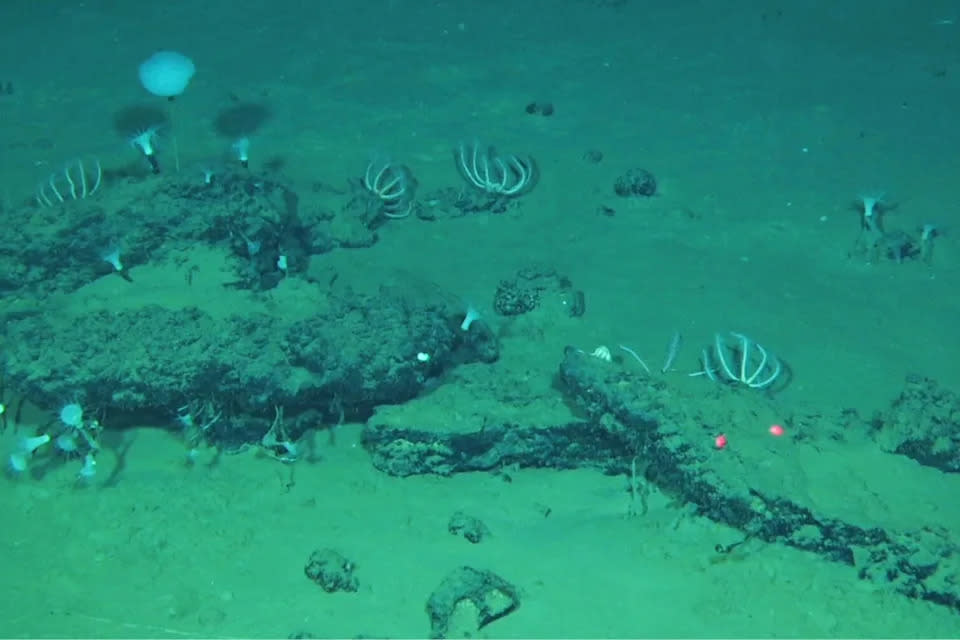
Chinese scientists have uncovered the largest, deepest, and oldest whale graveyard ever found on Earth, a sprawling underwater cemetery stretching roughly 1,200 kilometers across the floor of the southeastern Indian Ocean. The findings, published Wednesday in the journal Nature, reveal a “whale necropolis” containing nearly 500 individual skeletal remains, some dating back 5.3 million years.cbsnews
The discovery was made using China’s Fendouzhe deep-sea submersible, which carried out 32 dives in 2023 through a region known as the Diamantina Zone, a network of ridges and trenches west of Australia. At depths ranging from about 4,600 to 7,000 meters, the team documented 476 fossilized whale bone sites and five active whale falls — carcasses of more recently deceased whales still being consumed by deep-sea organisms.nst
Most of the remains belonged to species of beaked whales, including strap-toothed beaked whales and Andrews’ beaked whales. The researchers also identified a previously unknown extinct species, which they named Pterocetus diamantina. Using strontium isotope dating on 33 recovered fossils, the team confirmed the oldest specimen dates to the Early Pliocene, approximately 5.3 million years ago.cas
“It covers over 1,200 kilometers, which just defies belief,” Nick Pyenson, a curator of fossil marine mammals at the Smithsonian National Museum of Natural History who was not involved in the study, told Live Science.livescience
Extrapolating from the density of remains they observed, the researchers estimated that more than 10 million whale carcasses could exist across the Diamantina Zone. The soft tissue and lipids contained in that volume of remains “translates to roughly 6.7 million tonnes of sequestered carbon,” said lead author Xiaotong Peng. The finding underscores the role whale falls play not only as ecological oases but as long-term carbon sinks on the deep ocean floor.cbsnews
The graveyard also teems with life. Communities of jellyfish, tubeworms, brittle stars, sea cucumbers, squat lobsters, and other invertebrates — many potentially new to science — were found thriving on and around the whale remains. According to the BBC, the site brims with organisms and species that “might be novel to science”.bbc
Scientists believe the Diamantina Zone acts as a natural trap. The area serves as a feeding ground for beaked whales, some of which die during extreme deep dives. The V-shaped seafloor topography then funnels carcasses into the trenches below. The result is a concentration of remains unmatched anywhere else on the planet — and a paleontological record spanning millions of years that researchers are only beginning to explore.cas