Newsletter Subscribe
Enter your email address below and subscribe to our newsletter

Enter your email address below and subscribe to our newsletter
All voices matter
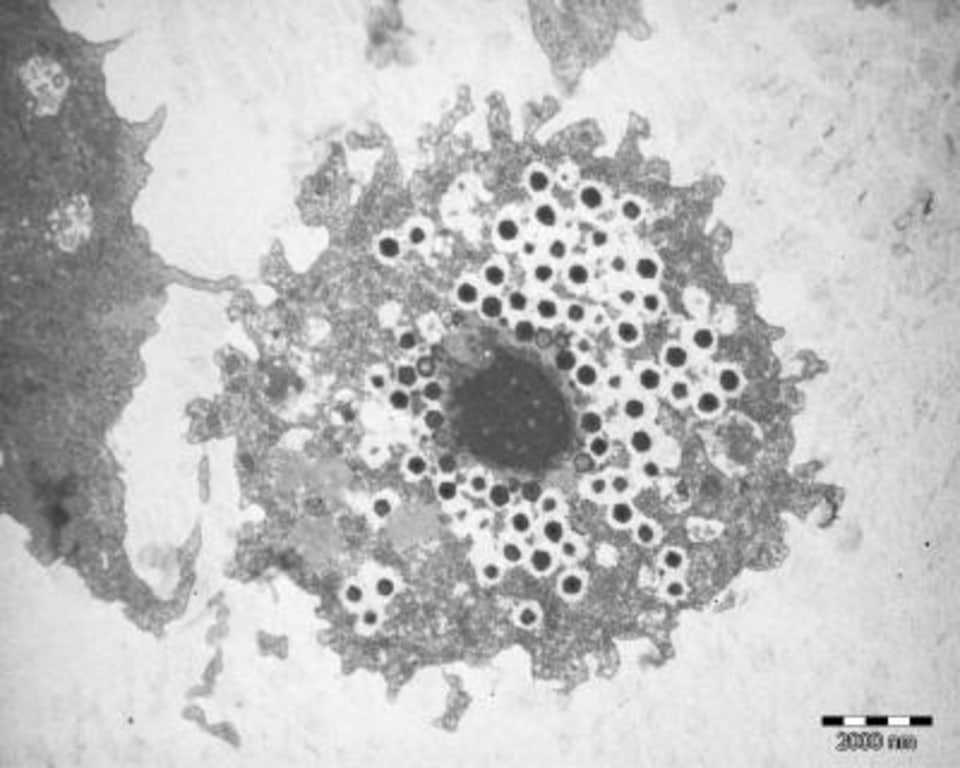
For decades, the story of how complex life arose on Earth has been told as a partnership between two microorganisms: an archaeon that served as the host and a bacterium that became the mitochondrion. A study published Wednesday in Nature upends that narrative, finding that the ancestor of all animals, plants, fungi, and protists drew its genome from a broader cast of characters — including additional bacterial groups and giant viruses.irbbarcelona
The research, led by Dr. Toni Gabaldón of IRB Barcelona and the Barcelona Supercomputing Center, used the MareNostrum supercomputer over more than five years to reconstruct the proteome of the last eukaryotic common ancestor, known as LECA. By tracing the evolutionary histories of thousands of gene families across living eukaryotes, the team identified contributions from bacterial lineages beyond the mitochondrial ancestor.eurekalert
Two bacterial groups left a particularly strong imprint: Myxococcota, which may have contributed genes related to lipid metabolism, and Planctomycetota, which appears linked to the development of internal cellular compartments — a hallmark of eukaryotic cells. The analyses suggest these contributions arrived at different times. Planctomycetota represents an older signal, while Myxococcota and the mitochondrial ancestor appear closer together in the timeline.irbbarcelona
“For a long time, we have explained the origin of complex cells as a story with two main protagonists: an archaeon and the bacterium that gave rise to the mitochondrion,” Gabaldón said in a statement. “Our study suggests that this narrative is incomplete and that there were more actors on the stage, including other bacterial groups and giant viruses that could have facilitated genetic exchange”.larazon
Among the study’s most unexpected findings is the involvement of Nucleocytoviricota, a group of giant viruses. The authors propose that these viruses, rather than simply being parasites, acted as vehicles for shuttling DNA between microorganisms that coexisted in the same environment — helping to shape the ancestral eukaryotic genome.irbbarcelona
The study does not diminish the central role of the mitochondrion in eukaryotic evolution. Instead, it reframes the origin of complex cells as a longer, more gradual process involving a microbial community rather than a single decisive merger. LECA, the researchers suggest, likely arose in a microbially dense environment where symbioses and gene transfer were routine.larazon
The question of how eukaryotic complexity emerged remains one of biology’s most debated problems. The new findings offer a framework in which the leap from simple to complex cells was not a singular event but an extended collaboration — one that unfolded over millions of years and involved organisms from across the tree of life, and beyond it.nature