






Newsletter Subscribe
Enter your email address below and subscribe to our newsletter

Enter your email address below and subscribe to our newsletter
All voices matter
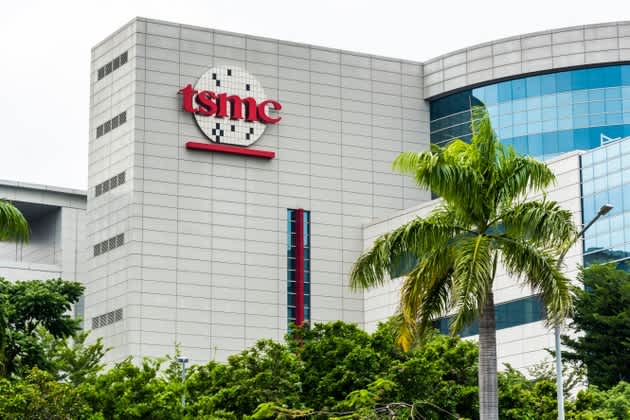
Taiwan Semiconductor Manufacturing Company reported May 2026 revenue of NT$416.98 billion, a 30.1% increase from the same month a year earlier, according to the company’s official disclosure on Tuesday. The result, which also marked a 1.5% rise from April, set a new single-month revenue record for the world’s largest contract chipmaker.tsmc
Cumulative revenue for the first five months of 2026 reached NT$1.96 trillion, up 30% year-over-year, as demand for advanced processors used in artificial intelligence applications continued to accelerate. TSMC had previously forecast second-quarter revenue between $39 billion and $40.2 billion, representing roughly a 32% rise from a year earlier, after posting a 58% jump in first-quarter net profit.gurufocus
The chipmaker’s growth is underpinned by an unprecedented wave of AI infrastructure spending. Alphabet, Amazon, Meta, and Microsoft collectively plan to invest up to $725 billion in capital expenditures this year, a 77% increase over last year’s record $410 billion, according to figures compiled by the Financial Times.statista
At TSMC’s annual shareholders meeting in Hsinchu on June 4, CEO C.C. Wei said customers remain upbeat on the AI outlook but warned that supply constraints will persist. “It will be a long time before we can meet customer demand” with U.S.-based production alone, Wei told shareholders, according to Reuters. He added that rising component costs are pressuring margins, and the company would “like” to raise prices.letsdatascience
In a separate interview, TSMC senior vice president Kevin Huang told the BBC that inflation has caused costs to increase, without committing to specific price hikes. Any pricing changes could ripple through the AI supply chain, given TSMC’s role as the sole manufacturer of the most advanced chips designed by Nvidia, AMD, and Apple.bbc
TSMC has budgeted between $52 billion and $56 billion in capital expenditures for 2026, at least a 25% increase from the prior year, and now expects full-year revenue growth of more than 30% in U.S. dollar terms. Wei described the trajectory as part of a “multi-year AI megatrend” that shows no sign of easing.qz