Newsletter Subscribe
Enter your email address below and subscribe to our newsletter

Enter your email address below and subscribe to our newsletter
All voices matter
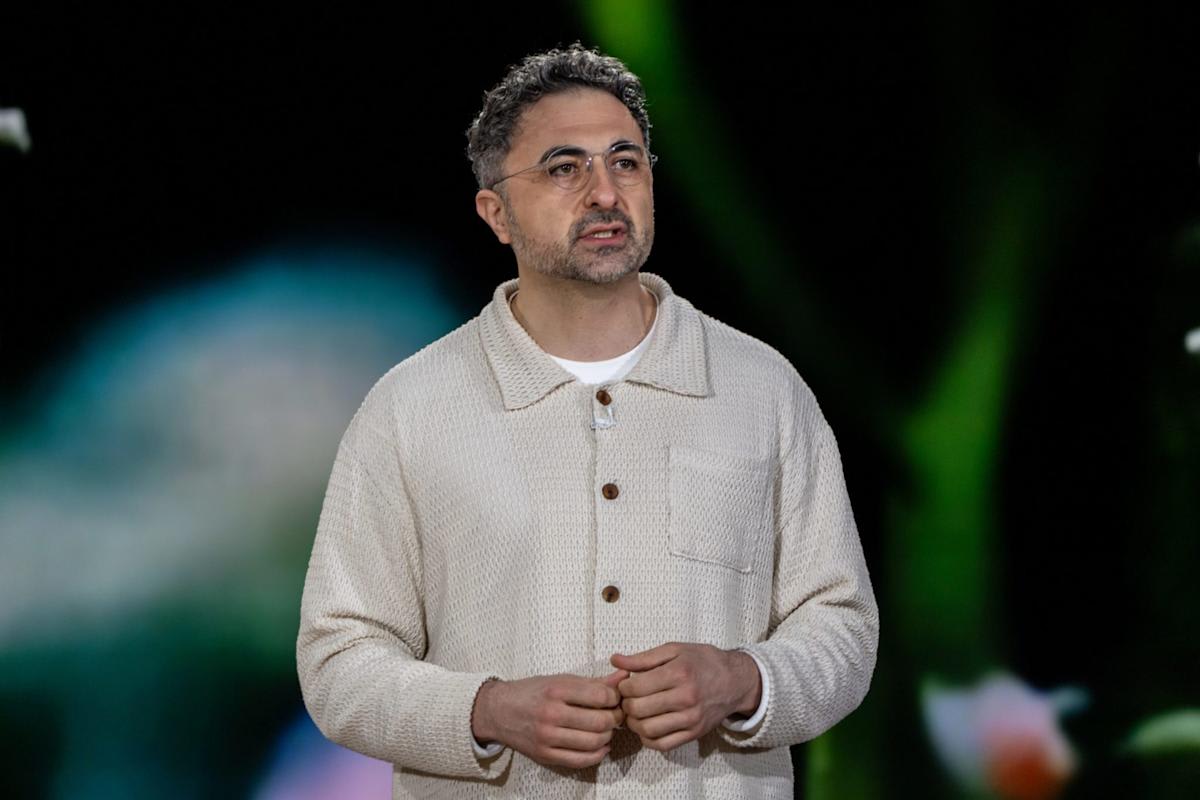
Microsoft AI chief Mustafa Suleyman has declared that a renegotiated deal with OpenAI has “set free” the company to independently pursue superintelligence, marking a turning point in one of the most consequential partnerships in the technology industry.
Suleyman told the Financial Times that Microsoft’s superintelligence team is now targeting enterprise use cases, software developers, and coding — an approach that directly mirrors Anthropic’s market strategy — while being “less concerned” about the consumer-focused tactics of Google, Meta, and OpenAI.yahoo
The declaration came as Microsoft unveiled a family of seven in-house AI models at its Build 2026 developer conference on June 2. The flagship, MAI-Thinking-1, is a sparse Mixture-of-Experts reasoning model with roughly 1 trillion total parameters but only 35 billion active during inference. Microsoft says it matches Anthropic’s Claude Opus 4.6 on the SWE-Bench Pro coding benchmark and scores 97% on the AIME 2025 math reasoning test. The suite also includes MAI-Code-1-Flash, tuned for Visual Studio Code and GitHub Copilot, alongside models for image generation, transcription, and voice synthesis.youtube
Microsoft emphasized that all models were trained from scratch on commercially licensed data, with no distillation from third-party systems.mlq
The shift follows a restructured agreement finalized in October 2025, in which OpenAI converted its for-profit arm into a public benefit corporation. Under the revised terms, Microsoft received a 27% ownership stake valued at about $135 billion and retained access to OpenAI’s technology through 2032, including any models that reach artificial general intelligence. Critically, the deal also lifted restrictions that had prevented Microsoft from training its own frontier models.bloomberg
Suleyman first signaled the new direction in November 2025 when he announced the MAI Superintelligence Team, led by chief scientist Karén Simonyan, to pursue what he calls “humanist superintelligence” — advanced AI designed to serve people rather than replace them.fortune
Microsoft’s enterprise focus extends beyond models. The company is building custom silicon, with its Maia 200 accelerator reportedly 30% more cost-efficient than Nvidia’s GB200. MAI-Thinking-1 is available in private preview on Microsoft Foundry, with a public preview expected soon. Suleyman has also predicted that AI will achieve “human-level performance” on most professional white-collar tasks within 18 months.fortune
The moves position Microsoft as both a partner to and competitor of OpenAI — retaining its stake and model access while building the infrastructure to go it alone.