






Newsletter Subscribe
Enter your email address below and subscribe to our newsletter

Enter your email address below and subscribe to our newsletter
All voices matter
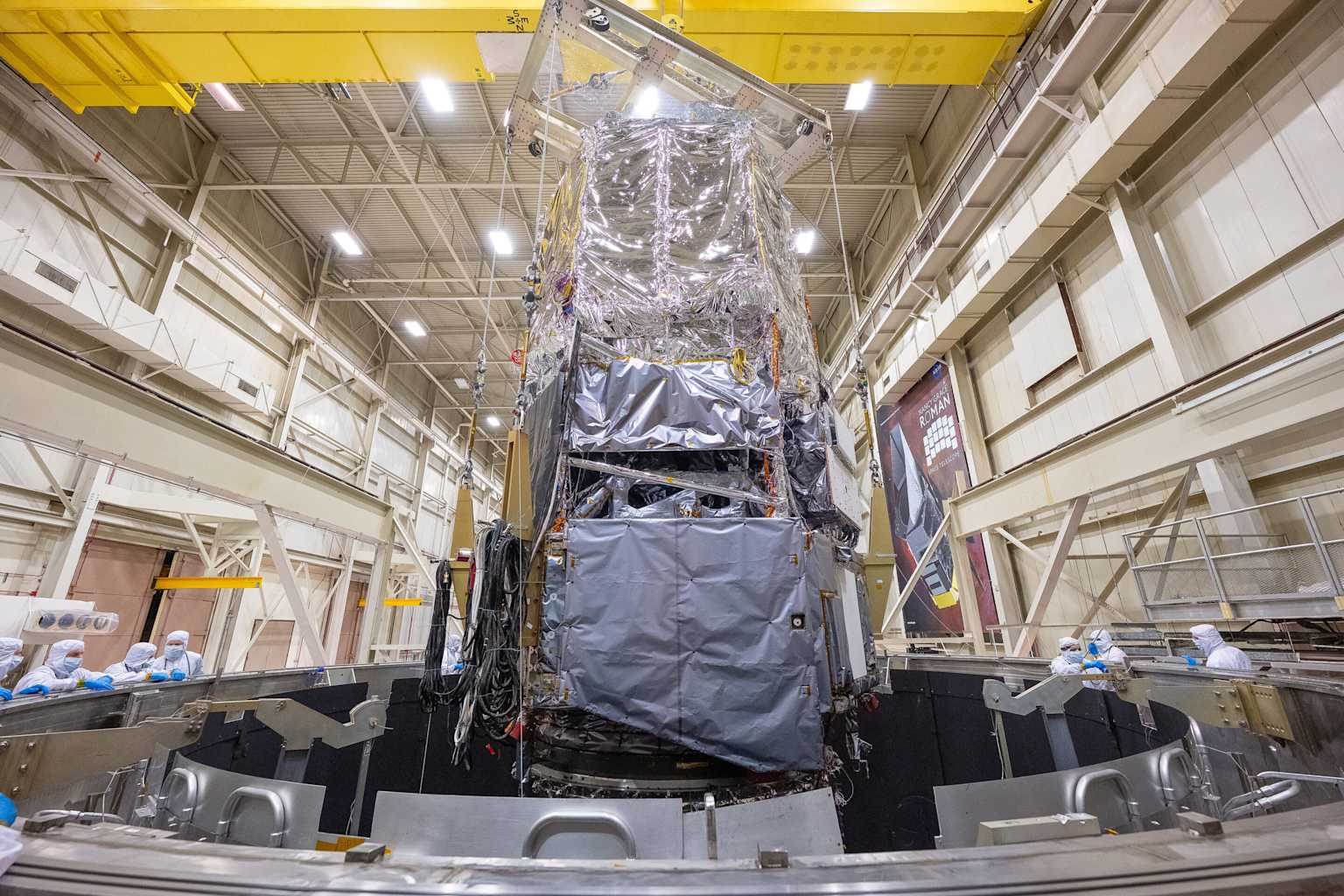
NASA’s Nancy Grace Roman Space Telescope is on track for a late summer launch after engineers completed a final inspection of its primary mirror, bringing one of the agency’s most ambitious astrophysics missions closer to flight.
The telescope is now targeting a launch no earlier than August 30 aboard a SpaceX Falcon Heavy rocket from Launch Complex 39A at Kennedy Space Center in Florida, ahead of NASA’s commitment to fly no later than May 2027. NASA had previously stated it was targeting “as soon as early September 2026” for the launch.nasa
On May 20 and 21, engineers at NASA’s Goddard Space Flight Center in Greenbelt, Maryland, confirmed that no specks fell onto the 7.9-foot (2.4-meter) primary mirror during testing and that there are no defects in the coating or alignment. The inspection marked the last time human hands will touch the telescope’s main light-gathering surface before it reaches space.nasa
With the mirror cleared, the Roman team is preparing to ship the observatory to Kennedy Space Center in the coming weeks, where it will be mated to its Falcon Heavy launch vehicle.nasa
Once aloft, Roman will travel to the Sun-Earth L2 Lagrange point, approximately one million miles from Earth, where it will join the James Webb Space Telescope and other observatories. The $4.3 billion mission will carry a 288-megapixel Wide Field Instrument capable of surveying 100 times more sky than the Hubble Space Telescope in a single shot.facebook
Scientists expect the mission to reveal around 100,000 exoplanets during its operational life — a leap from the roughly 6,300 found so far. The telescope will also investigate dark energy and dark matter through surveys of galaxies, supernovae, and cosmic voids.gizmodo
Roman’s primary mission lifetime is five years, though NASA has designed the observatory with a potential five-year extended mission. The telescope will carry enough propellant to support operations well beyond the baseline, following a pattern set by JWST, whose precise launch trajectory gave it fuel reserves far exceeding initial projections.space
The mission will begin returning science data approximately 90 days after launch, potentially placing first observations before the end of 2026.livescience