







Newsletter Subscribe
Enter your email address below and subscribe to our newsletter

Enter your email address below and subscribe to our newsletter
All voices matter
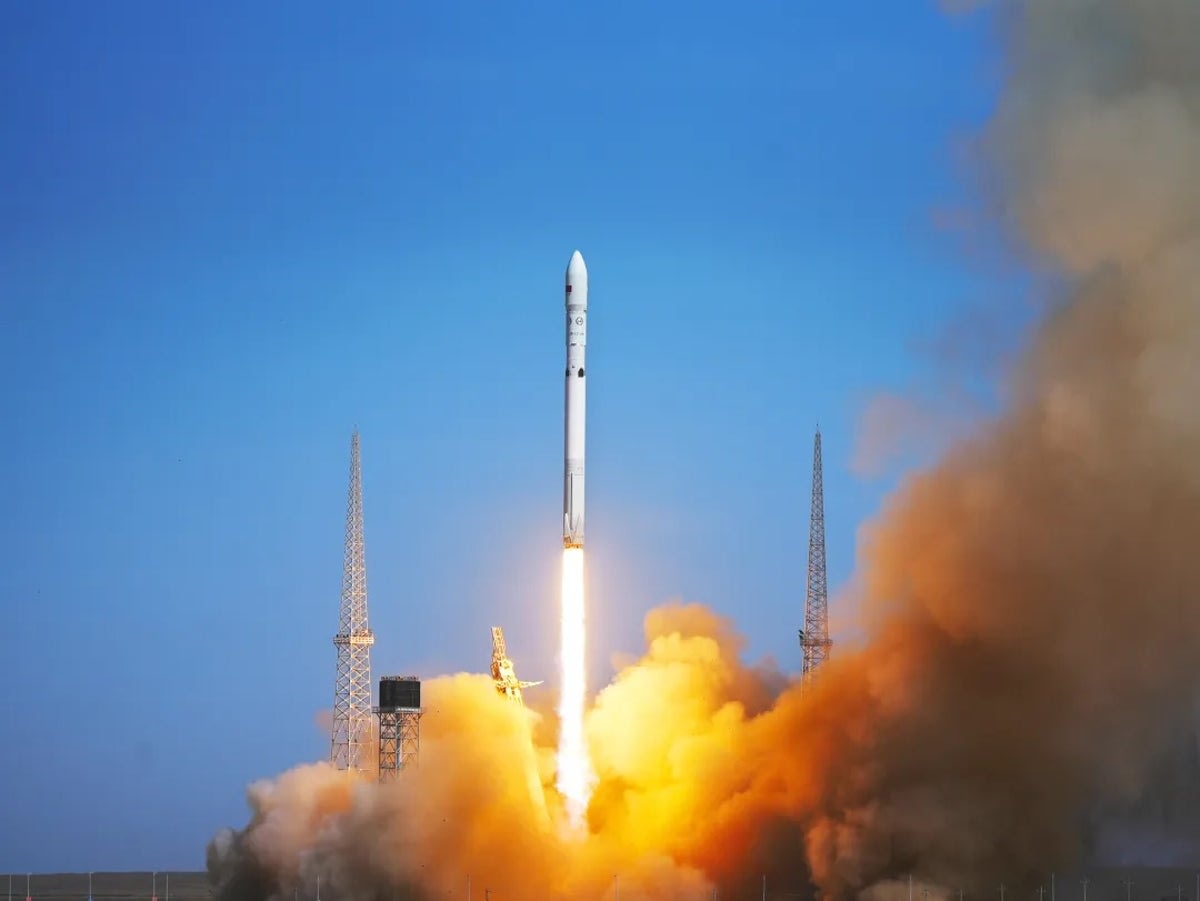
China on Monday debuted its Long March 12B rocket, sending a batch of internet satellites into orbit from the Jiuquan Satellite Launch Center in the Gobi Desert — reportedly without issuing the standard advance airspace and maritime warnings that typically precede such missions.scientificamerican
The two-stage kerosene and liquid oxygen-fueled rocket lifted off at 4:40 a.m. EDT, deploying 18 satellites for the Qianfan internet megaconstellation into polar orbit. The Qianfan network, also known as SpaceSail or Thousand Sails, is China’s answer to SpaceX’s Starlink satellite internet service. The China Aerospace Science and Technology Corporation (CASC) declared the flight a success.wikipedia
The Long March 12B is designed to be reusable, with its first stage intended to land via propulsive landing on a downrange pad in Gansu Province. However, no recovery attempt was made on this maiden flight. The rocket can carry up to 20,000 kilograms to low Earth orbit in expendable mode and is described as comparable in capability to SpaceX’s Falcon 9. The launch marked the 647th flight of the Long March rocket series.scientificamerican
News of the launch spread first on Chinese social media, according to SpaceNews, with no prior notices issued — an unusual departure from standard practice for both government and commercial space programs.scientificamerican
The launch comes amid an active period for China’s space program. On May 29, the Shenzhou-21 crew — astronauts Zhang Lu, Wu Fei, and Zhang Hongzhang — returned to Earth aboard the Shenzhou-22 spacecraft after completing a record 210-day mission on the Tiangong space station. The capsule also brought back approximately 41 kilograms of scientific samples spanning 23 experimental projects in life sciences, materials, and combustion, according to Xinhua.cctv
Days earlier, China launched the Shenzhou-23 mission, with one crew member expected to remain aboard Tiangong for a full year — a duration that would set another national record, according to Reuters.cgtn
The Qianfan constellation has been expanding rapidly, with the Long March 8 rocket conducting frequent launches throughout 2026 to build out the network. The Long March 12B’s entry into service adds a larger-capacity vehicle to the constellation’s deployment campaign, potentially accelerating the pace at which China populates its planned mega-constellation of thousands of low-orbit internet satellites.nextspaceflight