Newsletter Subscribe
Enter your email address below and subscribe to our newsletter

Enter your email address below and subscribe to our newsletter
All voices matter
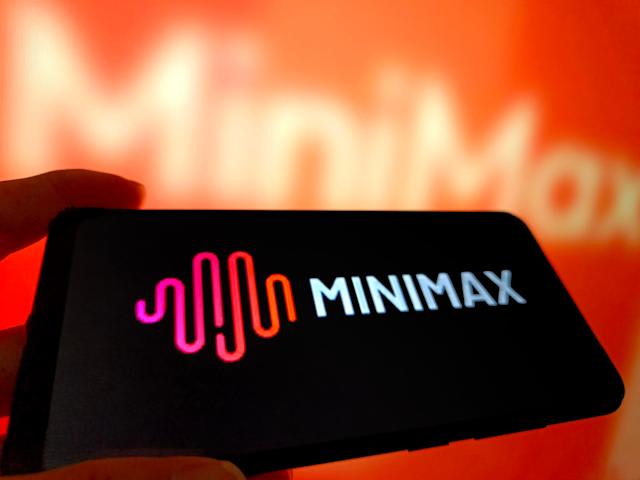
Chinese AI startup MiniMax Group on Sunday unveiled its next-generation M3 model, billing it as the first open-weights large language model to combine frontier-level coding, a one-million-token context window, and native multimodal capabilities in a single package. The launch immediately drew attention for its benchmark claims against closed-source rivals from OpenAI and Google, though the company’s Hong Kong-listed shares reversed sharply on the news.
M3 is built on a proprietary architecture MiniMax calls MiniMax Sparse Attention, or MSA, which the company says reduces per-token computation at the full million-token context length to roughly one-twentieth of the prior generation, delivering more than nine times faster prefill and 15 times faster decoding. On SWE-Bench Pro, a software engineering benchmark, M3 scored 59.0%, which MiniMax says exceeds both OpenAI’s GPT-5.5 and Google’s Gemini 3.1 Pro while approaching Anthropic’s Claude Opus 4.7. The model also posted an 83.5 on BrowseComp, surpassing Opus 4.7’s 79.3, according to MiniMax’s own reported results.aibase
The model supports native image and video understanding and is available immediately through MiniMax’s API and its MiniMax Code product, with open weights and a technical report expected on Hugging Face and GitHub within roughly ten days.felloai
Despite the product fanfare, MiniMax’s shares on the Hong Kong Stock Exchange told a different story. After opening more than 5% higher and touching an intraday peak of HK$907.50, the stock reversed course and fell sharply, dropping more than 15% from its highs by the afternoon session. The selloff came as MiniMax disclosed plans to pursue a secondary listing on Shanghai’s STAR Market, having signed a mentorship agreement with CITIC Securities on May 29 and filed with the China Securities Regulatory Commission. The company raised roughly $619 million in its Hong Kong IPO in January 2026, and its shares had surged some 400% between listing and late May.cryptobriefing
M3 arrives at a moment when the line between open and closed AI models is narrowing rapidly. Independent observers have noted the benchmark results with caution — SWE-Bench Pro is a “contaminated benchmark,” as one analyst put it, and MiniMax’s claims are self-reported pending third-party verification. Still, the pricing is hard to ignore: M3’s API charges a fraction of what frontier closed-source models cost, with token plans starting at $20 per month. If the performance holds under independent scrutiny, MiniMax’s release could reshape the economics of agentic AI development.apidog