






Newsletter Subscribe
Enter your email address below and subscribe to our newsletter

Enter your email address below and subscribe to our newsletter
All voices matter
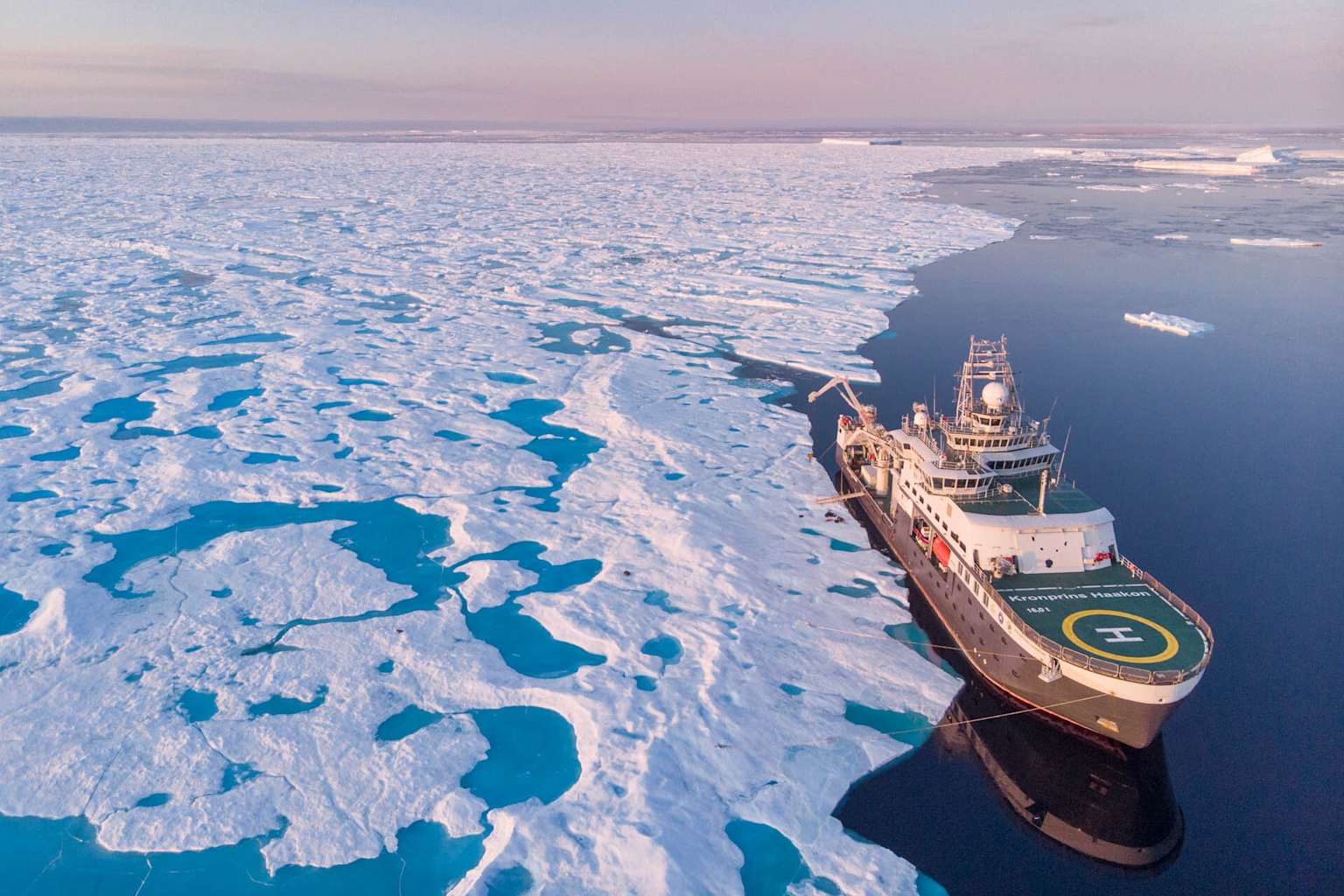
The Arctic Ocean passed a critical chemical threshold around 2009 that is unlikely to be reversed, according to new research showing that sea ice loss has triggered a sustained collapse in nitrate levels essential for marine life. The findings, published this week in Communications Earth & Environment, warn of cascading consequences for Arctic ecosystems, carbon absorption, and North Atlantic fisheries.
Researchers at the University of Edinburgh analyzed more than two decades of sampling data from Fram Strait, the main gateway through which Arctic waters flow into the Atlantic. Their analysis revealed a clear shift from 2009 onwards, with nitrate levels in outflowing Arctic waters falling steadily and remaining low.phys
The drop coincided with drastic reductions in Arctic sea ice that exposed vast shallow continental shelves — underlying nearly half of the Arctic Ocean — to sunlight. That increased light penetration intensified a natural process called benthic denitrification, which converts nitrate into nitrogen gas within shallow seafloor sediments, effectively stripping the ocean of a nutrient vital for plankton growth.ed
“For years, sea-ice loss in the Arctic Ocean was expected to increase phytoplankton growth because more sunlight could reach surface waters,” said Marta Santos-García, a PhD student at Edinburgh who co-led the study. “Our findings suggest that this relationship has changed: the Arctic Ocean appears to have shifted from a system mainly limited by light to one increasingly limited by nitrate availability, with far-reaching consequences for marine ecosystems, food chains and the role of the Arctic in Earth’s climate.”phys
The shift to nitrate-limited conditions means the Arctic Ocean may only support smaller plankton species in the future, reducing food availability throughout the marine food chain for fish, seabirds, and marine mammals. Diminished plankton populations could also weaken the ocean’s capacity to absorb atmospheric carbon through photosynthesis.ed
Because the nutrient loss is driven by ongoing sea ice decline, researchers say it is very unlikely the Arctic Ocean will ever revert to its previous state.phys
Professor Raja Ganeshram, who led the research over two decades at Edinburgh, said the findings carry consequences well beyond the Arctic. “The changes we report suggest that the Arctic Ocean ecosystem passed a tipping point around 2009. How this change cascades through the food chain needs to be closely monitored as this has profound implications for us, including on commercial fishing in the North Atlantic Ocean.”businessgreen
The study, supported by the Natural Environment Research Council’s Changing Arctic Ocean project, also involved researchers from the Norwegian Polar Institute, the Scottish Association for Marine Science, the Technical University of Denmark, and the Alfred Wegener Institute in Germany.ed