






Newsletter Subscribe
Enter your email address below and subscribe to our newsletter

Enter your email address below and subscribe to our newsletter
All voices matter
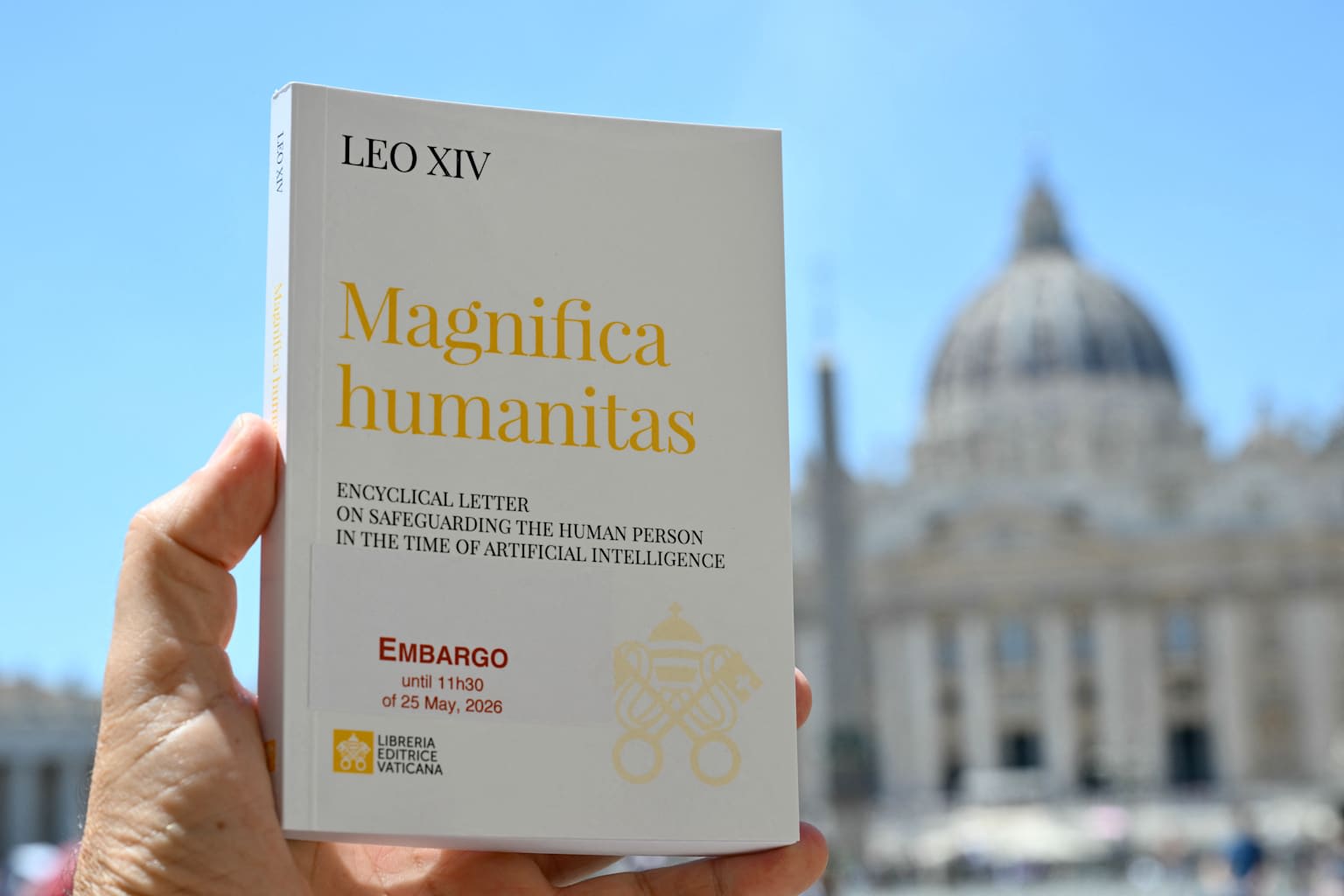
Pope Leo XIV’s first encyclical, “Magnifica Humanitas,” released on May 25, has thrust the Vatican squarely into the center of the global debate over artificial intelligence — and the tech world’s response has been anything but uniform. The 42,300-word document warns against concentrating AI power among a privileged few and insists machines can never replicate human morality, drawing both applause from AI safety advocates and skepticism from those who see it as impractical.
The most striking endorsement came from inside the AI industry itself. Anthropic co-founder Chris Olah, who was invited to speak at the encyclical’s Vatican presentation, acknowledged that “every frontier AI lab — including Anthropic — operates inside a set of incentives and constraints that can sometimes conflict with doing the right thing.” He called the Church’s intervention “enormously important,” arguing that the industry needs “informed critics who will tell the labs when we are failing” and “moral voices that the incentives cannot bend.”anthropic
Not everyone in the tech ecosystem was receptive. Blake Scholl, founder and CEO of Boom Technology, wrote on X that it was a “bad take from the Pope,” arguing that “tech revolutions tend to eliminate some jobs while creating others.” David Sacks, the tech investor and former White House AI czar, offered a more measured response, agreeing the Pope was right that AI should not lead to “domination or exclusion,” but questioning whether handing governments sweeping regulatory power might itself enable censorship and surveillance.businessinsider
In the document, Pope Leo XIV — the first American pope — argues that AI systems “lack personal experiences, do not have a physical form, do not experience joy or suffering” and “lack a moral compass.” He calls for “disarming” AI, a term he defined not as rejecting technology but as “liberating technology from monopolistic control and fostering open discussions.”newyorker
The encyclical advocates for government oversight of AI companies, worker retraining programs, protections for children, and a ban on autonomous weapons making lethal decisions without human control. “Active political engagement is essential to decelerate progress when everything else is accelerating,” the Pope wrote.nytimes
Whether the encyclical will alter the trajectory of AI development remains an open question. U.S. Ambassador to the Holy See Brian Burch attended the presentation but emphasized that the Trump administration “prioritizes pro-innovation policies enabling the private sector to develop transformative AI technologies.” Investigative reporter Gerald Posner predicted that “tech is likely to rush past the generalized safety suggestions set out in this massive encyclical.”businessinsider
AI researcher Yoshua Bengio struck a more hopeful note, writing that “the Vatican and other global institutions can and must play a role in the global dialogue on AI to raise public awareness.” Adding an ironic twist, an analysis shared on the platform LessWrong suggested that portions of the encyclical itself may have been written with AI assistance, with the detection tool Pangram estimating 46 percent of a tested sample was AI-generated — a claim the Vatican has not addressed.theverge