







Newsletter Subscribe
Enter your email address below and subscribe to our newsletter

Enter your email address below and subscribe to our newsletter
All voices matter

Companies in the MSCI Emerging Markets Index are beating profit estimates for the first time since early 2022, marking a turning point in a years-long stretch of underwhelming corporate performance across the developing world, according to Bloomberg.financialpost
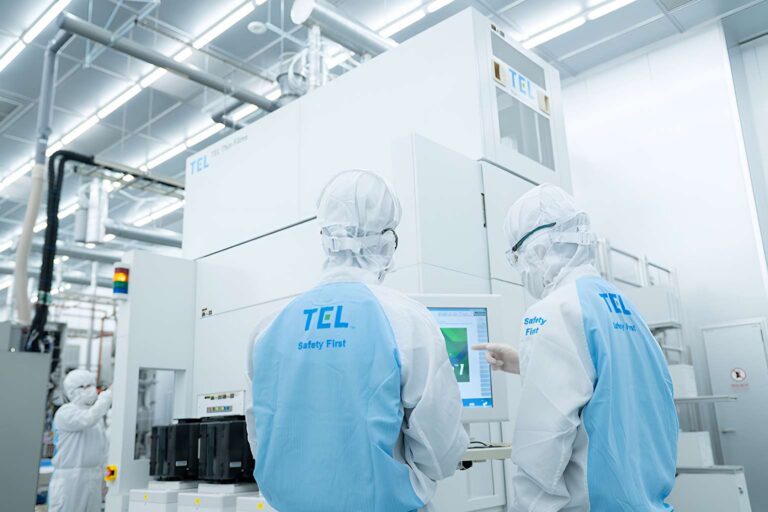
The earnings breakthrough comes as emerging-market equities have surged this year, driven by an extraordinary rally in Asian technology stocks tied to the global artificial intelligence infrastructure buildout.
First-quarter 2026 earnings growth in Asia reached roughly 40 percent year-over-year, one of the strongest quarters in recent history, though heavily concentrated in AI-related names, according to JP Morgan Asset Management’s monthly market review. South Korea and Taiwan posted extraordinary returns in May, with the Korean market climbing 33 percent in a single month as semiconductor companies benefited from hyperscaler-led investment demand.jpmorgan
Taiwan Semiconductor Manufacturing Co. reported a 58 percent surge in profit and raised its revenue forecast earlier this year, while SK Hynix and Samsung Electronics both reached trillion-dollar market capitalizations in May. Morgan Stanley noted in February that emerging-market stocks were heading for their strongest stretch of earnings growth since the 2002-04 super-cycle, powered by the surge in AI investment.oneascent
The earnings improvement extends beyond semiconductors. Indian oil refiners have benefited from increased refining margins and shifting crude supply chains, with Indian Oil Corporation ramping up Brazilian crude purchases as the Iran conflict disrupted traditional Middle Eastern supply routes. Brazil’s energy sector has also seen strengthening fundamentals, with the country’s 2026 reserve capacity auction contracting approximately 19 gigawatts of firm power capacity — the largest reliability-focused procurement to date — mobilizing an estimated $12 to $13 billion in investments.reuters
JP Morgan Asset Management has attributed the constructive backdrop to a softer dollar, ongoing deficit spending, and a multi-year AI and infrastructure capital expenditure cycle. The U.S. dollar weakened roughly 7 percent on a trade-weighted basis in 2025, and strategists expect further softening in 2026.youtube
The MSCI Emerging Markets Index has outperformed developed markets since late 2024, generating annualized returns of 35.6 percent through April 2026 versus 17.3 percent for the MSCI World Index, according to RBC Wealth Management. Consensus estimates project EM earnings-per-share growth of nearly 50 percent in 2026, compared with roughly 19 percent for developed markets.rbcwealthmanagement
Valuations remain undemanding despite the rally, with the MSCI Emerging Markets Index trading at 11.7 times forward earnings — a nearly 40 percent discount to developed market peers. Global investors remain underweight the asset class, suggesting further room for reallocation flows.ssga
“Emerging markets have entered a yearslong supercycle,” Bloomberg Opinion wrote in January, noting that the mechanisms underpinning 2025’s outperformance — a weak dollar, benign global growth, and investors’ desire to diversify — remain firmly in place.bloomberg