Newsletter Subscribe
Enter your email address below and subscribe to our newsletter
Enter your email address below and subscribe to our newsletter

All voices matter
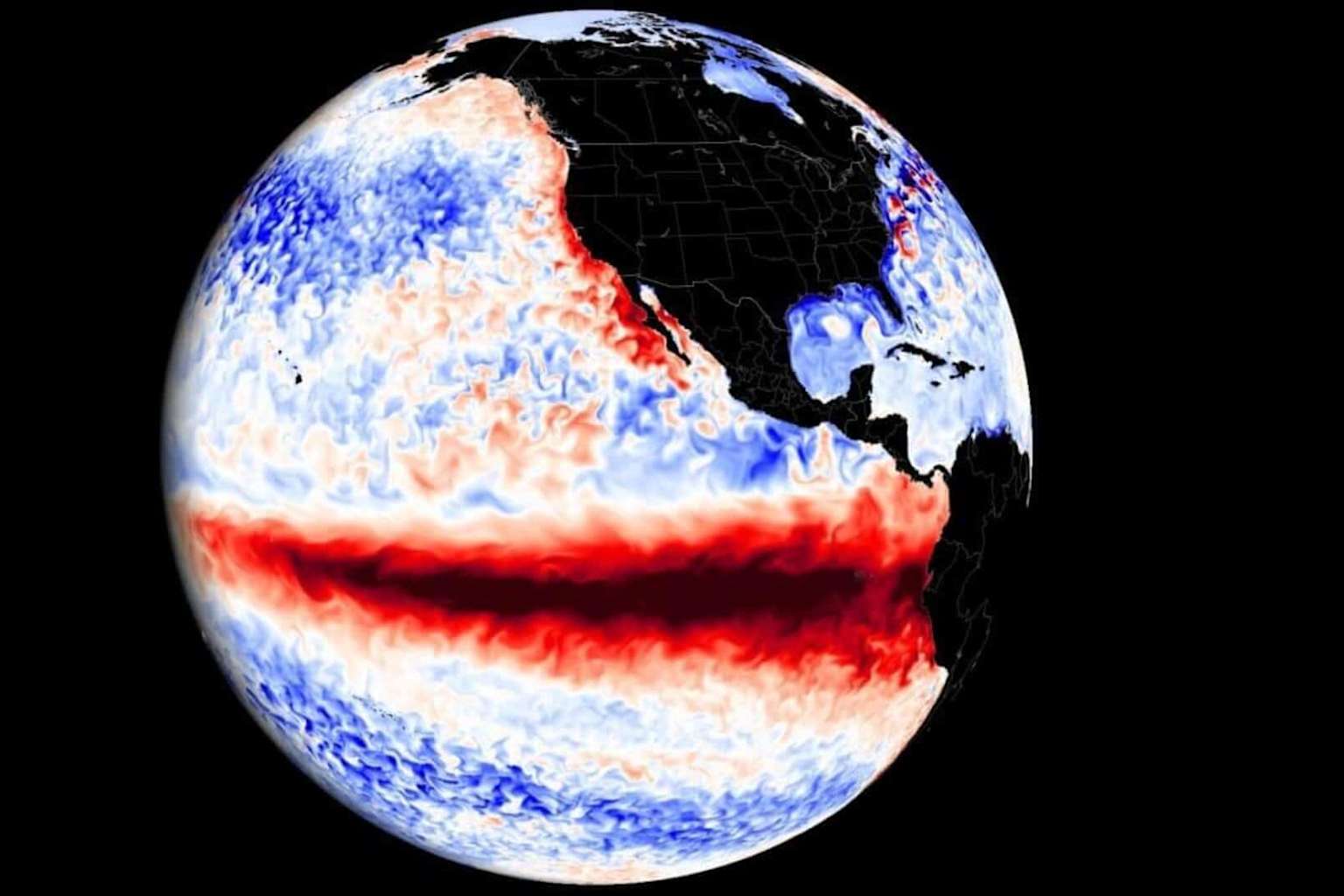
El Niño has officially arrived in the Pacific Ocean, and forecasters say it could intensify into one of the most powerful events recorded, with far-reaching consequences for North America’s weather, agriculture, and economy over the next year.
NOAA’s Climate Prediction Center declared on June 10 that El Niño conditions had formed in the equatorial Pacific, with sea surface temperatures already well above average and expected to strengthen through the Northern Hemisphere winter of 2026–27. The agency’s latest diagnostic discussion puts the chances of a “very strong” El Niño — defined by sea surface temperatures exceeding 2°C above the norm — at 63% during the November-to-January peak, a level that “would rank among the largest El Niño events in the historical record going back to 1950”.noaa
NASA satellites have captured a massive Kelvin wave — a band of elevated sea levels stretching hundreds of miles along the equator — now reaching the western coast of South America, a hallmark of a rapidly intensifying El Niño. Columbia University’s International Research Institute reported that 13 of 24 forecast models project a very strong event during the autumn peak, with the Niño 3.4 index already at +1.7°C as of mid-June.columbia
The World Meteorological Organization issued a preparedness advisory on June 2, noting subsurface temperatures in the tropical Pacific exceeding 6°C above average — a massive heat reservoir fueling surface warming. WMO Secretary-General Celeste Saulo urged governments to act: “We need to prepare for a potentially strong El Niño event — which will exacerbate drought and heavy rainfall and increase the risk of heatwaves both on land and in the ocean”.wmo
The expected impacts follow a familiar El Niño pattern but at amplified intensity. NOAA’s three-month outlook for the coming winter calls for above-average precipitation and flooding risk across the southern United States, while the northern half of the country faces warmer, drier conditions with the possibility of drought. In the Atlantic, NOAA is forecasting a below-normal hurricane season of 8 to 14 named storms, down from the historical average of 14, as El Niño’s wind shear suppresses tropical storm formation.post-gazette
Agriculture faces particular exposure. A risk analysis by Risilience estimated global crop losses from an extreme El Niño could reach $342 billion, with commodity price shocks of 10% to 50% for staples like rice, coffee, and sugarcane. J.P. Morgan cautioned that tighter fertilizer supplies compounded by El Niño-driven weather stress could add further food inflation pressure into 2027.risilience
Whether climate change is making El Niño events more intense remains a subject of active scientific debate. The WMO has stated there is no evidence that warming increases the frequency of El Niño events but acknowledged it “can amplify associated impacts because a warmer ocean and atmosphere increases the availability of energy and moisture for extreme weather events”. NOAA has said it is “very likely” that 2026 will rank among the five hottest years on record, with the possibility that the combined effect of El Niño and background warming could push 2027 into record territory.cnycentral