






Newsletter Subscribe
Enter your email address below and subscribe to our newsletter

Enter your email address below and subscribe to our newsletter
All voices matter
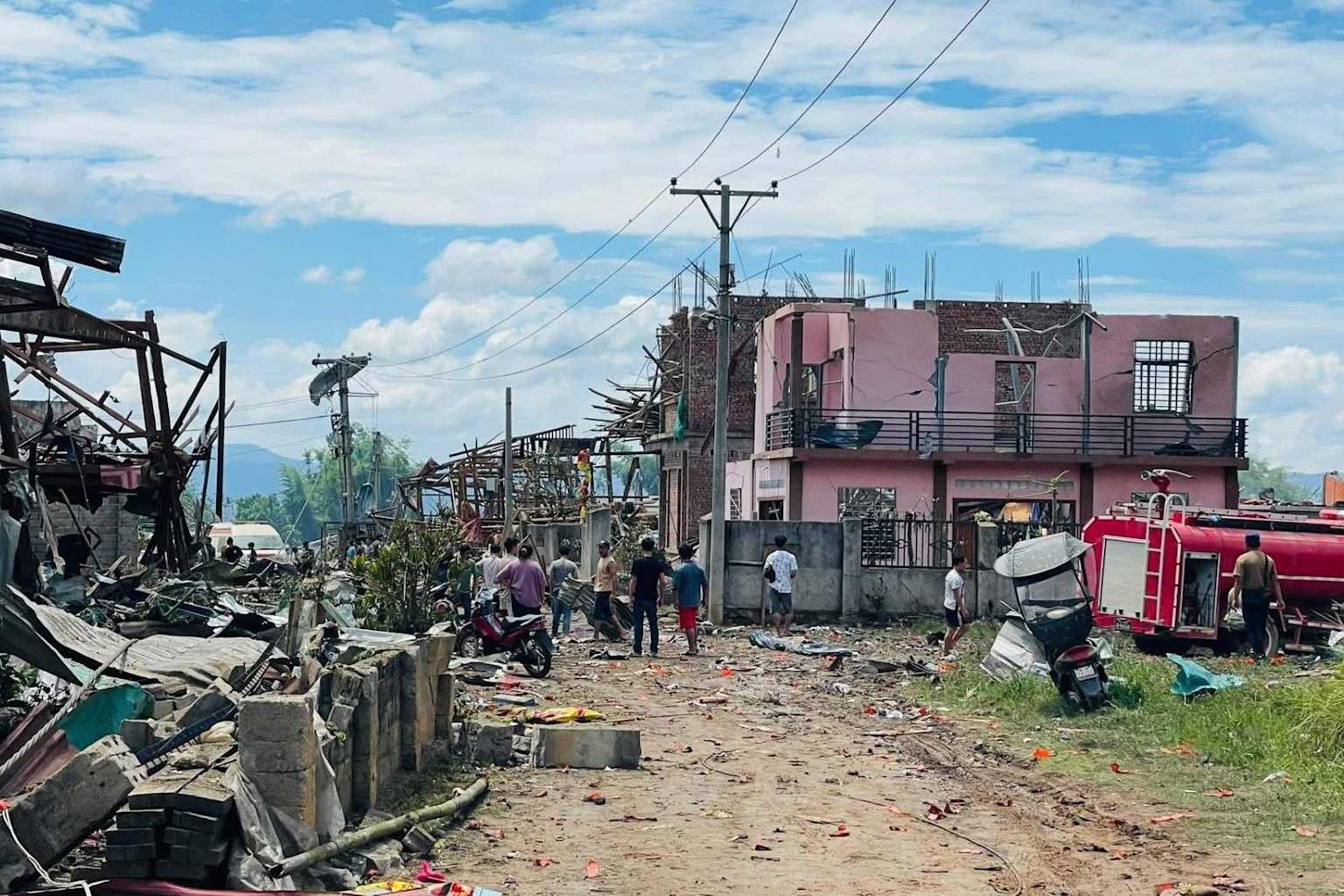
An explosion at a building storing mining explosives in northeastern Myanmar killed at least 46 people on Sunday, including six children, with local media reporting death tolls as high as 55. About 70 others were injured in the blast, which struck around noon in the village of Kaungtup in Namhkam township, roughly two miles from the Chinese border.
A rescue worker who spoke to the Associated Press said 46 bodies had been recovered by Sunday evening and taken for cremation, while 74 injured people were transported to the township hospital. Another rescuer in Namhkam said more than 100 houses near the blast site were damaged. Myanmar media outlets, including Shan State’s online Shwe Phee Myay news agency, reported death tolls ranging from 50 to 55.washingtonpost
Chinese state broadcaster CCTV reported that the explosion caused deaths and injuries and severely damaged several houses, saying preliminary investigations indicated the blast occurred at a site storing large quantities of explosives used for mining operations.latimes
The Ta’ang National Liberation Army, which controls the area, said in a statement on its Telegram channel that gelignite had been stored by the group’s economic department for use in mining and stone quarrying. Gelignite is widely used in rock blasting but can become highly unstable over time or if improperly stored. The TNLA said an investigation into the cause is underway.latimes
The TNLA is a member of the rebel Three Brotherhood Alliance and has controlled the Namhkam area since the alliance launched a major offensive against Myanmar’s military in late 2023. The group signed a ceasefire with Myanmar’s military following China-mediated talks in October, though relations remain tense.wikipedia
Myanmar has been mired in conflict since the military seized power from the elected government of Aung San Suu Kyi in February 2021. Large parts of the country are now controlled by armed ethnic groups and resistance forces fighting for autonomy or democratic restoration. The Namhkam area, nestled near the Chinese border in northern Shan State, has been a flashpoint in these wider hostilities, with multiple armed factions vying for control of territory rich in natural resources.washingtonpost