







Newsletter Subscribe
Enter your email address below and subscribe to our newsletter

Enter your email address below and subscribe to our newsletter
All voices matter
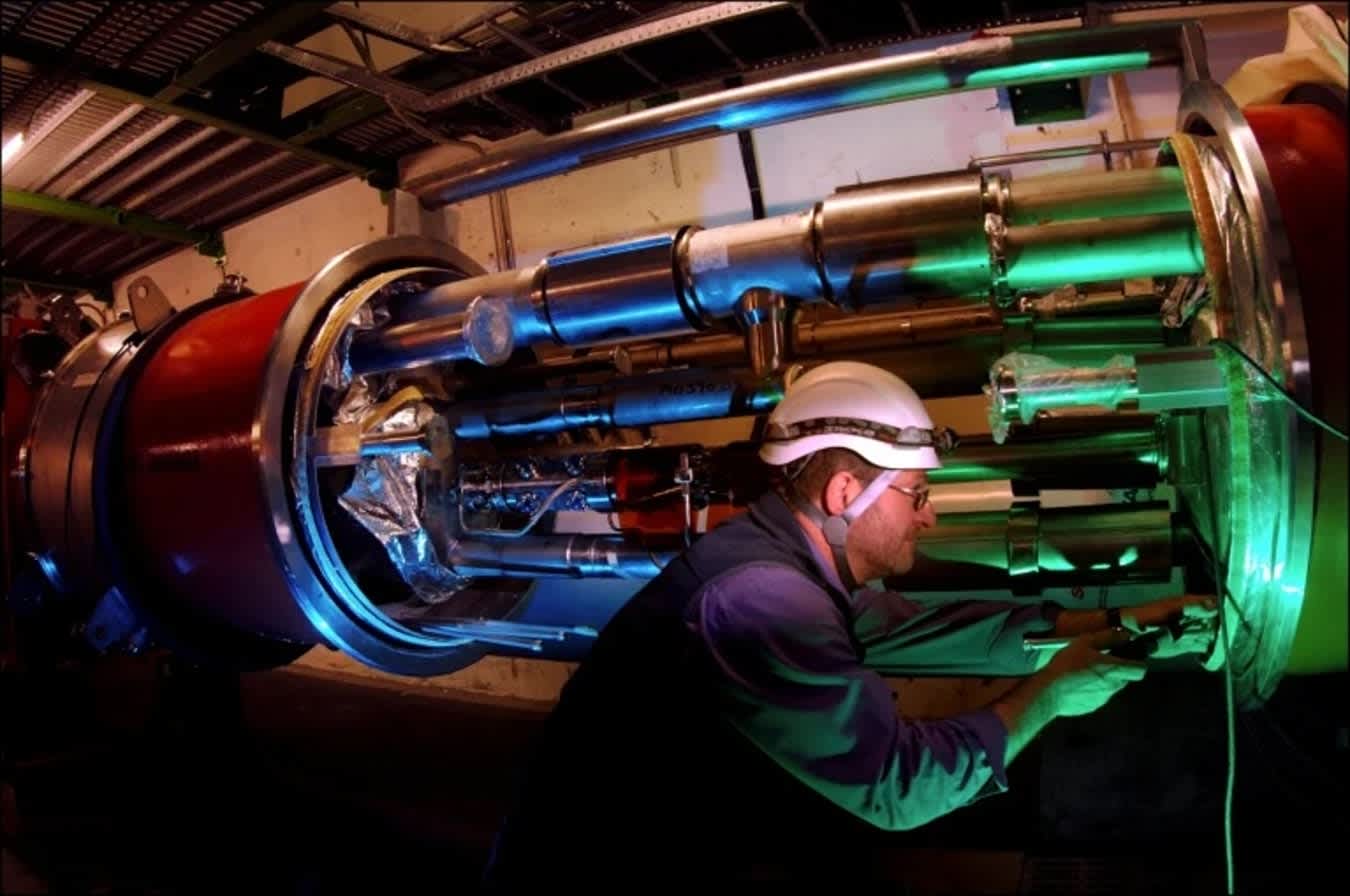
Physicists working at CERN’s Large Hadron Collider have found what may be one of the strongest hints yet that the Standard Model of particle physics is incomplete, publishing results that show rare “penguin” decays of subatomic particles behaving in ways current theory cannot explain. The discovery arrives as the LHC prepares to shut down for its High-Luminosity upgrade — a project now clouded by the United Kingdom’s decision to pull funding.
The findings, accepted for publication in Physical Review Letters, come from the LHCb experiment and involve the decay of particles called B mesons into kaons and pairs of muons. Researchers found that the angles at which the decay products emerge disagree with Standard Model predictions at a level of four standard deviations — meaning there is only a one-in-16,000 chance that random statistical fluctuation would produce such a result if the Standard Model is correct.scitechdaily
Evidence for this anomaly has been quietly growing since 2015, with the latest analysis drawing on roughly 650 billion decays amassed during two LHC runs between 2011 and 2018. William Barter, a particle physicist at the University of Edinburgh who works on LHCb, told Nature that one possible explanation is a hypothetical particle called Z-prime acting as a virtual intermediary in the decay process.nature
While the result falls short of the five-sigma threshold physicists require to claim a discovery, the researchers note the mounting evidence is hard to ignore. “Despite our excitement, open theoretical questions remain that prevent us from definitively claiming that physics beyond the Standard Model has been observed,” the team acknowledged.sciencedaily
The timing is fraught. The LHC is scheduled to shut down on June 29 for its High-Luminosity upgrade, which will increase particle collisions tenfold. But the UK government announced in early 2025 that it would cancel more than £250 million in planned physics infrastructure funding, including contributions to the LHCb upgrade at CERN.physicsworld
The decision by UK Research and Innovation means the LHCb experiment will likely finish operation in 2033 without its planned next-generation detector. The cuts are part of broader STFC reductions totaling £162 million over four years, as the government redirects resources toward artificial intelligence and life sciences.ft
Should the anomaly persist with more data from the High-Luminosity era, it could point toward entirely new particles or forces. But as Physics Today reported, UK physical scientists are now bracing for a diminished role in the very experiments that could confirm or refute these tantalizing hints.aip