Newsletter Subscribe
Enter your email address below and subscribe to our newsletter
Enter your email address below and subscribe to our newsletter

All voices matter
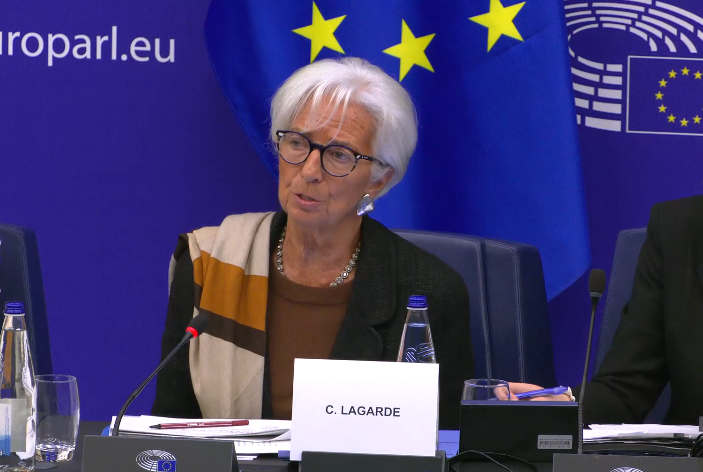
European Central Bank President Christine Lagarde told the European Parliament’s Committee on Economic and Monetary Affairs on Monday that the euro area’s inflation overshoot calls for a careful policy adjustment rather than an aggressive tightening cycle, arguing that longer-term price expectations remain anchored despite consumer prices running well above the bank’s 2% target.reuters
Lagarde framed the current environment as the “second scenario” in a three-tier framework she first outlined at the ECB Watchers conference in March, in which a moderate but not overly persistent overshoot justifies “some measured adjustment of policy.” “We have yet to observe any signs of inflation expectations becoming unanchored or second-round effects that would justify a more aggressive policy reaction at this time,” she said, according to Reuters.investing
She noted the present shock appears less intense than the 2021-22 episode that triggered rapid rate increases, citing a stronger labor market and rising household incomes as buffers. Still, she acknowledged the ongoing Iran conflict is weighing on economic activity, particularly in energy-intensive services.reuters
ECB Governing Council member José Luis Escrivá reinforced the vigilance message. Speaking in Barcelona last week and reiterating his concerns on Monday, the Bank of Spain governor warned that higher oil and commodity prices are already feeding into transport and services costs, and that the bank must watch for any transmission into wages. “Second-round wage effects have yet to materialize,” he said, but added that the absence of evidence should not be mistaken for evidence of absence.bloomberg
The remarks come less than two weeks after the ECB raised its deposit rate to 2.25% — its first hike in nearly three years — as eurozone inflation hit 3.2% in May, driven by energy prices linked to the Middle East conflict. Financial markets currently price in a further quarter-point increase by autumn, though policymakers have signaled they could pause in July if energy prices continue to ease following the recent US-Iran agreement.theguardian
The ECB’s June projections put headline inflation at 3% for 2026, falling to 2% only in 2028. Chief Economist Philip Lane said last week that oil prices have moved closer to the bank’s baseline scenario since the US-Iran deal, but cautioned that production disruptions and low inventories could keep energy costs elevated. Belgian central bank governor Pierre Wunsch told Reuters he would support another hike as soon as July if inflation continues to broaden beyond energy.irishtimes