





Newsletter Subscribe
Enter your email address below and subscribe to our newsletter

Enter your email address below and subscribe to our newsletter
All voices matter
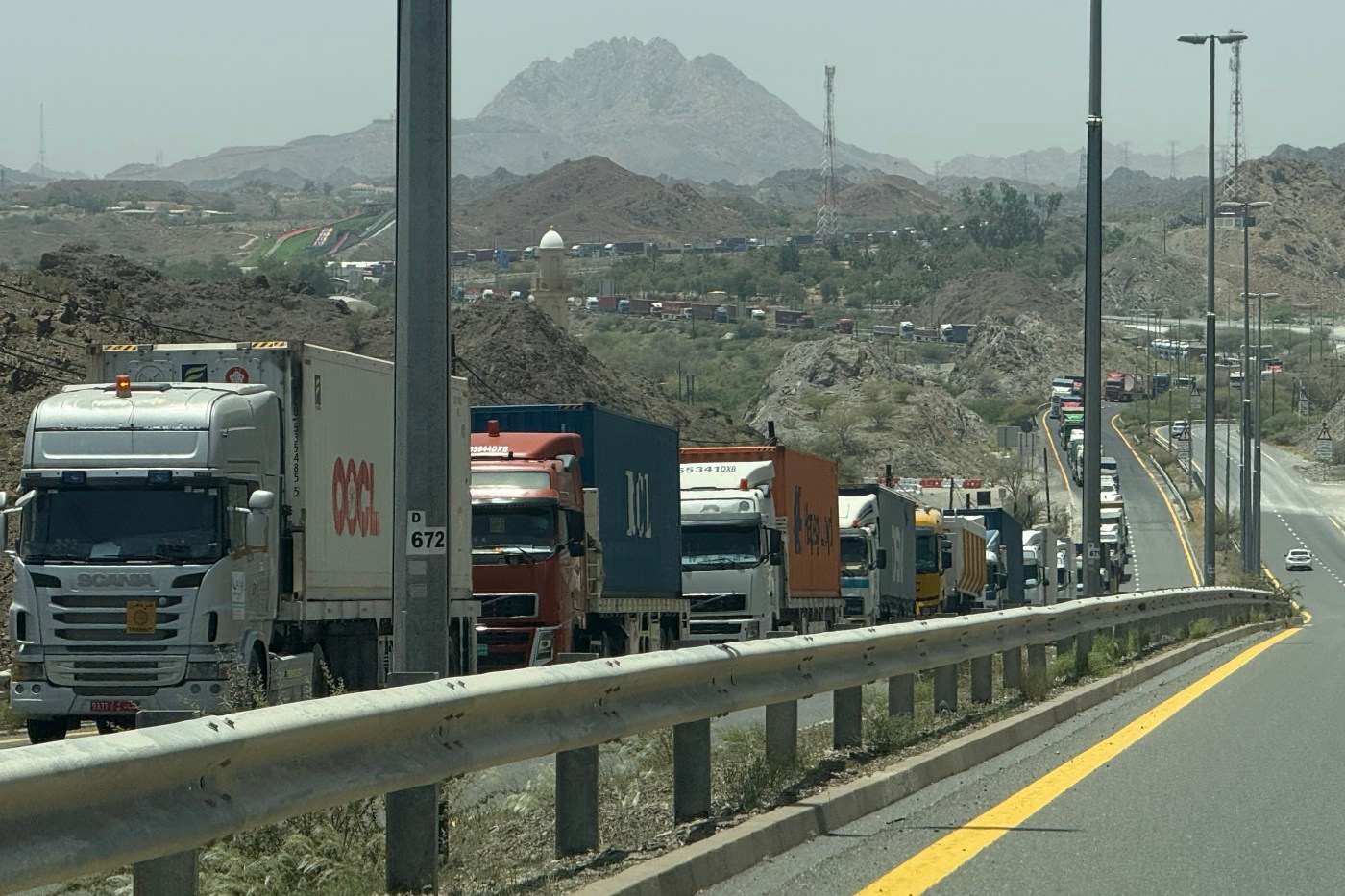
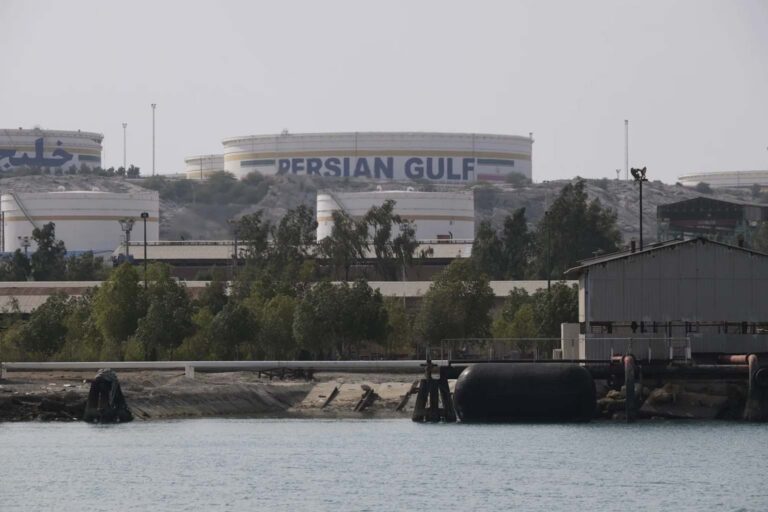
Convoys of heavy-duty trucks barreling across the Arabian desert have become an unlikely escape valve for the global economy, as the prolonged closure of the Strait of Hormuz forces Gulf states to improvise new land routes for energy and commodity shipments, according to a report published Monday by The Wall Street Journal.wsj
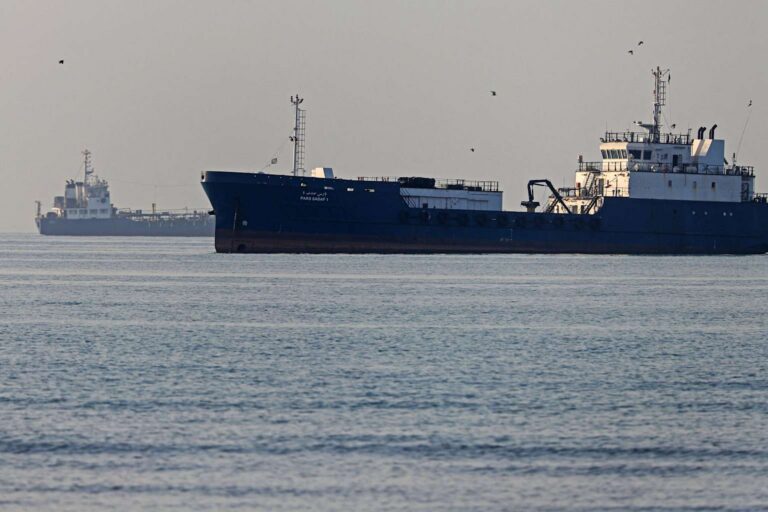
The truck convoys represent one piece of a broader scramble by Saudi Arabia, the UAE, and Oman to keep trade flowing more than two months after Iran effectively shut down the world’s most important oil chokepoint in late February, in retaliation for U.S. and Israeli strikes. Before the closure, roughly 20 million barrels of crude oil passed through the strait daily. Traffic has since collapsed to about 5% of pre-war levels, according to maritime data firm Kpler.tufts
Saudi Arabia’s East-West Pipeline, with a maximum capacity of 7 million barrels per day, is now operating at full tilt. Saudi Aramco CEO Amin Nasser said during the company’s first-quarter earnings call on Monday that even if the strait reopened immediately, it would take months for the market to normalize. But pipelines alone cannot replace the lost maritime capacity, and Gulf states are turning to roads and rail to fill the gap.cnbc
Saudi Arabia’s Route 95, which cuts through the Empty Quarter to connect Qatar’s border to Oman, has seen a near tripling of goods crossing the Ramlet Khelah border post — from $300 million in February to $830 million in March, according to data from Oman’s Public Authority for Special Economic and Free Zones. Saudi Arabian Railways is launching five new freight corridors connecting its east and west coasts, while shipping lines MSC and Hapag-Lloyd are introducing combined sea-and-land services routing containers through Red Sea ports and then overland to the Gulf.indexbox
The main bottleneck, according to a report by The Maritime Executive cited by IndexBox, remains a shortage of trucks and drivers — though soaring revenues are attracting new entrants rapidly. One Saudi trucking firm, Ramool Transportation, reported that its March 2026 earnings alone surpassed its total revenue for all of 2025.indexbox
On the natural gas side, the picture is more nuanced. Qatar’s shutdown of LNG production in early March knocked out roughly 20% of global output. But a wave of new liquefaction capacity — primarily in the United States — that had been planned before the crisis is now coming online, partially cushioning the blow. The International Energy Agency had forecast a 7% jump in global LNG supply for 2026, driven by North American projects, while analysts at Morgan Stanley noted that the Qatari disruption would offset most but not all of the projected surplus for the year.forbes
According to Reuters, analysts at S&P Global Energy, Kpler, and Rystad Energy had projected 2026 global LNG supplies of between 460 million and 484 million metric tons before the crisis. The loss of Qatari volumes — estimated by S&P Global at 33 million tons annually from Qatar and the UAE combined — has tightened that outlook but not erased the gains from new capacity.reuters
As Rockford Weitz, director of the Maritime Studies Program at Tufts University’s Fletcher School, put it: “The U.S. will be, I think, a long-term beneficiary of this disruption”.tufts