







Newsletter Subscribe
Enter your email address below and subscribe to our newsletter

Enter your email address below and subscribe to our newsletter
All voices matter
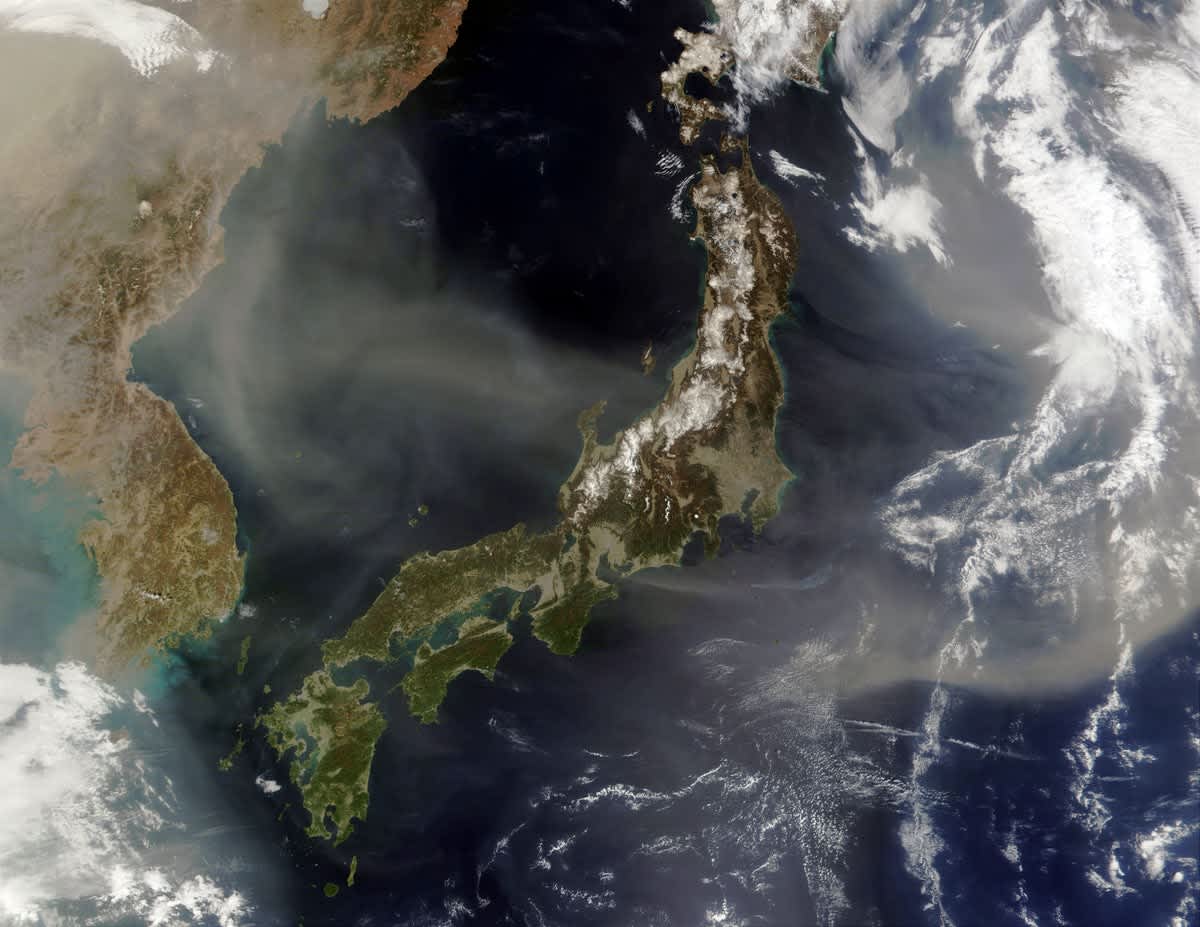
The devastating 2011 Tohoku earthquake was so powerful that it sent seismic waves plunging nearly 6,000 kilometers to Earth’s iron core and back — and when those waves returned to the surface minutes later, they triggered a massive fault slip that permanently shifted the entire country of Japan several millimeters to the east. The finding, published Thursday in the journal Science, represents the first documented case of a core-reflected seismic wave triggering fault movement on tectonic plate boundaries.science
The research, led by University of Chicago geophysicist Sunyoung Park, analyzed data from Japan’s Geonet Earth observation system, which incorporates readings from 1,300 stations across the country. About 13 minutes after the magnitude 9.0 main shock on March 11, 2011, the network recorded the arrival of so-called ScS waves — shear waves that had traveled down through the Earth’s mantle, reflected off the boundary between the mantle and the outer core, and returned to the surface.bluewin
Shortly after these waves arrived, large parts of Japan shifted a few millimeters to the east relative to a reference point in China near the Russian border, with a maximum displacement of five to six millimeters. “Given the unusual nature of this event, we dedicated substantial time exploring various explanations,” Park’s team noted, ultimately ruling out errors in satellite data processing before identifying the ScS waves as the cause.scientificamerican
The team simulated various slip scenarios at depths of 20 to 60 kilometers and compared results against recorded data. They determined the displacement could not have originated solely near the earthquake’s epicenter — if it had, the shift would have decreased with distance, which was not the case. Instead, the slippage occurred simultaneously along four tectonic plate boundaries: between the Pacific Plate and the Okhotsk Plate in the northeast, and between the Philippine Plate and the Eurasian Plate to the southwest.bluewin
The total affected area spans roughly 3,000 kilometers — approximately the length of the Japanese mainland. The researchers describe it as six to seven times greater than the rupture length of the main earthquake and more than twice that of the 2004 Sumatra earthquake, making it the broadest rupture zone ever recorded following a single event.science
The researchers believe the main earthquake reduced friction along fault zones in the crust, allowing the returning ScS waves to trigger sudden displacement. The finding carries implications for earthquake preparedness. “This observation underscores how important it is to take into account this previously unrecognized source of seismic hazard posed by a potential reactivation of the main earthquake zone and the surrounding region — even more than ten minutes after the main earthquake,” the study states.bluewin