




Newsletter Subscribe
Enter your email address below and subscribe to our newsletter

Enter your email address below and subscribe to our newsletter
All voices matter
NASA’s Lucy spacecraft has revealed that asteroid Donaldjohanson once harbored liquid water, according to findings published in the journal Science on June 18, 2026. The results, drawn from data collected during Lucy’s flyby of the asteroid on April 20, 2025, offer new details about the early solar system’s chemistry and the violent collisions that shaped it.
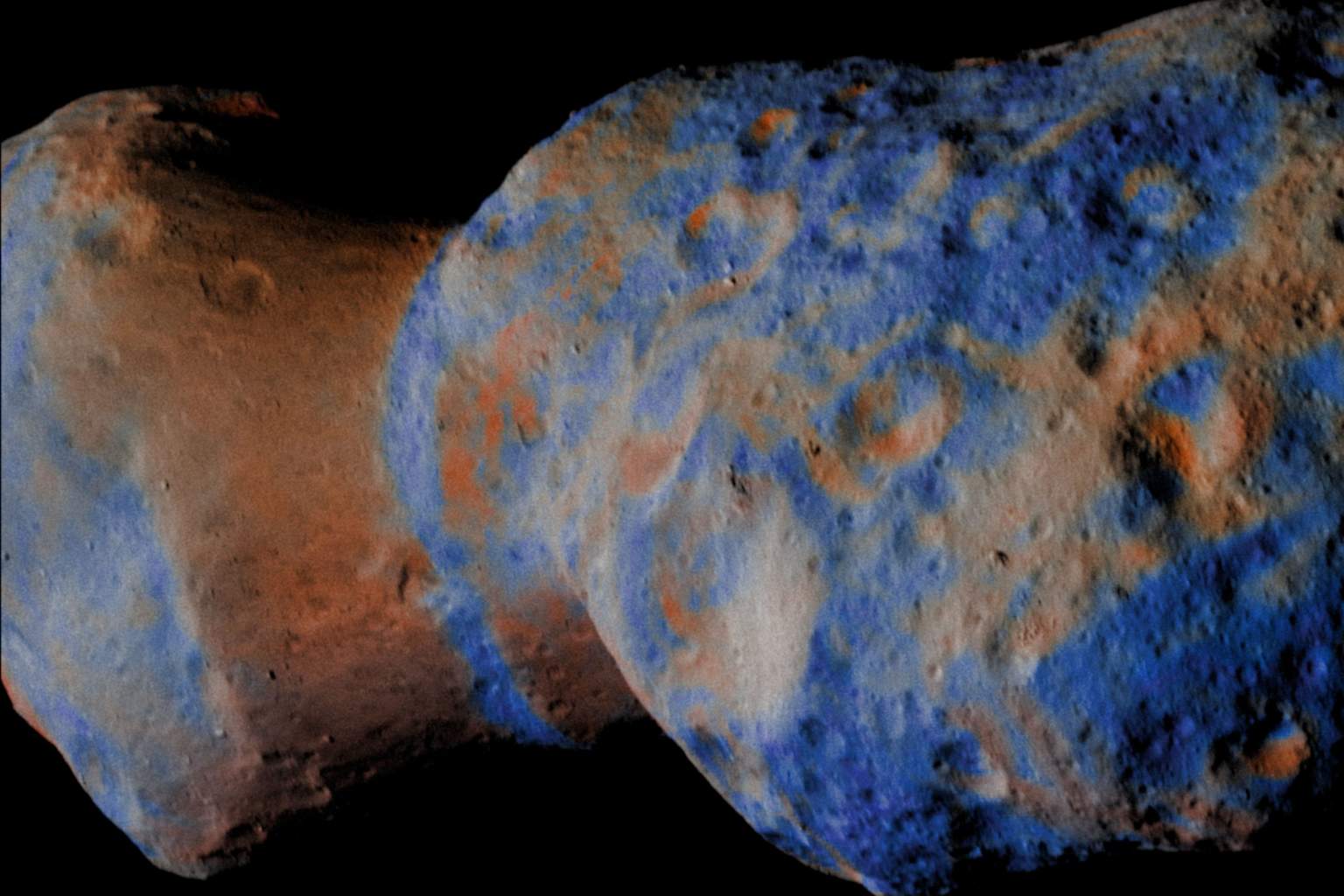
Scientists at the Southwest Research Institute detected iron-rich clay minerals on Donaldjohanson’s surface using Lucy’s infrared spectrometer, indicating that liquid water briefly interacted with the asteroid’s minerals in the distant past. The clays are similar to those found in carbon-rich meteorites, suggesting that water was present on a larger parent body before it was destroyed.nasa
The findings confirm that Donaldjohanson belongs to the Erigone collisional family, a group of roughly 1,800 primitive asteroids created when a larger body shattered approximately 155 million years ago. The alteration by water likely halted at an early stage, either because the water escaped into space or the body cooled enough for it to freeze.miragenews
The study also revealed that Donaldjohanson does not rotate in a simple, steady pattern. Instead, it tumbles through space on two axes — spinning end-over-end once every 10.5 Earth days while wobbling around its horizontal axis every 26.5 days. “This is just one of many surprising things learned since NASA’s Lucy spacecraft flew by Donaldjohanson on April 20, 2025,” said Dr. Simone Marchi, the study’s lead author and deputy principal investigator of the Lucy mission at SwRI.spektrum
Close-up images confirmed the asteroid’s elongated, peanut-like shape — a contact binary with two cratered lobes joined by a smoother, narrower neck, stretching about five miles long and two miles wide.nasa
Lucy’s encounter with Donaldjohanson served as a rehearsal for the mission’s primary targets: the Jupiter Trojan asteroids, which Lucy will begin visiting in 2027. The spacecraft passed within about 960 kilometers of Donaldjohanson’s surface, collecting enough data to reconstruct its three-dimensional shape and surface composition. The mission now continues outward, carrying instruments validated by results that have already expanded scientists’ understanding of how asteroids form, break apart, and evolve.miragenews