







Newsletter Subscribe
Enter your email address below and subscribe to our newsletter

Enter your email address below and subscribe to our newsletter
All voices matter
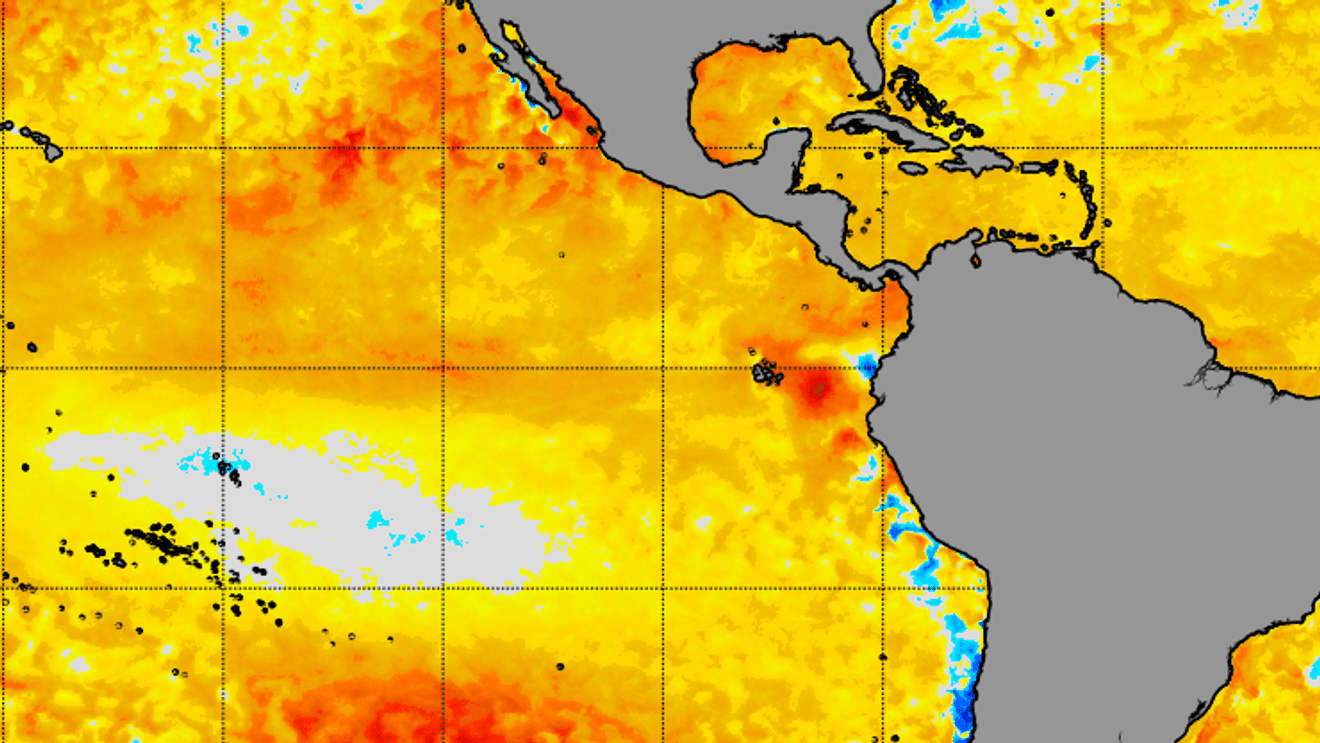
The US Climate Prediction Center is expected to formally confirm on Thursday that El Niño conditions have taken hold in the equatorial Pacific, with scientists warning the event could become one of the most powerful in recorded history, raising the prospect of widespread droughts, floods, and extreme heat in the months ahead.
The Pacific Ocean has undergone a dramatic shift in recent months. After La Niña conditions persisted through late 2025, the tropical Pacific transitioned to neutral territory earlier this year before warming accelerated sharply. By mid-May, weekly sea surface temperature anomalies in the critical Niño 3.4 region had surged to +0.9°C, well above the El Niño threshold. The Columbia University International Research Institute for Climate and Society assigned a 98% probability to El Niño conditions for May through July 2026.columbia
The Philippines’ weather agency PAGASA issued an advisory on Tuesday confirming that El Niño conditions are now present, noting that sea surface temperature anomalies reached the +0.5°C threshold in May and that most models indicate an 80% probability the event will develop into a full-blown El Niño persisting until early 2027. Japan’s Meteorological Agency had already assessed a 100% likelihood that El Niño conditions would continue through the Northern Hemisphere autumn.dost
What has alarmed forecasters is not merely the onset of El Niño but its potential intensity. The European Centre for Medium-Range Weather Forecasts projects sea surface temperatures in the central equatorial Pacific could rise more than 3°C above the long-term average by year’s end — a level comparable to or exceeding records set in 1877 and 2015. Some modeling data suggest anomalies could peak above +4.5°C in the eastern Pacific.washingtonpost
The World Meteorological Organization said on May 31 that while some uncertainty remains about peak strength and timing, most forecast models suggest the event will be “at least moderate — and possibly strong”. The CPC’s own May assessment acknowledged that no single strength category exceeded a 37% probability, but noted that the strongest El Niño events in history are characterized by ocean-atmosphere coupling through the summer — a process now underway.noaa
A strong El Niño typically reshapes weather patterns worldwide. In the Philippines, forecasters expect below-average rainfall and potential crop damage. For Japan and the western Pacific, stronger but fewer typhoons are likely, with storm tracks shifting northward. California and the Desert Southwest face elevated chances of above-normal precipitation — potentially easing drought but increasing flood risk in burn scar areas.youtube
UN Secretary-General António Guterres urged nations to treat the approaching event as “the urgent climate warning it represents”. The WMO has projected “nearly universal dominance of above-normal temperatures” globally for the June-August season, and climate scientist Zeke Hausfather has indicated 2026 is on track to become one of the warmest years on record.usatoday