Newsletter Subscribe
Enter your email address below and subscribe to our newsletter

Enter your email address below and subscribe to our newsletter
All voices matter
The peace deal between the United States and Iran announced on June 14 may have opened a path to reopening the Strait of Hormuz, but analysts warn that the damage to global food supply chains will take months — if not longer — to unwind, threatening to push millions more people into poverty.
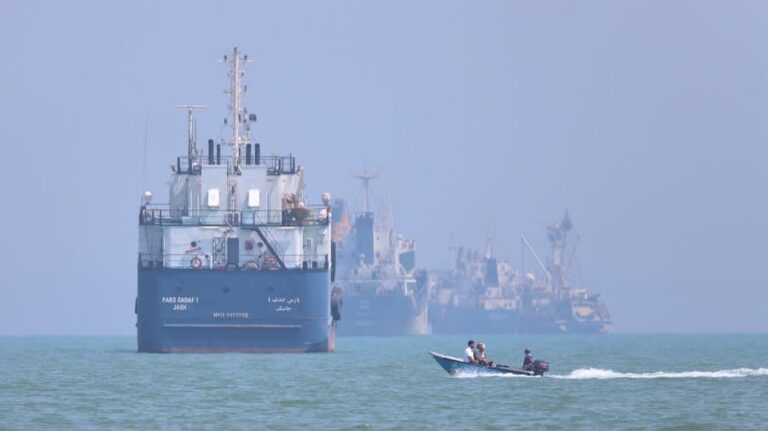
Despite President Trump’s declaration of “toll-free” passage through the strait, the operational reality on the ground tells a different story. As of June 15, none of the four major global shipping carriers had announced plans to resume Hormuz transits, with no schedule updates or booking reopenings issued. Mine clearance alone is expected to take six months, and war risk insurance remains at crisis-era levels. Logistics operators including DHL have told clients that shipping through Hormuz will take four to six months to fully normalize.wto-mww
According to CNBC, ship traffic could rise to about 50% of prewar levels within 30 days if the agreement — set to be formally signed on June 19 in Switzerland — is executed without obstacles. But the roughly 500 ships trapped in the Persian Gulf are not expected to move until after that ceremony, with only about 15 vessels crossing per day initially.nypost
The International Food Policy Research Institute published modeling on June 16 showing that the Iran war could push more than 20 million additional people into poverty across 20 developing countries, with 2.5 million more facing undernourishment. High fuel and fertilizer prices are the primary transmission mechanism, as roughly one-third of all fertilizer transported worldwide passes through the Strait of Hormuz.ifpri
The disruption has hit American farmers hard. In Montana, urea fertilizer that cost $640 per ton before the war spiked to $900 per ton, a 25% increase, while diesel hovers around $5 per gallon. Kansas farmers have seen diesel reach $5.50 to $6 per gallon in some cases. Purdue University economists have projected that if the disruption persists, food-at-home inflation could rise by 3 to 6 percentage points within the next year to 18 months.yahoo
Even with the peace deal in hand, experts caution against premature optimism. Bloomberg reported that the U.S. is at odds with allies over how quickly trade can resume, with partners questioning Trump’s promise that shipping could restart by week’s end. A trade risk analyst at Kpler told the New York Post that clearing the backlog and resolving all constraints could take eight weeks at minimum.bloomberg
For Montana grain farmer Tryg Koch, the math remains unforgiving. “The biggest challenge in agriculture right now is the inputs are just so high compared to the price of commodities,” he told the Flathead Beacon. “It doesn’t stop at fertilizer and fuel.”flatheadbeacon