







Newsletter Subscribe
Enter your email address below and subscribe to our newsletter

Enter your email address below and subscribe to our newsletter
All voices matter
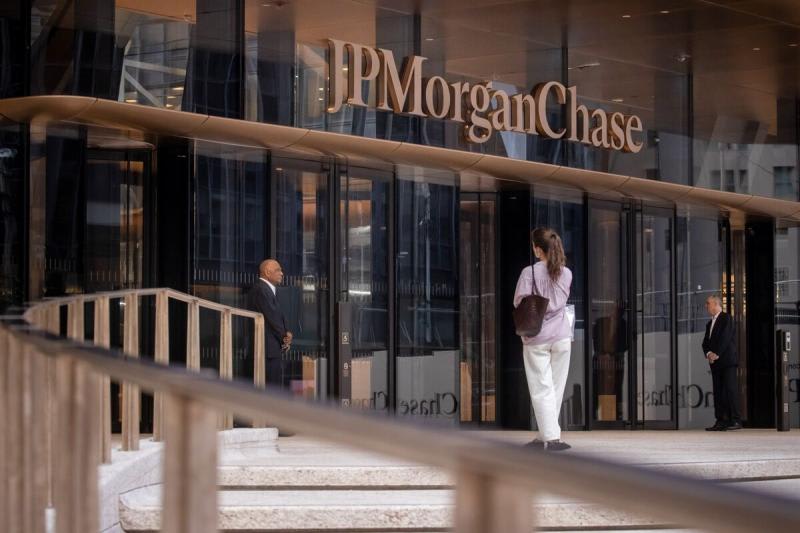
JPMorgan Chase has raised its estimate for total AI-related capital expenditure through 2030 to $5.5 trillion, up from a prior projection of $5.1 trillion, and expects $4.1 trillion of that spending to be financed through debt markets, according to an analyst report published this week.barrons
The bank’s projection underscores the extent to which AI infrastructure buildout is reshaping global credit markets. JPMorgan expects high-grade corporate debt markets to provide more than $2.1 trillion of the financing, with another $150 billion coming from leveraged finance markets over the next five years. The figures reflect the heavy reliance on borrowing by hyperscalers and data center developers, with loans averaging roughly 85% of project costs.niftytrader
The updated capex estimate comes as the five largest U.S. cloud and AI infrastructure providers — Microsoft, Alphabet, Amazon, Meta, and Oracle — have collectively committed to spending between $660 billion and $690 billion on capital expenditure in 2026 alone, nearly doubling 2025 levels. Barron’s reported Monday that JPMorgan’s revised $5.5 trillion figure reflects continued upward pressure on spending plans across the industry.futurumgroup
The AI debt wave is already well underway. Morgan Stanley estimated that AI-related debt issuance reached nearly $236 billion in the first five months of 2026, a fourfold increase year-on-year, and forecast the full-year total to approach $570 billion. By late 2025, JPMorgan had already identified $1.2 trillion in outstanding AI-linked debt in the investment-grade market, making the sector larger than U.S. banks in the JPMorgan U.S. Liquid Index.reuters
Tech companies are also diversifying their borrowing globally. Amazon raised 14.5 billion euros in March in what was the largest-ever euro corporate bond deal, while Alphabet has become a top-10 borrower in multiple global bond indexes.journalrecord
JPMorgan’s own analysis has highlighted the economic challenge embedded in these projections. The firm has previously estimated that the AI industry would need to generate $650 billion in annual revenue in perpetuity to justify a 10% return on $5 trillion in cumulative investment. Whether the application layer — AI agents, enterprise copilots, and workflow automation — can fill the gap between current AI revenues and that threshold remains the central tension in the buildout’s financial logic.substack