Newsletter Subscribe
Enter your email address below and subscribe to our newsletter

Enter your email address below and subscribe to our newsletter
All voices matter
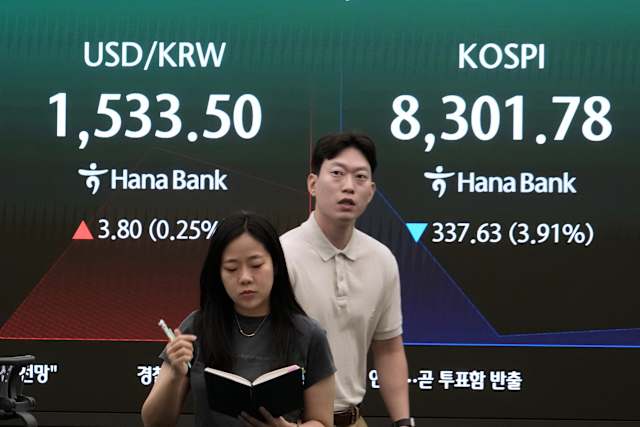
Asian equity markets tumbled on Friday as the months-long energy crisis sparked by the Iran war showed no sign of abating, with South Korea’s Kospi plunging more than 5% and broader regional indexes declining as stalled U.S.-Iran peace talks revived fears of a prolonged supply disruption. The selloff came even as record volumes of American crude and natural gas flow eastward to fill the gap left by the effective blockade of the Strait of Hormuz.
The Kospi dropped 5.1% by midday Friday to 8,185.62, while Japan’s Nikkei 225 slipped 1.3%, according to Reuters. Traders took profits from technology shares and adopted a cautious stance ahead of the weekend, troubled by renewed violence in the Middle East while U.S.-Iran negotiations remained deadlocked. The moves followed a week in which oil prices rose more than 3%, with Brent crude hovering near $95 per barrel.reuters
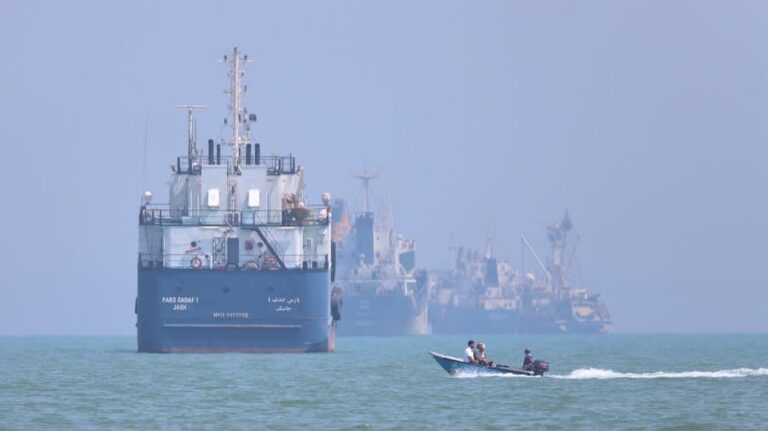
The war, which began on February 28 when U.S. and Israeli forces launched large-scale strikes on Iran, has periodically shuttered the Strait of Hormuz — the chokepoint through which roughly a fifth of the world’s oil flows. A Pakistan-brokered ceasefire in early April brought temporary relief, but Iran broke the truce in May by firing cruise missiles at the UAE, and hostilities have since resumed.reuters
The disruption has reshaped global energy trade. U.S. crude exports reached a record 5.6 million barrels per day in May, according to Reuters, with Asia importing 2.45 million barrels per day — maintaining its position as the leading buyer for a second consecutive month. Asia’s total imports of U.S. crude hit 63.56 million barrels in May, the highest monthly total on record, Reuters reported.reuters
U.S. LNG producers are also benefiting. NPR reported that more than a dozen new export terminals are under construction or have received approval across the country. The Washington Post noted that U.S. natural gas exporters have emerged as among the biggest beneficiaries of the conflict, as Asian governments seek alternatives to Middle Eastern fuel. Yet as the New York Times reported in late April, the United States is already exporting near full capacity and cannot fully compensate for the lost Qatari LNG volumes.washingtonpost
The energy shock has battered Asian economies that depend heavily on Gulf imports. On average, Gulf exports constitute 80% to 90% of oil brought into Japan, and 30% to 40% of China’s oil imports, according to Fortune. South Korea’s Kospi has roughly doubled in the past year on AI-chip momentum, making it especially vulnerable to profit-taking when geopolitical risk flares.fortune
Analysis from the Soufan Center noted that Japan and South Korea remain “highly vulnerable to the ongoing energy crisis produced by the war with Iran,” with austerity measures being adopted across the region. While some analysts project the impact on developed economies will prove relatively short-lived if the Strait reopens by mid-summer, the stalled negotiations offer little assurance that relief is imminent.thesoufancenter