







Newsletter Subscribe
Enter your email address below and subscribe to our newsletter

Enter your email address below and subscribe to our newsletter
All voices matter
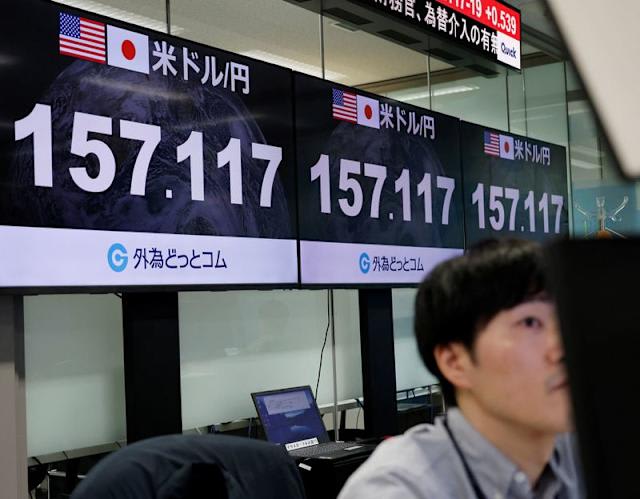
The Japanese yen tested the critical 160-per-dollar barrier for a third consecutive session on Friday, June 5, as the U.S. dollar remained supported by safe-haven demand tied to ongoing military tensions between the United States and Iran in the Persian Gulf.
The yen’s slide back toward the 160 threshold has erased gains achieved through Japan’s record intervention campaign, in which authorities spent 11.73 trillion yen ($73.6 billion) between late April and late May to prop up the currency. The USD/JPY pair first breached the level on Wednesday, June 3, marking its weakest point since April 30.japantimes
Japanese Finance Minister officials renewed verbal warnings to currency speculators this week, echoing the posture that preceded the April-May intervention. Reuters reported that the yen fell to a session low of 160.05 in New York trading on Wednesday before recovering briefly after Bank of Japan Governor Kazuo Ueda hinted at a possible rate hike later this month. However, markets remain skeptical that monetary policy alone can stem the yen’s decline, with Reuters noting that Japan has now spent an “astonishing $215 billion” over recent years in efforts to slow yen depreciation.yahoo
The dollar’s strength this week has been underpinned by the stalled U.S.-Iran peace process. On June 3, the two sides exchanged missile and drone attacks across the Persian Gulf, including strikes that damaged a passenger terminal at Kuwait’s main airport, killing one person and wounding 63. The Strait of Hormuz — a vital oil chokepoint — remains a central point of contention, with Iran demanding continued control over the waterway as part of any deal.rferl
Iran is reviewing a proposed agreement to halt hostilities and reopen the strait, but communications between Tehran and Washington paused for several days this week, according to Reuters. President Trump said talks were progressing and expressed optimism a deal could be reached, though Iranian Foreign Minister Abbas Araqchi cautioned against “speculation”.reuters
The euro edged modestly higher midweek after Israel and Lebanon announced a ceasefire agreement on Wednesday, brokered by the United States. The EUR/USD pair rose to 1.1611 on June 4. However, gains were short-lived as Hezbollah rejected the deal, saying it would not accept any ceasefire without a prior Israeli withdrawal from southern Lebanon. The collapse of immediate ceasefire prospects also dims hopes for a broader U.S.-Iran settlement, as Tehran has conditioned its own peace on a Lebanon deal.reuters