







Newsletter Subscribe
Enter your email address below and subscribe to our newsletter

Enter your email address below and subscribe to our newsletter
All voices matter
Saudi Arabia’s energy minister and Russia’s deputy prime minister met on Thursday at the St. Petersburg International Economic Forum, projecting unity ahead of a pivotal OPEC+ meeting on Sunday even as the alliance grapples with the UAE’s departure, declining Russian output, and a Middle East conflict that has upended global oil supply routes.
Prince Abdulaziz bin Salman, who led Saudi Arabia’s delegation as the forum’s guest of honor marking 100 years of Saudi-Russian diplomatic relations, broke weeks of public silence to deliver a pointed message to jittery markets. “The world needs every molecule of energy, and every form of stabilization to this energy, because without energy security, you will lose sustainability,” he said, according to Asharq Al-Awsat.aawsat
The Saudi minister said he had deliberately stayed quiet during what he called one of the most severe global energy crises, explaining that “silence amid many unknowns is a message and a humble acknowledgment that reality is changing quickly.”aawsat
Russian Deputy Prime Minister Alexander Novak struck a more alarmed tone, warning of a hidden shortfall in global supply estimated at about 12 million barrels per day not currently reaching the market. He cautioned that if the Middle East conflict continues and Gulf states delay raising production, an “acute and immediate physical shortage” could emerge within months.aawsat
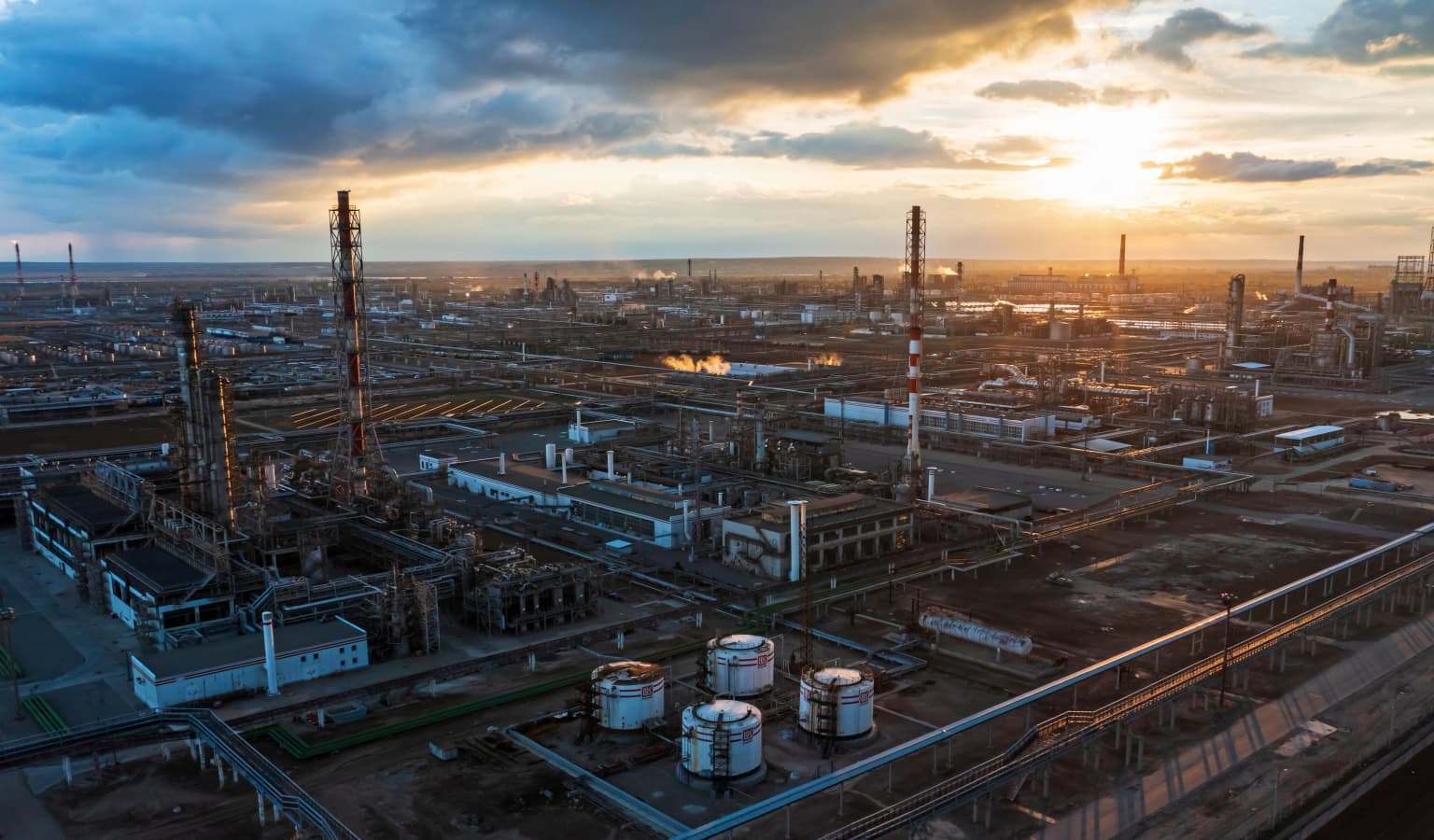
In a notable admission, Novak acknowledged for the first time that Russian oil production has fallen since the start of 2026, attributing the decline to “emergency and unscheduled maintenance” at refineries, according to Reuters. The International Energy Agency reported that Russia’s crude output dropped by 460,000 barrels per day in April compared with a year earlier, settling at around 8.8 million barrels per day.indiatimes
Novak’s framing contrasts with the assessment of independent analysts and Ukrainian officials, who point to an intensifying campaign of drone strikes on Russian energy infrastructure. Ukrainian President Volodymyr Zelenskyy said in May that Ukrainian forces had struck 15 Russian oil refineries since January, knocking nearly 40% of Russia’s primary refining capacity offline. The Moscow Times reported in April that attacks on key port facilities and pipelines had forced the equivalent of roughly 1 million barrels per day of export capacity offline.reuters
The forum dialogue served as a prelude to three consecutive OPEC+ meetings on Sunday, June 7, where seven remaining core members — Saudi Arabia, Russia, Iraq, Kuwait, Kazakhstan, Algeria, and Oman — are expected to approve a further output target increase of approximately 188,000 barrels per day for July, according to Reuters. That figure matches the hike agreed for June and reflects a downward adjustment from earlier monthly increases of 206,000 barrels per day to account for the UAE’s absence.reuters
The UAE’s exit from OPEC on May 1, after 59 years of membership, removed the group’s third-largest producer and roughly 3.4 million barrels per day of output from its coordination framework. Analysts have said the departure signals closer alignment between Abu Dhabi and Washington and could encourage other members to leave, further eroding the cartel’s pricing power.enerdata
OPEC Secretary General Haitham Al Ghais, also speaking at the forum, insisted the organization still expects demand growth of 1.2 million barrels per day this year and urged continued investment. “Despite all the commentary out there that oil demand is declining, we have not registered signs of that yet,” he said.aawsat