






Newsletter Subscribe
Enter your email address below and subscribe to our newsletter

Enter your email address below and subscribe to our newsletter
All voices matter
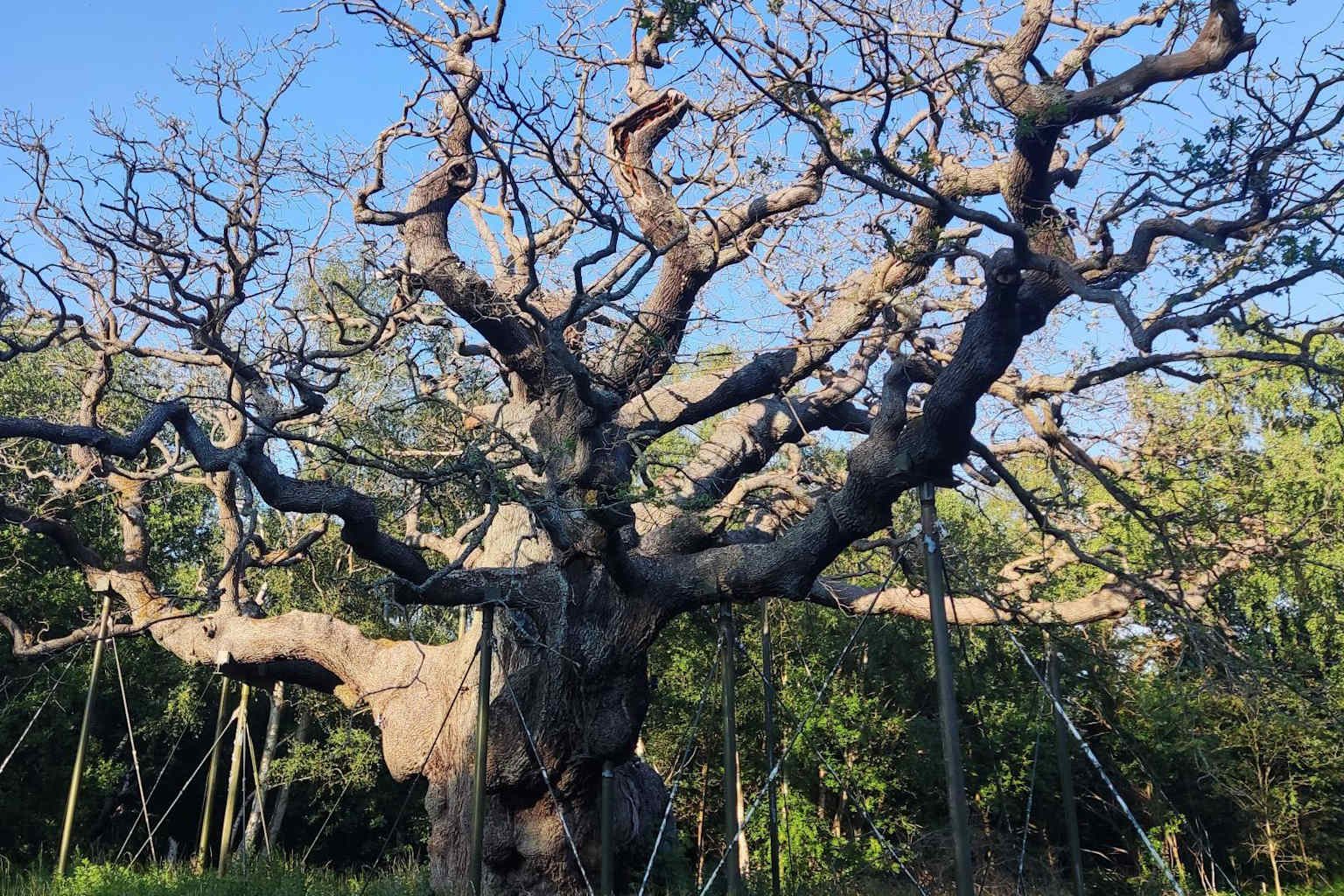
The Major Oak, an enormous English oak that stood for more than a millennium in the heart of Sherwood Forest and became inseparable from the legend of Robin Hood, is dead. The Royal Society for the Protection of Birds, which manages the woodland site in Nottinghamshire, England, announced Thursday that the tree failed to produce any leaves this spring and is believed to have perished.abcnews
Estimated to be up to 1,200 years old, the Major Oak was one of the largest oak trees in Europe, with a trunk measuring 11 meters in girth and a canopy stretching 28 meters wide. It attracted roughly 350,000 visitors annually, drawn by its association with the outlaw Robin Hood, who according to legend used the hollow trunk as a hideout while evading the Sheriff of Nottingham.theguardian
But that devotion may have hastened the tree’s end. The RSPB said that centuries of foot traffic compressed the surrounding soil to the hardness of concrete in places, preventing rain from reaching the roots. Underground assessments revealed “a strangled and starved root system completely disconnected from its surrounding environment,” according to Chloe Ryder, operations manager for RSPB Sherwood Forest.standard
“The tree’s failure to produce leaves this year is heartbreaking for everyone,” Hollie Drake of the RSPB said in a statement.abcnews
Climate change compounded the damage. The tree had struggled since Britain’s record-breaking heatwave in July 2022, when temperatures reached 40°C, and a series of hot, dry summers followed. A tree health expert who monitored the oak for nine years on behalf of the RSPB said it was impossible to isolate a single cause but added: “Sadly, it seems probable the lack of summer rainfall over the last five years, coupled with the unprecedented high temperatures, have had a significant hand in it.”theguardian
Historical conservation efforts also backfired. Metal chains and props installed as early as 1904 to support the tree’s enormous limbs prevented it from naturally shedding branches and “growing down” into its trunk — a process that allows ancient oaks to reduce their need for water and nutrients. In the 1960s, hollow sections were filled with concrete, and limbs were coated in lead and later fiberglass.theguardian
The RSPB said the Major Oak will remain in place as both a memorial and a habitat. Dead wood is ecologically valuable — a quarter of all forest species depend on it at some stage of their life cycles. The tree was named after Major Hayman Rooke, a local antiquarian who documented it in 1790, and has been protected by a fence since the 1970s.abcnews
Drake said the oak “will continue to stand at the heart of Sherwood” as an environmental marvel. The Visit Sherwood Forest website noted simply: “The story is far from over.”visitsherwood