







Newsletter Subscribe
Enter your email address below and subscribe to our newsletter

Enter your email address below and subscribe to our newsletter
All voices matter
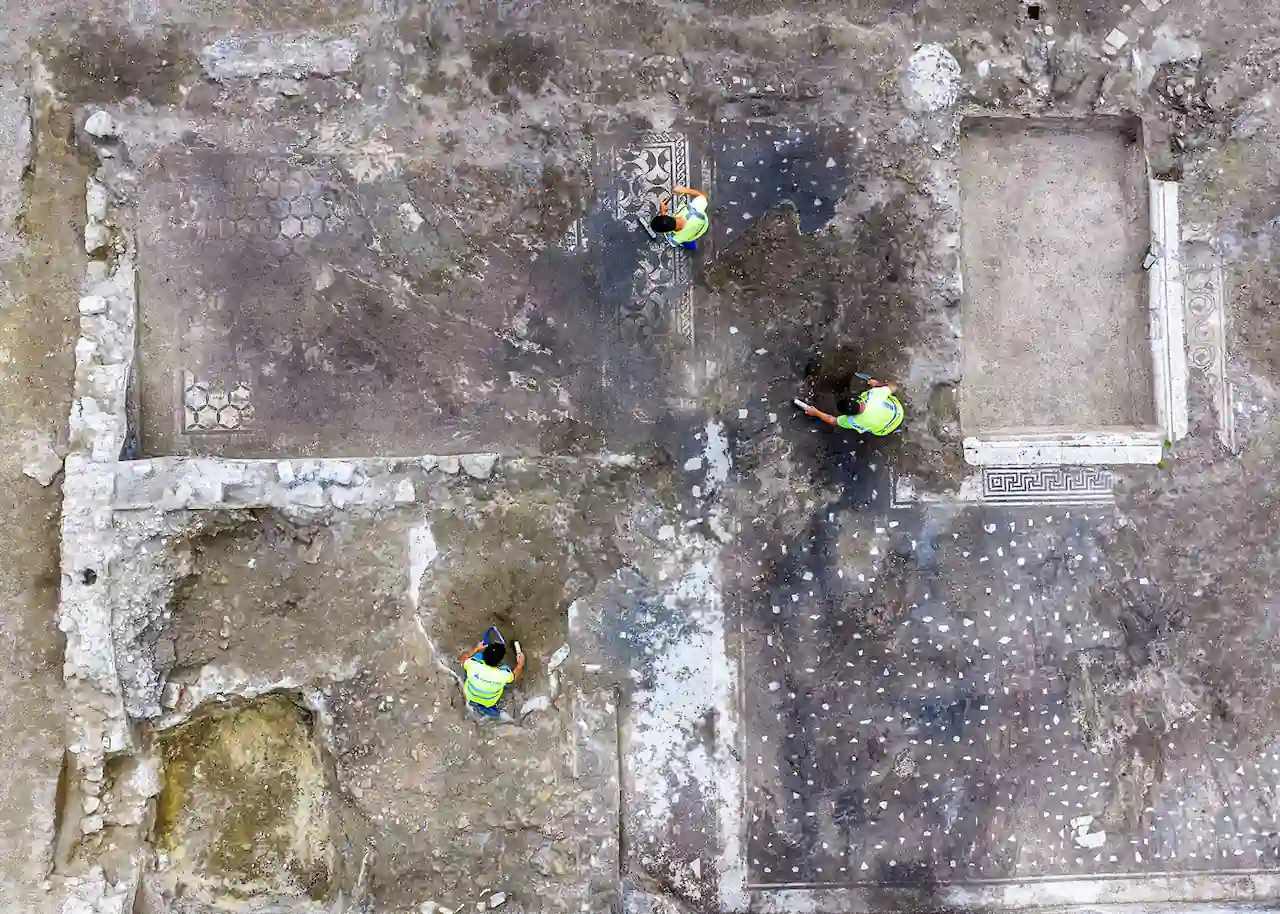
A lavish Roman villa from the imperial era has been uncovered at Castel di Guido, about 19 kilometers west of Rome, after police were tipped off about illegal excavations on government-owned land in February. Italy’s Special Superintendency of Rome will open the site to the public on June 20 with free guided archaeological walks.finestresullarte
The chain of events began on February 16, when police from the Metropolitan City of Rome reported unauthorized excavations on land owned by the Lazio Region to the Superintendency. The Carabinieri’s Cultural Heritage Protection Unit was brought in the following day, and by February 23, authorities had begun securing the area with surveillance systems including phototraps.finestresullarte
The illegal diggers had already caused considerable damage, using mechanical means and toothed buckets to carve deep trenches into the archaeological layers. Facing exposed ancient structures at risk of further harm, the Superintendency activated emergency procedures, expanding the excavation for scientific research and documentation.labrujulaverde
Directed by archaeologist Alessia Contino, the investigation revealed a monumental entrance hall centered on an impluvium — a basin for collecting rainwater — set within elaborate mosaic floors featuring geometric and plant motifs in black tesserae with polychrome marble inserts. The walls retain traces of painted decoration, including a red lower band and fragments suggesting yellow and blue panels with anthropomorphic figures.labrujulaverde
Four surrounding rooms preserve portions of their original mosaic floors with varied geometric patterns. Among the most notable finds is a fragmentary white marble statue, about 80 centimeters tall, depicting a bearded man in a short tunic carrying a basket with birds and fruit. Scholars have tentatively identified it as Silvanus, the Roman god of forests and rural life, though other interpretations remain under consideration.finestresullarte
The site lies within the territory of ancient Lorium, a post station on the Via Aurelia recorded in historical sources as the location of an imperial estate. Emperor Antoninus Pius spent part of his youth there and eventually died at the site, while both Hadrian and Marcus Aurelius frequented the area. Archaeologists believe the villa dates from the first half of the first century AD and may have been abandoned during the third century.yahoo
Italy’s Culture Minister Alessandro Giuli called the operation “exemplary,” noting that officials “stopped a clandestine operation, secured an archaeological area, and brought to light the remains of a splendid villa from the imperial period.” The free guided tours on Saturday, June 20, will depart at 5 p.m. and 6:15 p.m., with reservations available through Eventbrite.finestresullarte