







Newsletter Subscribe
Enter your email address below and subscribe to our newsletter

Enter your email address below and subscribe to our newsletter
All voices matter
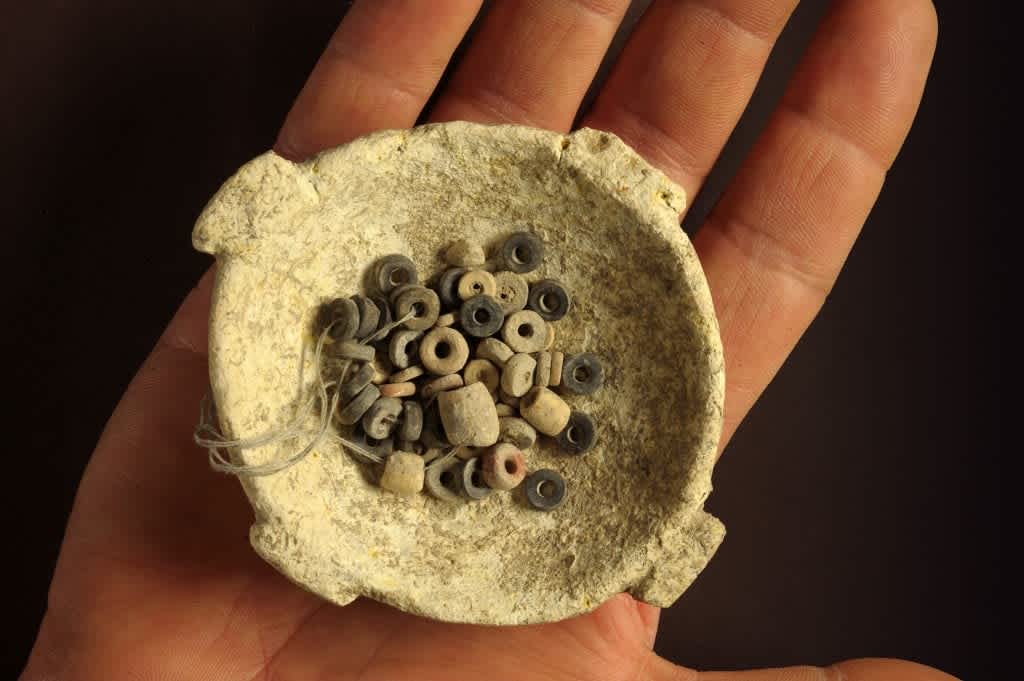
Archaeologists have identified 142 clay beads and pendants crafted by Natufian hunter-gatherers roughly 15,000 years ago, with preserved fingerprints showing that children as well as adults shaped the ornaments — the first time researchers have directly identified the makers of Paleolithic-era adornments.
The findings, published this week in the journal Science Advances, represent the earliest known clay ornaments in Southwest Asia, pushing back the symbolic use of clay in the region by thousands of years. Before this discovery, only five clay beads from the era were known worldwide.nbcrightnow
“This discovery completely changes how we understand the relationship between clay, symbolism, and the emergence of settled life,” said study leader Dr. Laurent Davin of the Institute of Archaeology at Hebrew University of Jerusalem.phys
The ornaments were recovered from four Natufian sites — el-Wad, Nahal Oren, Hayonim, and Eynan-Mallaha — spanning more than three millennia of occupation. Shaped from unbaked clay into cylinders, discs, and ellipses, many were coated in red ochre using a technique called engobe, which researchers say is the earliest known use of this coloring method anywhere in the world.nbcrightnow
Nineteen distinct bead types were identified, many echoing the shapes of wild barley, einkorn wheat, lentils, and peas that were central to Natufian life — the same plants that would later form the backbone of agriculture.nbcrightnow
A total of 50 preserved fingerprints on the beads allowed the team to determine the age range of their makers, from children to adolescents and adults. It is the largest such fingerprint assemblage ever documented from the Paleolithic period.phys
Some objects appear to have been designed specifically for young hands, including a tiny clay ring just 10 millimeters wide. “The findings suggest that making ornaments was a shared, everyday activity, one that played a role in learning, imitation, and the transmission of social values from one generation to the next,” Davin said.nbcrightnow
For decades, scholars assumed that symbolic uses of clay in Southwest Asia emerged only alongside farming and the Neolithic way of life. The new study overturns that assumption, showing that a “symbolic revolution” was already underway when communities were still hunting and gathering but beginning to settle permanently.science
“These objects show that profound social and cognitive changes were already underway,” said Professor Leore Grosman, Davin’s supervisor at Hebrew University. “The roots of the Neolithic lie deeper than we once thought.”phys