Newsletter Subscribe
Enter your email address below and subscribe to our newsletter

Enter your email address below and subscribe to our newsletter
All voices matter
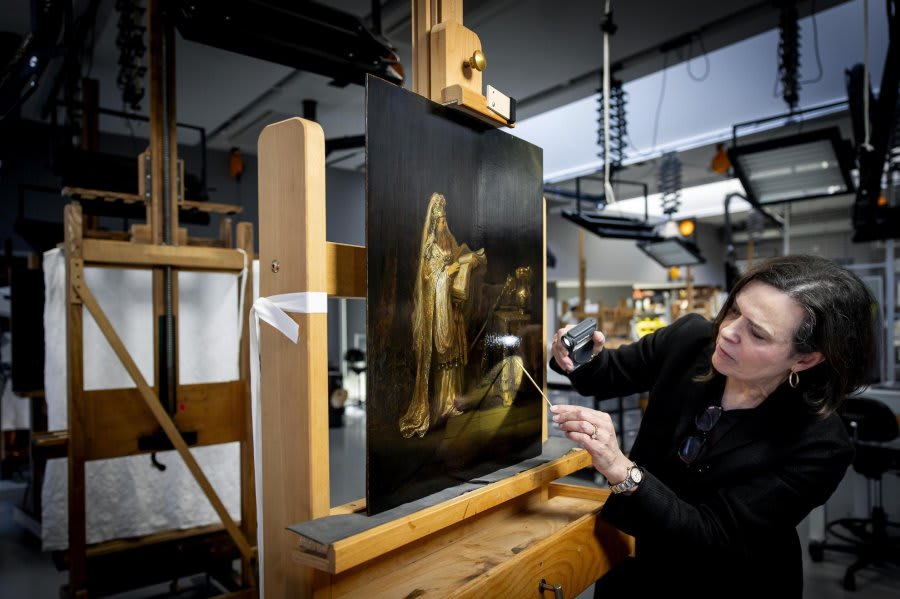
The Rijksmuseum in Amsterdam announced Monday that researchers have confirmed “Vision of Zacharias in the Temple” (1633) as a genuine work by Rembrandt van Rijn, ending a 65-year mystery surrounding the biblical painting. The work, on long-term loan from an anonymous private collector, will go on public display starting Wednesday, March 4.rijksmuseum
The painting was considered part of Rembrandt’s body of work until 1960, when it was excluded from his official oeuvre based on the investigative methods available at the time. After being purchased by a private individual in 1961, the work vanished from public view entirely. No experts had been able to study it since.upi
The current owner, who inherited the painting from his father, recently contacted the Rijksmuseum and proposed it for examination. “It arrived in our inbox, and one of our curators considered it an intriguing image,” Rijksmuseum director Taco Dibbits told the BBC, as reported by UPI. “We had known about this painting for over a century, yet we had never encountered it.”the-independent
The museum subjected the painting to a rigorous two-year investigation using the same advanced techniques developed for its “Operation Night Watch” project. Macro-XRF scans and visual inspection revealed compositional changes characteristic of Rembrandt’s working process. All paints used in the work matched those found in other Rembrandt paintings from the same period, and the technique and layering were comparable to his early works.euronews
Researchers also confirmed the signature was original and conducted dendrochronological analysis of the wooden panel, verifying that the 1633 date on the painting is correct. Restorer Petria Noble noted that the illumination in the painting is produced through thick applications of paint known as impasto, a hallmark of Rembrandt’s style.rijksmuseum
The painting depicts the moment when the high priest Zacharias receives a visit from the Archangel Gabriel in the temple. The angel, who tells Zacharias that he and his elderly wife will have a son — John the Baptist — is not shown, but light streaming from the upper right corner signals his arrival.euronews
Thematically, the work fits alongside other biblical paintings by the then 27-year-old artist, including “Daniel and Cyrus Before the Idol Bel” (1633, J. Paul Getty Museum) and “Jeremiah Lamenting the Destruction of Jerusalem” (1630, Rijksmuseum).rijksmuseum
“It’s wonderful that people can now learn more about the young Rembrandt — he created this very poignant work shortly after moving from Leiden to Amsterdam,” Dibbits said. “It is a beautiful example of the unique way Rembrandt depicts stories.”rijksmuseum