






Newsletter Subscribe
Enter your email address below and subscribe to our newsletter

Enter your email address below and subscribe to our newsletter
All voices matter
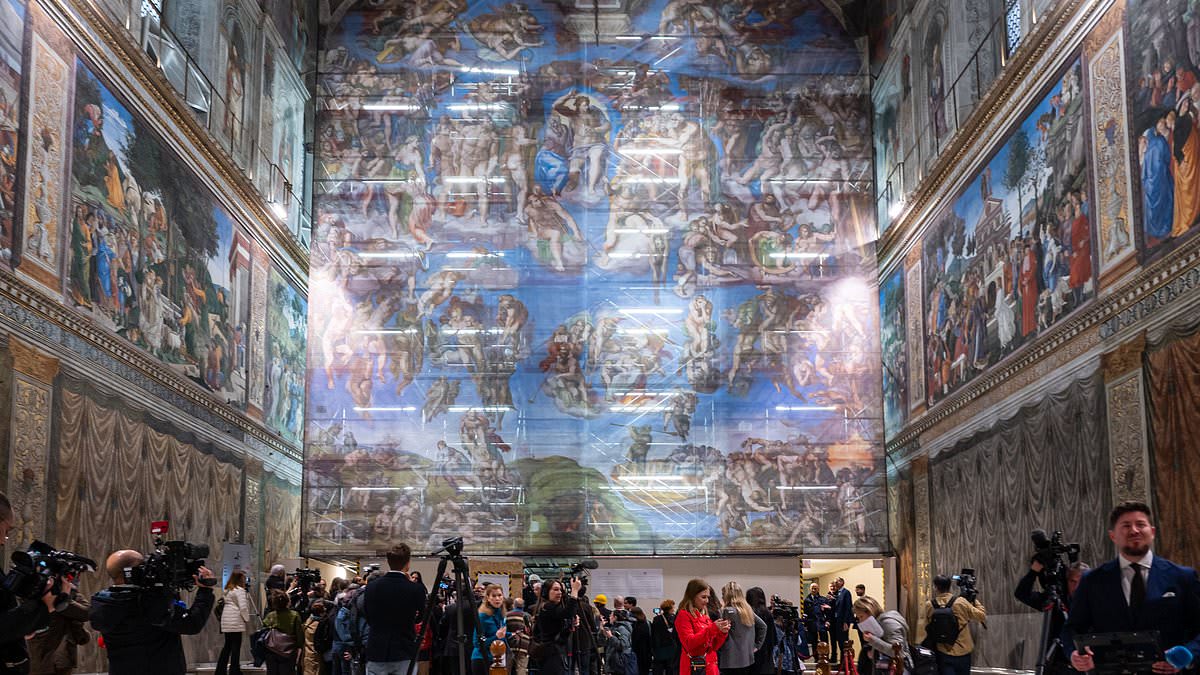
Restorers at the Vatican are removing a chalky white film of salt from Michelangelo’s “The Last Judgment” in the Sistine Chapel, the first major cleaning of the fresco since a comprehensive restoration concluded in the 1990s. The Vatican gave journalists a close look at the work on Saturday, revealing a stark contrast between cleaned and uncleaned sections of the towering masterpiece.apnews
The cleaning is expected to wrap up by Easter in early April. During the restoration, visitors can still enter the Sistine Chapel but will see a digital reproduction of the fresco projected on a screen covering the floor-to-ceiling scaffolding.washingtontimes
The white residue is a direct consequence of the nearly 25,000 people who pass through the Vatican Museums each day. “This salt is created because, above all, when we sweat, we emit lactic acid, and unfortunately lactic acid reacts with the calcium carbonate present on the wall,” said Fabio Moresi, who leads the scientific research team overseeing the project. Climate change has compounded the problem, he said, as visitors sweat more and raise humidity levels inside the chapel.ctvnews
Vatican Museums director Barbara Jatta described the buildup as a “cataract” that is relatively easy to remove. The technique is deliberately gentle: restorers soak sheets of Japanese rice paper in distilled water, press them against the fresco, and carefully wipe away the salt deposits.apnews
From the scaffolding, the difference between treated and untreated areas is unmistakable. Sections still coated in salt appear under a dusty white layer, while cleaned portions reveal vivid colors and fine details — including the hair and crucifixion wounds on the figure of Jesus at the center of the composition.dailymail
The other frescoes in the Sistine Chapel, where Pope Leo XIV was elected last May, undergo annual nighttime cleaning using cherry-pickers. But “The Last Judgment” sits behind the altar atop raised marble steps, making such equipment impractical and requiring fixed scaffolding.ctvnews
Rather than drastically limiting visitor numbers, the Vatican is exploring filtration systems and other technologies to control humidity and prevent the salt film from forming again. The Sistine Chapel underwent a full restoration between 1979 and 1999, when centuries of smoke, grime, and wax were stripped away. The Vatican has preserved small patches of the pre-restoration surface to show the difference — areas that appear nearly black compared with the cleaned fresco.apnews